⌘K
Your vehicleHome›Dodge›Durango› 2018
Dodge · Large SUV

2018 Dodge Durango

Gas
Standard Sport Utility Vehicle 4WD
5 EPA-rated configurations
Data refreshed 2026-10-26
F
Safety Signal
57 / 100 from the NHTSA recall record
Counts recalls, not crash safety — this vehicle earned 4 of 5 stars from NHTSA. A much-recalled best-seller scores low here; see the methodology.
Recalls2 critical 5
Complaints9 crash · 5 injured reported 233
Crash ratingNHTSA overall 4★
Fuel economybest combined, EPA 21 mpg
202720262025202420232022202120202019201820172016

The 2018 Dodge Durango is sold in the U.S. as a gas large SUV with 5 EPA-rated configurations. The most efficient version, the Durango AWD, is EPA-rated at 21 mpg combined. NHTSA lists 5 recall campaigns for this model year, 2 rated critical, which gives it a Safety Signal grade of F. Owners have filed 233 complaints, most often about the electrical system. NHTSA crash-tested it at 4 stars overall.

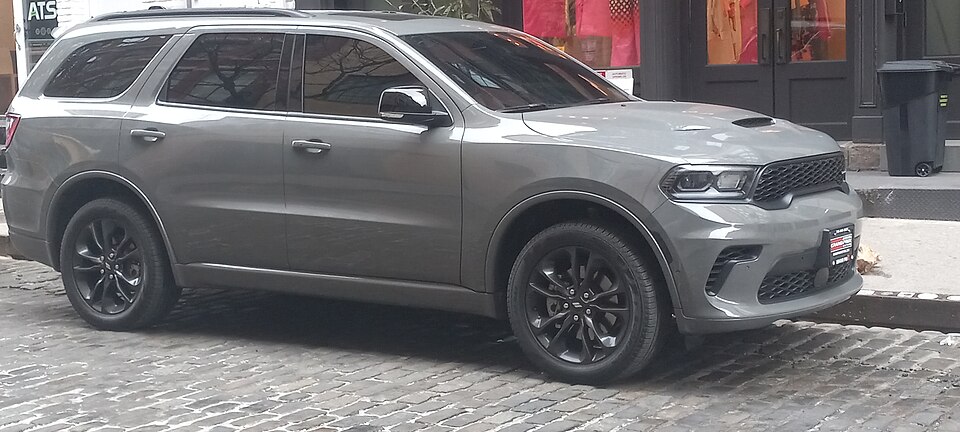
Dodge Durango — photograph via Wikimedia Commons
Dodge Durango · Photo: Kidfly182 · CC BY 4.0 · Wikimedia Commons

Specs & fuel economy

Source: EPA fueleconomy.gov
ConfigurationPowertrainDriveEngine / motorCityHwyCombAnnual fuel*
Durango AWDGasAWD3.6L 6-cyl182521$3,200
Durango RWDGasRWD3.6L 6-cyl192621$3,200
Durango AWDGasAWD5.7L 8-cyl142217$4,450
Durango RWDGasRWD5.7L 8-cyl142217$4,450
Durango SRT AWDGasAWD6.4L 8-cyl131915$5,500

*EPA estimate at 15,000 miles/year at EPA reference fuel and electricity prices. fueleconomy.gov record ids: 39102, 39100, 39318, 39316, 39187.

Emissions & certification

Source: EPA emission certificates
ConfigurationSmog ratingEmission standardWhere it can be sold newSmartWay
Durango AWD5 / 10California LEV-III ULEV70 / Federal Tier 3 Bin 70All 50 states (federal, all altitudes); California and states following California standards—
Durango RWD5 / 10Federal Tier 3 Bin 70 / California LEV-III ULEV70All 50 states (federal, all altitudes); California and states following California standards—
Durango AWD, Durango RWD3 / 10Federal Tier 3 Transitional Bin 110All 50 states (federal, all altitudes); California and states following California standards—
Durango SRT AWD1 / 10Federal Tier 3 Bin 160 / California LEV-II LEVAll 50 states (federal, all altitudes); California and states following California standards—

Certified for all fifty states, so it can be registered new anywhere in the U.S.

The smog rating scores tailpipe pollutants other than greenhouse gases, 1 (worst) to 10 (best), and is comparable only within a model year. The standard is the federal bin or California tier the configuration was certified to. Both come from the EPA certificate behind the window sticker.

Specifications filed with NHTSA

Source: NHTSA vPIC

Dimensions Exterior

Body styleSport Utility Vehicle [SUV]/Multipurpose Vehicle [MPV]
Doors4
GVWR classClass 2E: 6,001 - 7,000 lb (2,722 - 3,175 kg)

Engine Basics

Cylinders6
Displacement3.6 L
Engine configurationV-Shaped

Engine Output

Horsepower295 hp

Fuel Economy

FuelGasoline

Seating

Seating capacity7 seats

Transmission

Drivetrain4x2
TransmissionAutomatic
Transmission speeds8

Driver assistance

Standard: Anti-lock brakes, Backup camera, Electronic stability control, Parking assist

Optional: Adaptive cruise control, Automatic emergency braking, Blind-spot monitoring, Forward collision warning, Lane departure warning, Lane keeping assist

Filed by the manufacturer with NHTSA under the federal vehicle-identification rule and decoded from the VIN pattern — not a manufacturer press kit, so it describes the configurations we could identify rather than every trim (seen: GT, R/T, SRT, SXT). Figures for the trim you are looking at may differ.

Dimensions & weight

Source: Transport Canada
Length200.0 in
Width (body, without mirrors)76.0 in
Height70.9 in
Wheelbase119.7 in
Track, front63.8 in
Track, rear64.2 in
Curb weight4,987–5,331 lb
Weight distribution, front/rear56/44

Measured by Transport Canada for its Canadian Vehicle Specifications database, which covers the North American versions of each model — here 2 configurations: 4-door SUV AWD V6, 4-door SUV AWD V8. Where a range is shown, those versions differ. Width is the body without mirrors, which is why it can read narrower than a brochure figure. Before we used it we checked it against the US manufacturer press kits we hold (27 Sep 2026): wheelbase agreed within 1% on every vehicle we could compare, length on 98%, and the curb weight fell inside the manufacturer's range on 96%. Source dataset. Contains information licensed under the Open Government Licence – Canada. Licence.

Advertisement

Factory warranty running out?

The 2018 Dodge Durango is in the years where transmission, electronics and drivetrain repairs land on the owner. What an extended plan does and does not cover is worth reading before a dealer quotes you one.

What to check before you buy →

Affiliate disclosure: some links on this page are affiliate links. If you request a quote or buy through them we may earn a commission at no extra cost to you. Nothing on this page changes because of it.

Recalls (5)

Source: NHTSA recall database
▲high

Service Brakes, Hydraulic

94B
206,502 vehicles 26% reported repaired
Problem Chrysler (FCA US, LLC) is recalling certain 2018-2019 Jeep Grand Cherokee and Dodge Durango vehicles. A malfunction in the antilock-brake system (ABS) module may incorrectly illuminate the brake lights and disable the ABS and electronic stability control (ESC). In addition, the vehicle operator may be able to start and shift out of Park without the brake pedal being applied. Risk A vehicle that can be started and shifted out of Park without applying the brake pedal can result in a vehicle rollaway. Disabled ABS and ESC systems can reduce vehicle handling and control in certain driving situations. Brake lights that incorrectly illuminate can fail to properly indicate the driver's intention to following traffic. Any of these scenarios can increase the risk of a crash. Fix Dealers will replace the integrated pressure transducer and update the ABS module software, as necessary free of charge. Owner notification letters were mailed December 16, 2025. Owners may contact FCA customer service at 1-800-853-1403. FCA's number for this recall is 94B. This recall replaces previous recall number 22V-426. Vehicles previously remedied under 22V-426 will need to have the new remedy completed.
NHTSA campaign 24V838000 reported Nov 7, 2024 Chrysler (FCA US, LLC) the full filing, and every vehicle covered →
!critical

Service Brakes, Hydraulic

Z48
206,502 vehicles
Problem Chrysler (FCA US, LLC) is recalling certain 2018-2019 Jeep Grand Cherokee and Dodge Durango vehicles. A malfunction in the antilock-brake system (ABS) module may illuminate the brake lights, and allow the vehicle to start and shift out of Park without the brake pedal being applied. Risk A vehicle that starts and shifts out of Park without applying the brake pedal can result in vehicle rollaway, increasing the risk of a crash without prior warning and/or injury to others outside of the vehicle. Fix This recall is replaced by NHTSA recall number 24V838. Vehicles already repaired under this recall will need to have the new remedy completed. The remedy includes updated HCU/ABS module software that prevents the HCU/ABS module from falsely reading pressure in the primary circuit. FCA has decided to do a two-Phase Campaign remedy schedule. Phase 1 began November 17, 2022. Phase 2 begin date has not been determined yet. Interim owner notification letters explaining the safety risk were maile
Filed with NHTSAOwner letter PDF
NHTSA campaign 22V426000 reported Jun 9, 2022 Chrysler (FCA US, LLC) the full filing, and every vehicle covered →
▲high

Electrical System

U87
12,779 vehicles 77% reported repaired built Sep 6, 2017 – Dec 11, 2017
Problem Chrysler (FCA US LLC) is recalling certain 2018 Jeep Renegade, Compass and Grand Cherokee, RAM 1500 and Promaster, Fiat 500x, Dodge Journey, Challenger, Charger and Durango and Chrysler 300x vehicles, 2017-2018 Jeep Wrangler, Dodge Grand Caravan and Chrysler Town and Country vehicles and 2018-2019 Jeep Cherokee and 2018 Chrysler Pacifica and Pacifica Hybrid vehicles. The powertrain control module may be equipped with a voltage regulator chip in the circuit board that may fail, causing a stall or a no start condition. Risk A vehicle stall can increase the risk of a crash. Fix Chrysler will notify owners, and dealers will replace the powertrain control module, free of charge. The recall began October 2, 2018. Owners may contact Chrysler customer service at 1-800-853-1403. Chrysler's number for this recall is U87.
NHTSA campaign 18V524000 reported Aug 9, 2018 Chrysler (FCA US LLC) the full filing, and every vehicle covered →
!critical

Electrical System

U49,U59-U65,U68,U73
4,815,661 vehicles 77% reported repaired built Jun 2, 2013 – May 23, 2018
Problem Chrysler (FCA US LLC) is recalling certain 2014-2018 Dodge Journey, Charger and Durango, RAM 2500, 3500, 3500 Cab Chassis (more than 10,000lb), 4500 Cab Chassis and 5500 Cab Chassis, Jeep Cherokee and Grand Cherokee and Chrysler 300, 2014-2019 RAM 1500, 2015-2018 Dodge Challenger, 2015-2017 Chrysler 200, 2016-2018 RAM 3500 Cab Chassis (less than 10,000 lb), 2017-2018 Chrysler Pacifica and 2018 Jeep Wrangler vehicles. These vehicles are being recalled to address a defect that could prevent the cruise control system from disengaging. If, when using cruise control, there is a short circuit within the vehicle's wiring, the driver may not be able to shut off the cruise control either by depress Risk If the vehicle maintains its speed or accelerates despite attempts to deactivate the cruise control, there would be an increased risk of a crash. Fix Chrysler will notify owners, and dealers will inspect the software, and perform a software flash on the engine or powertrain control module, free of charge. The recall began June 4, 2018. Owners may contact Chrysler customer service at 1-800-853-1403. Note: Owners are advised to stop using cruise control until the software update has been performed. In the event that cruise control cannot be disengaged while driving, owners should firmly and steadily apply the brakes and shift the transmissi
Filed with NHTSAOwner letter PDF
NHTSA campaign 18V332000 reported May 17, 2018 Chrysler (FCA US LLC) the full filing, and every vehicle covered →
▲high

Power Train

U43
71 vehicles 84% reported repaired built Mar 26, 2018 – Mar 26, 2018
Problem Chrysler (FCA US LLC) is recalling certain 2018 Dodge Charger, Durango and Challenger, Jeep Grand Cherokee and Wrangler, Chrysler 300, and RAM 1500 vehicles. An incorrect transmission park lock rod may have been installed in the transmission. Risk If the incorrect park lock rod is installed, the transmission may not shift into 'PARK' and keep the vehicle from moving, increasing the risk of unintended vehicle movement and the risk of a crash. Fix Chrysler will notify owners, and dealers will install the correct park lock rod, free of charge. The recall began June 28, 2018. Owners may contact Chrysler customer service at 1-800-853-1403. Chrysler's number for this recall is U43.
Filed with NHTSAOwner letter PDF
NHTSA campaign 18V280000 reported May 1, 2018 Chrysler (FCA US LLC) the full filing, and every vehicle covered →

These are vehicle campaigns — the ones the automaker filed against this model. NHTSA also records equipment recalls, filed by a parts maker against a component (a tyre, a child seat, an aftermarket part), and those are not listed here or counted above. nhtsa.gov/recalls shows both for a VIN.

NHTSA defect investigations

Air Bags:Frontal:Passenger Side:Inflator Module — Desiccated Air Bag Inflator Rupture open

From 2000 through 2017, Takata produced millions of air bag inflators using two types of phase-stabilized ammonium nitrate ("PSAN") propellant -- propellant 2004 and propellant 2004L. After prolonged exposure to high temperature cycles and humidity, inflators using propellant 2004 can degrade, causing the propellant to burn too quickly when ignited. The rapid burning can cause the inflator to rupture during deployment, potentially causing serious or even fatal injury to vehicle occupants. See 2016 Blomquist Report at www.nhtsa.gov/sites/nhtsa.gov/files/documents/expert_report-hrblomquist.pdf. Consequently, all frontal inflators using propellant 2004 that do not contain a "desiccant" (a subst

Opened Sep 17, 2021 · action EA21002 · the investigation’s page →

Seats:Front Assembly:Head Restraint — Active Head Rest Inadvertent Deployment closed

The Office of Defects Investigation (ODI) opened PE19014 on September 9, 2019, to investigate 128 consumer complaints alleging that the Active Head Rest (AHR) inadvertently deployed without the occurrence of a crash or other rear impact event in model year (MY) 2014 Jeep Grand Cherokee and Dodge Durango vehicles. When ODI opened the investigation, ODI was aware of thirteen alleged injuries. A small number of Early Warning Reports identified driver and/or passenger front seat AHR inadvertent deployments without a rear impact event. Reported safety consequences resulting from the AHR deployments include concussions, headaches, soft tissue injuries, disorientation, nausea, vomiting and/or loss

Opened Sep 9, 2019 · closed Feb 25, 2026 · action PE19014 · the investigation’s page →

Whether any of this applies to one specific Durango

A campaign covers a build range, not a model year, so two identical-looking cars from 2018 can differ. Both of these check a VIN against the manufacturer’s own list, free, in about ten seconds. Dodge publishes its own lookup because federal rule 49 CFR 573.15 requires it to, and to keep it current to within seven days.

Hear about a recall before the letter does

The manufacturer’s letter is the last step of a recall: it has up to 60 days after filing to mail owners, at the address on the registration. We email you the day NHTSA posts a recall on the 2018 Dodge Durango, with what to do next. Nothing else, ever — no newsletter, no marketing, one-click unsubscribe in every message.

Advertisement

Parts & accessories for the 2018 Dodge Durango

Search by fitment on eBay Motors — OEM take-offs, aftermarket, and the trim pieces dealers no longer stock. The listing and the price are the seller's.

Find parts for this Durango →

Owner complaints

Source: NHTSA complaint database
233complaints filed

9 involved a crash · 0 a fire · 5 injuries · 0 deaths reported

29 per 10,000 built · Dodge reported 79,128 Durango built (its Early Warning production report to NHTSA)

Filed per year: 2018: 12 · 2019: 29 · 2020: 18 · 2021: 31 · 2022: 41 · 2023: 24 · 2024: 31 · 2025: 30 · 2026: 17

Most-cited components

Exterior Lighting 56
Unspecified 32
Engine 29
Service Brakes 26
Seats 22

In depth: electrical problems →

In owners' own words

Filed with NHTSA by the people who own these cars, one per problem area. Quoted as written, with anything identifying removed.

When coming to a slow stop in a driveway and shifting car into park car will not stay in park and shift back into drive
Power Train at 19,000 miles Jul 1, 2019 NHTSA owner report · ODI 11228708
While drive my 2018 Dodge Durango on the fwy around 65+ the engine just turn off. With kids in the car we were stuck in the slow lane of the fwy unable to move the car. I tried restarting it with no luck. The car still had power(lights were on). The car wouldn't go into neutral .. The car had to be pulled off the road by a tow truck.
Electrical System at 29,000 miles Apr 1, 2019 NHTSA owner report · ODI 11193032
The contact owns a 2018 Dodge Durango. While driving 43 MPH over an icy patch in the road, the vehicle crashed into a guardrail, three telephone poles, and a tree. The air bags failed to deploy. The contact sustained a shoulder injury and medical attention was provided. A police report was filed.
Air Bags at 5,000 miles Feb 26, 2019 NHTSA owner report · ODI 11182599
Most pumps do not work only costco cannot fill the tank with more than $1 - $2 worth of gas without the pump clicking off. I have tried several gas stations and I have the same problem everywhere. I have to hold the nozzle almost upside down in order to pump gas.
Fuel/Propulsion System at 4,000 miles Feb 22, 2019 NHTSA owner report · ODI 11181809
I was coming threw the wv area coming down a hill moving toward the car tunnels. Just as I was coming down the hill the car incressined the speeds from 70 to 75 and then from there to 80.
Electronic Stability Control at 3,000 miles Feb 4, 2019 NHTSA owner report · ODI 11173950
The contact owns a 2018 Dodge Durango. While driving 35 MPH, the front driver's seat independently reclined backwards. The contact coasted the vehicle to the side of the road and attempted to recline the seat forward, but the handle failed. In addition, the contact stated that the seat failed to slide forward.
Seats at 2,347 miles Dec 14, 2018 NHTSA owner report · ODI 11161446

Complaint counts are raw owner reports to NHTSA, not verified defects, and scale with how many were sold. Use them to spot patterns, not to rank.

Reported by Dodge itself: 54 death-or-injury claims on this model year in its quarterly Early Warning reports to NHTSA (49 CFR 579.21): 75 injured, as claimed, not verified — about 68 per 100,000 built. Every Durango model year, by year and system → Dated and by system, they are exhibit F of the defect dossier.

When owners reported it

Reported at 25k

miles, typically

Half the 85 owner reports with an odometer reading on file fall between 11,000 and 42,000 miles. That is when problems get reported, which is not the same as when they start — and not a failure rate, because nobody knows how many of these cars never had a problem at all.

under 10k 18
10k–20k 15
20k–30k 17
30k–40k 11
40k–50k 5
50k–60k 2
60k–70k 5
70k–80k 3
80k–90k 3
90k–100k 1
100k–150k 3
150k + 2

Median mileage by component

ComponentReportsMedian milesVs same age
Electrical System3329,0001.29×
Exterior Lighting1641,0002.41×
Unspecified1225,500—

Vs same age is this model year’s median for the system divided by the median of every 2018-model-year complaint about the same system, all makes: under 1× means owners of this car reported it at lower mileage. Here, owners reported later: exterior lighting (2.41×). Which systems go early across the whole fleet: the component study.

Across 2018–2021 model years the Dodge Durango ranks 42 of 79 nameplates in the odometer-at-first-complaint study: owners reported problems at 1.12× the mileage of vehicles the same age (median 26,059 miles against a fleet 23,512).

Odometer readings as filed by owners with NHTSA. Readings under 100 or over 400,000 miles are dropped as data entry rather than history, and a component needs at least 12 readings before a median is shown for it.

Crash ratings

Source: NHTSA NCAP
ConfigurationOverallFrontalSideRolloverRollover risk
SUV 2WD★★★★☆★★★★☆★★★★★★★★★☆20%
SUV 4WD★★★★☆★★★★☆★★★★★★★★☆☆21%

NHTSA New Car Assessment Program.

Service bulletins & campaigns

Source: NHTSA manufacturer communications
Communicationsfiled with NHTSA 374
Most recentmanufacturer date 2026-09-30
Kindsas classified by NHTSA 370 service bulletins, 4 others

Most often about: Equipment, Electrical System, Engine, Structure, Power Train.

  • S2621000004 Service bulletin
    2026-09-30 · Power Train
  • The Customer May Complain About a Popping Noise, Grinding Noise, or an Intermittent No Reverse or Forward Transmission Engagement. The Tech May Find Damaged and/or Worn Transmission Output Shaft Splines (850RE Transmission Only)
  • 114738 Service bulletin
    2026-09-24 · Power Train
  • TRANSMISSION KIT - WITH TORQUE CONVERTER
  • 114737 Service bulletin
    2026-09-24 · Power Train
  • TRANSMISSION KIT - WITH TORQUE CONVERTER
  • 114538 Service bulletin
    2026-09-10 · Unknown Or Other
  • EVAPORATOR - AIR CONDITIONING
  • 114537 Service bulletin
    2026-09-10 · Unknown Or Other
  • EVAPORATOR - AIR CONDITIONING
  • 9100898 Service bulletin
    2026-09-08 · Engine
  • Engine PNs: MY 24-26 WD/DT (5.7L) Code P00B is being misdiagnosed and incorrect parts are being installed causing over repair. Refer to SOL S2609000006 The IAFM Foam Engine Valley Cover (PN 53013735AB) does not provide sufficient clearance for proper routing of the MDS solenoid jumper harness (PN 05148163AE). As a result, the harness may become compressed by the foam cover. To prevent unnecessary
  • 9100900 Service bulletin
    2026-09-08 · Structure — Body
  • Passive Entry O/S Dr Handle Prior to replacing an inoperative passive entry door handle, perform Star Online S2623000040.
  • S2208000045 REV. D Service bulletin
    2026-06-26 · Structure — Body
  • Backup Camera Poor Image Quality Inspection

A service bulletin is the manufacturer telling its dealers how to diagnose or repair a known condition. It is not a recall, not a finding that the vehicle is defective, and the work is not automatically free — though a bulletin is often what a dealer works from when you describe a symptom, so quoting the document number can save a diagnosis. The count is every communication filed; the list shows the most recent, one entry per campaign, because a single campaign is usually filed as several documents on the same day. The summaries are NHTSA's; the full documents come from the manufacturer.

Diagnostic trouble codes on file

Source: NHTSA manufacturer communications and complaints

Codes documented against this model year in the federal record. A code appearing here does not mean this vehicle will set it — it means the code is part of this nameplate-year's documented history.

CodeWhat it meansMost often filed underWhere it appears
P0513
P0513 on Dodge →
Manufacturer-defined — the meaning is set by the automaker, not the standard.Electrical System · Battery →4 bulletins
P057B
P057B on Dodge →
Manufacturer-defined — the meaning is set by the automaker, not the standard.Electrical System · Battery →4 bulletins
P0456
P0456 on Dodge →
A very small leak in the evaporative emissions system.Power Train · Gas cap →3 bulletins
P0300
P0300 on Dodge →
Misfire detected, but not isolated to one cylinder.Engine · Ignition coils →1 bulletin · 1 owner report
P06EFManufacturer-defined — the meaning is set by the automaker, not the standard.Power Train2 bulletins
P1524Manufacturer-defined — the meaning is set by the automaker, not the standard.Engine2 bulletins
P1572Manufacturer-defined — the meaning is set by the automaker, not the standard.Power Train2 bulletins

Generic codes (the second character is 0 or 2) mean the same thing on every vehicle sold in the United States. Manufacturer-specific codes (1 or 3) mean whatever the automaker assigned, and no honest source can define them for you — which is why the ones here carry the evidence instead of a definition. A code is a link when enough separate federal documents name it across the catalogue to be worth a page of its own; the rest are listed here, where the vehicle is the context that makes them mean something.

Affiliate disclosure: some links on this page are affiliate links. If you request a quote or buy through them we may earn a commission at no extra cost to you. Nothing on this page changes because of it.

At the New York inspection station

Source: New York State DMV

In New York’s inspection lanes over the 12 months to Oct 10, 2026, the 2018 Dodge Durango failed the emissions check on 4.9% of first inspections — higher than the 3.0% for every 2018 model-year vehicle inspected; and the safety inspection on 1.8% (every 2018 vehicle: 1.9%).

New York inspections 4.9%

failed emissions

3,939 initial inspections of 3,848 vehicles.

MeasureThe 2018 DurangoEvery 2018 vehicleBehind it
Failed the emissions check4.9%3.0%3,928
Failed the safety inspection1.8%1.9%3,939
Air-bag warning lamp stayed lit0.28%0.22%3,939
Miles driven a year11,37410,002odometer at inspection
Average odometer94,16582,833odometer at inspection

New York’s emissions test on these model years is an on-board diagnostics check: it fails a car whose check-engine light is on or whose self-tests have not finished. First inspections only, so a car that failed and came back is counted once; private and special plates, not taxis, livery or commercial plates. A rate appears only where at least 200 inspections stand behind it. “Every 2018 vehicle” is every 2018 model-year car, SUV and pickup inspected in the same window, all makes. This is the state’s record of test results, not a reliability score by itself. Source: New York State Department of Motor Vehicles, Vehicle Inspections (data.ny.gov, Open NY terms).

Common questions about the 2018 Durango

Source: EPA, NHTSA and manufacturer press kits

Does the 2018 Dodge Durango have any recalls?

NHTSA has posted 5 recall campaigns for the 2018 Dodge Durango, 2 of them rated critical. The most serious on file is 22V426000, covering Service Brakes, Hydraulic. 1 of them was filed with no repair available at the time — NHTSA's file records what the manufacturer had in hand on the filing date, not what exists today. Check your own VIN at nhtsa.gov/recalls; a recall applies to specific build ranges, not every car.

How safe is the 2018 Dodge Durango?

NHTSA gave the 2018 Dodge Durango 4 stars overall in its New Car Assessment Program tests — 4-star frontal crash, 5-star side crash, 4-star rollover. WhichTrim also grades it F (57/100) on its recall record, which is a different question from crash protection.

What is the fuel economy of the 2018 Dodge Durango?

Across the 5 EPA-rated configurations of the 2018 Dodge Durango, the best EPA combined figure is 21 mpg. Figures are the EPA's own, per configuration, and every one is listed above.

What are the dimensions of the 2018 Dodge Durango?

Transport Canada measured it at 200.0 in long, 76.0 in wide (body, without mirrors), 70.9 in tall, on a 119.7 in wheelbase. Curb weight: 4,987–5,331 lb depending on configuration. Those are its measurements of the North American versions; every figure is in the table above.

What do owners complain about on the 2018 Dodge Durango?

Owners have filed 233 complaints with NHTSA about the 2018 Dodge Durango, most often about electrical system, exterior lighting, unspecified. Of those, 9 involved a crash, 5 reported injuries. Complaints are unverified owner reports, so treat the pattern as a signal and the individual report as an anecdote.

How clean is the 2018 Dodge Durango?

The EPA smog rating for the 2018 Dodge Durango runs 1 to 5 out of 10 across its configurations. That score covers tailpipe pollutants other than greenhouse gases, and it only compares vehicles within the same model year. It is certified for all fifty states, so it can be registered new anywhere in the U.S. Its configurations were certified to different standards — California LEV-II LEV, California LEV-III ULEV70, Federal Tier 3 Bin 160, Federal Tier 3 Bin 70, Federal Tier 3 Transitional Bin 110 — which the table above lists per configuration.

Are there service bulletins for the 2018 Dodge Durango?

The manufacturer has filed 374 service bulletins and related communications with NHTSA for the 2018 Dodge Durango, most often covering equipment, electrical system, engine. The most recent is dated 2026-09-30. A bulletin is not a recall: it is the repair procedure a manufacturer sends its dealers for a condition it knows about, and the work is not automatically paid for. It is still worth knowing — if the symptom matches, quoting the bulletin number at the service desk can save a diagnosis. The document numbers and summaries are listed above.

How does the 2018 Dodge Durango do at state inspection?

In New York’s inspection lanes over the 12 months to Oct 10, 2026, the 2018 Dodge Durango failed the emissions check on 4.9% of first inspections — higher than the 3.0% for every 2018 model-year vehicle inspected; and the safety inspection on 1.8% (every 2018 vehicle: 1.9%). The figures are New York State DMV’s own inspection records, first inspections only, and the table above sets each one against every vehicle of the same model year.

What we hold, and what an empty row means

Paid vehicle-history reports will not tell you the difference between “nothing happened to this car” and “we never received that record” — both of the big two say as much in their own help pages. Most of what is on this page comes from complete federal registers, so we can tell you which is which, row by row.

DataHeldSourceWhat it covers — or what empty means
Fuel economy & configurations5 configurationsEPA certification recordsEvery configuration the EPA certified for sale, with its own test figures.
Emission certificates5 configurationsEPA emission certificatesSmog rating, standard and the sales area that decides where the car can be sold new.
Recalls5NHTSA recall campaignsA complete federal register: every campaign covering this model year, with severity and advisory flags.
Owner complaints233NHTSA complaint databaseAlso complete, but unverified: these are reports owners filed, not findings. Counts scale with how many were sold.
Crash ratings2 testedNHTSA NCAPOnly the configurations NHTSA chose to crash-test, which is never all of them.
Service bulletins374NHTSA manufacturer communicationsEverything the manufacturer told its dealers about a defect or malfunction, short of a recall.
Investigations2NHTSA Office of Defects InvestigationOpen and closed defect investigations, with the agency's own narrative.
Driver-assist crash reportsnoneNHTSA Standing General Order 2021-01No report has been filed. Only entities named in the order report, and only crashes they hear of — so this is also what an unequipped car, or a manufacturer without telematics, looks like.
Specifications filed with NHTSA12 fieldsNHTSA vPIC, decoded from VIN patternsWhat the manufacturer filed under the federal VIN rule — a configuration, not the full trim ladder.
Measured dimensions7 fieldsTransport Canada, Canadian Vehicle SpecificationsLength, width, height, wheelbase, track and curb weight, measured on the North American versions.
Trims, pricing & equipmentnoneManufacturer press kitWe have not transcribed a press kit for this model year yet. This is our gap, not the manufacturer's — the one row here where an empty cell means we are behind.

Rebuilt nightly; this page was generated 2026-10-26. Every figure above is traceable to the source named beside it, and the JSON for this page carries the same values with their identifiers.

Sources & method

Safety Signal starts every model-year at 100 and subtracts points per open NHTSA recall campaign by severity: critical 15 (fire risk, park-outside or do-not-drive advisories), high 8 (brakes, steering, airbags, loss of drive power, structure, battery), moderate 6, minor 3 (software, labels, lighting fixed by an update). The most serious recall counts in full and each further one counts 85% of the one before, because a vehicle sold in millions is recalled more often than a rare one without being more dangerous — and because a flat subtraction bottomed the scale out, scoring a vehicle with 22 recalls within a point of one with six. A ≥ 90, B ≥ 80, C ≥ 70, D ≥ 60, otherwise F. Read it as what it counts: recall campaigns on the federal record, weighted by severity. The damping reduces the sales bias by roughly 40% but does not remove it: like our complaint counts, this is not normalized by how many were sold, so a best-seller still scores somewhat worse than an obscure model with the same real risk. NHTSA crash ratings, do-not-drive and park-outside advisories, and the crash, fire, injury and death counts in owner complaints are reported separately on every page and never blended into the letter — a vehicle can hold five stars and a poor letter at once, and where that happens we say so rather than leave you to notice. Because the scale subtracts from a clean sheet, a model year too new to have been recalled, complained about or bulletined scores full marks on an empty record; we label those grades provisional rather than present them as earned.

EPA figures come from fueleconomy.gov vehicle records. Recalls, complaints, investigations and crash ratings come from NHTSA's public flat files, refreshed nightly.

JSON for this page · API