⌘K
HomeChevroletBolt EV2018
Chevrolet · Wagon

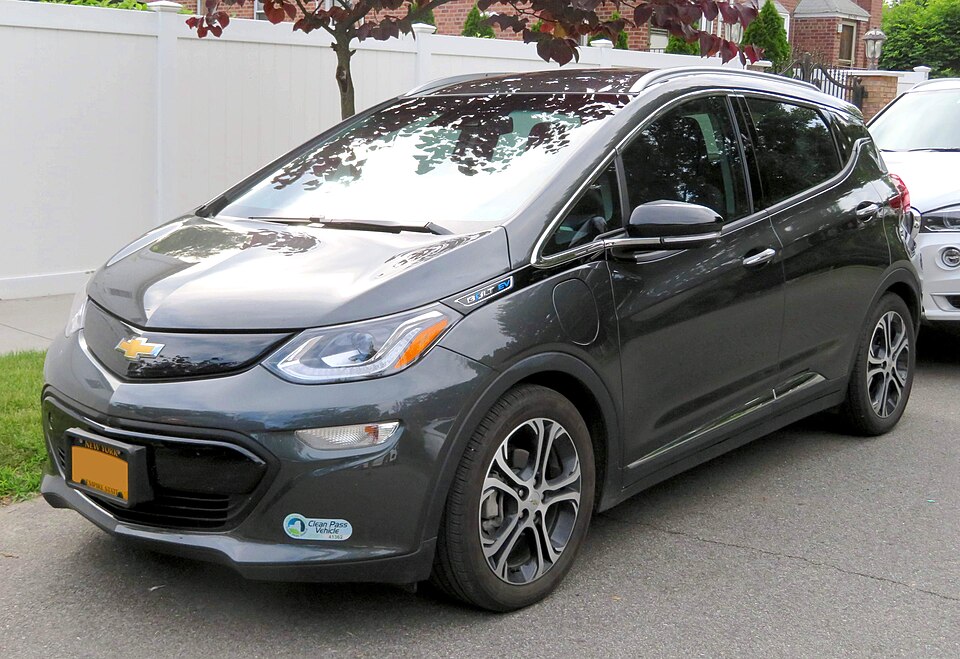
2018 Chevrolet Bolt EV

Electric
Small Station Wagons
1 EPA-rated configurations
Data refreshed 2026-09-11
F
Safety Signal
35 / 100 from the NHTSA recall record
Recalls4 critical5
Complaintsowner reports to NHTSA88
Crash ratingNHTSA overall5★
EV rangebest configuration, EPA238 mi
2023202220212020201920182017
Active NHTSA advisory: park outside and away from structures until repaired. Check your VIN at nhtsa.gov/recalls and see the recall details below.

The 2018 Chevrolet Bolt EV is sold in the U.S. as a electric wagon. Its longest-range version, the Bolt EV, is EPA-rated at 238 miles with 119 MPGe combined efficiency. NHTSA lists 5 recall campaigns for this model year, 4 rated critical, which gives it a Safety Signal grade of F. Owners have filed 88 complaints, most often about the steering. NHTSA crash-tested it at 5 stars overall.

Specs & fuel economy

Source: EPA fueleconomy.gov
ConfigurationPowertrainDriveEngine / motorCityHwyCombRangekWh/100miCharge (240V)Annual fuel*
Bolt EVElectricFWD150 kW ACPM128110119 MPGe238 mi28.39.3 h$650

*EPA estimate at 15,000 miles/year at EPA reference fuel and electricity prices. fueleconomy.gov record ids: 39786.

Factory warranty running out?

The 2018 Chevrolet Bolt EV is in the years where high-voltage electronics and module repairs land on the owner. Compare extended-coverage quotes in about two minutes.

Compare coverage →

Affiliate disclosure: some links on this page are affiliate links. If you request a quote or buy through them we may earn a commission at no extra cost to you. Nothing on this page changes because of it.

Recalls (5)

Source: NHTSA recall database
!critical

Structure

N232421970
6,771 vehicles
ProblemGeneral Motors, LLC (GM) is recalling certain 2017-2023 Chevrolet Bolt EV vehicles. This recall includes certain vehicles previously repaired incorrectly under NHTSA recall number 22V-930. After a crash with seat belt pretensioner deployment, the pretensioner exhaust may ignite carpet fibers near the B-pillar, causing a fire.RiskA fire increases the risk of injury.FixDealers will inspect both front seat belt pretensioners and, if necessary, install metal foil at the carpet near the pretensioner exhaust. Certain vehicles will also need a pretensioner cover installed. Repairs will be performed free of charge. Owner notification letters were mailed January 24, 2024. These vehicles were previously recalled for this same issue under recall number 22V-930 and will need to have the new remedy performed. Owners may contact GM EV Concierge at 1-833-EVCHEVY (1-83
NHTSA campaign 23V845000reported Dec 14, 2023General Motors, LLC
!critical

Seat Belts

N222383790
111,242 vehicles
ProblemGeneral Motors, LLC (GM) is recalling certain 2017-2023 Chevrolet Bolt EV vehicles. After a crash with seat belt pretensioner deployment, the pretensioner exhaust may ignite carpet fibers near the B-pillar, causing a fire.RiskA vehicle fire can increase the risk of injury.FixDealers will install metal foil at the carpet near the pretensioner exhaust, and install a pretensioner cover as necessary, free of charge. Owner notification letters were mailed between January 23, 2023 and April 25, 2023. Owners may contact Chevrolet customer service at 1-800-222-1020. GM's number for this recall is N222383790.
NHTSA campaign 22V930000reported Dec 15, 2022General Motors, LLC
!critical

Electrical System

N212343880
Park outside57,414 vehicles
ProblemGeneral Motors LLC (GM) is recalling certain 2017-2019 Chevrolet Bolt EV vehicles previously recalled under NHTSA recall number 20V-701. The high voltage battery could catch fire when charged to full or nearly full capacity.RiskA battery fire increases the risk of injury.FixOwners are advised to take the following interim steps: Activate either the Hill Top Reserve (2017 and 2018 models) or Target Charge Level (2019 models) feature in their vehicle to limit the charge level to 90%, charge their vehicle more frequently, avoid depleting the battery to 70 miles range remaining, park outside after charging, and do not charge the vehicle indoors overnight. Defective battery modules will be replaced by GM, free of charge. Interim notification letters notifying owners o
NHTSA campaign 21V560000reported Jul 23, 2021General Motors, LLC
!critical

Electrical System

N202311730
Park outside50,932 vehicles
ProblemGeneral Motors LLC (GM) is recalling all 2017-2018 and certain 2019 Chevrolet Bolt EV vehicles. The high voltage battery could catch fire when charged to full or nearly full capacity.RiskA battery fire increases the risk of injury.FixThis recall has been superseded by recall number 21V-560. Vehicles previously repaired under 20V-701 will still need to have the new remedy under recall 21V-560. GM will notify owners, and as an interim repair, beginning on November 17, 2020, dealers will reprogram the hybrid propulsion control module 2 (HPCM2) to limit the full charge to 90%, free of charge. Owners are advised to activate either the Hill Top Reserve (2017 and 2018 models) or Target Charge Level (2019 models) feature in their
NHTSA campaign 20V701000reported Nov 13, 2020General Motors LLC
high

Service Brakes, Hydraulic

18279
210,628 vehicles
ProblemGeneral Motors LLC (GM) is recalling certain 2018-2019 Chevrolet Equinox, Impala, Cruze, Volt and Bolt EV vehicles, GMC Terrain vehicles, Buick Lacrosse and Regal vehicles, Cadillac XTS and XTS Professional vehicles and 2018 Chevrolet Malibu vehicles. The rear brake caliper pistons may have an insufficient coating causing gas pockets to form, potentially reducing rear brake performance.RiskA reduction of braking performance can increase the risk of a crash.FixGM will notify owners, and dealers will bleed the vehicle's brake system, free of charge. The recall began October 11, 2018. Owners may contact Buick customer service at 1-800-521-7300, Cadillac customer service at 1-800-458-8006, Chevrolet customer service at 1-800-222-1020, or GMC customer service at 1-800-462-8782. GM's number for this recall is 18279.
NHTSA campaign 18V576000reported Aug 30, 2018General Motors LLC

NHTSA defect investigations

Equipment:Electrical — Electrical arcing and thermal events, potentially leading to fires, while utilizing Enel X Way USA, LLC's JuiceBox resid closed

On October 3, 2024, the Office of Defects Investigations (ODI) opened PE24028 to investigate alleged failures of Enel X Way's JuiceBox Level 2 residential EV chargers. The allegations were described as thermal incidents and electrical malfunctions, which could trip the circuit breakers in Juicebox owners’ homes and disrupt electric vehicle charge cycles. On October 2, 2024, Enel X Way posted on its website that Enel X Way North America would cease operations in the United States and Canada on October 11, 2024. The closure would potentially impact the charging app and supporting software. ODI sent Enel X Way an Information Request (IR) letter on October 21, 2024. Enel X Way provided an inco

Opened Oct 3, 2024 · closed Jun 5, 2025 · action PE24028

Electrical System:Propulsion System — Pedestrian alert sounds closed

NHTSA received a petition on or about July 18, 2022, requesting that Federal Motor Vehicle Safety Standard (FMVSS) 141 be applied to all electric and hybrid vehicles operating in the United States. The petition can be reviewed at NHTSA.gov under ODI Number 11486072. FMVSS 141 establishes performance requirements for pedestrian alert sounds for motor vehicles. The standard applies to hybrid and electric vehicles that have a gross vehicle weight rating of 4,536 KG or less or are defined as low-speed vehicles. The standard became fully applicable to all such vehicles manufactured on or after March 1, 2021.On January 27, 2023, NHTSA opened Defect Petition (DP) 22-005 to evaluate the subject matt

Opened Jan 27, 2023 · closed Aug 7, 2023 · action DP22005

Electrical System:Propulsion System:Traction Battery — Electric Vehicle Battery Fires closed

In October 2020, the Office of Defects Investigation (ODI) opened a Preliminary Evaluation (PE) on 2017-2020 Model Year (MY) Chevrolet Bolt vehicles based on complaints received alleging that the vehicles caught fire under the seating area while parked and unattended. At the time, ODI had received 2 Vehicle Owner Questionnaires (VOQs) and several field reports. All complaints alleged vehicles caught fire during or after electrical charging.ODI's review found vehicle thermal events occurred during and/or at the end of the battery module charging cycle. The information learned from NHTSA and General Motors joint vehicle inspections prompted General Motors to file Recall 20V-701 on April 29, 20

Opened Oct 9, 2020 · closed Feb 7, 2022 · action PE20016

Owner complaints

Source: NHTSA complaint database
88complaints filed

2 involved a crash · 1 a fire · 2 injuries · 0 deaths reported

Filed per year: 2018: 2 · 2019: 5 · 2020: 3 · 2021: 26 · 2022: 14 · 2023: 9 · 2024: 6 · 2025: 14 · 2026: 9

Most-cited components

Steering37
Electrical System30
Power Train12
Fuel/Propulsion System11
Unspecified8
Service Brakes7

What owners describe

“Driving curvy mountain road and the steering wheel fails to return to center. Nearly caused a terrible accident.”Sep 25, 2021 · Steering · NHTSA owner report
“The contact leased a 2018 Chevrolet Bolt EV. The contact received notification of NHTSA Campaign Number: 21V560000 (Electrical System) however, the part to do the recall repair was unavailable. The local dealer was contacted and referred the contact to the manufacturer. The contact stated that the manufacturer had exce…”Sep 13, 2021 · Electrical System · NHTSA owner report
“Steering on this vehicle failed at less than 40,000 miles. Car is almost uncontrollable and drifts off the road; steering now requires enormous force to maintain a straight course.”Aug 21, 2021 · Steering · NHTSA owner report

Complaint counts are raw owner reports to NHTSA, not verified defects, and scale with how many were sold. Use them to spot patterns, not to rank.

Crash ratings

Source: NHTSA NCAP
ConfigurationOverallFrontalSideRolloverRollover risk
5 HB FWD★★★★★★★★★☆★★★★★★★★★★10%

NHTSA New Car Assessment Program.

Other Bolt EV model years

Sources & method

Safety Signal starts every model-year at 100 and subtracts points per open NHTSA recall campaign by severity: critical 15 (fire risk, park-outside or do-not-drive advisories), high 8 (brakes, steering, airbags, loss of drive power, structure, battery), moderate 6, minor 3 (software, labels, lighting fixed by an update). Floor 35. A ≥ 90, B ≥ 80, C ≥ 70, D ≥ 60, otherwise F. Complaint counts and NHTSA crash ratings are shown separately and are not blended into the grade.

EPA figures come from fueleconomy.gov vehicle records. Recalls, complaints, investigations and crash ratings come from NHTSA's public flat files, refreshed weekly.

JSON for this page · API