⌘K
Your vehicleHome›Mazda›Mazda6› 2018
Mazda · Midsize Sedan

2018 Mazda Mazda6

Gas
Midsize Cars
3 EPA-rated configurations
Data refreshed 2026-10-26
B
Safety Signal
85 / 100 from the NHTSA recall record
RecallsNHTSA campaigns 2
Complaints1 crash · 1 fire · 1 injured reported 58
Crash ratingNHTSA overall 5★
Fuel economybest combined, EPA 29 mpg
202120202019201820172016

The 2018 Mazda Mazda6 is sold in the U.S. as a gas midsize sedan with 3 EPA-rated configurations. The most efficient version, the 6, is EPA-rated at 29 mpg combined. NHTSA lists 2 recall campaigns for this model year, which gives it a Safety Signal grade of B. Owners have filed 58 complaints, most often about the engine. NHTSA crash-tested it at 5 stars overall.

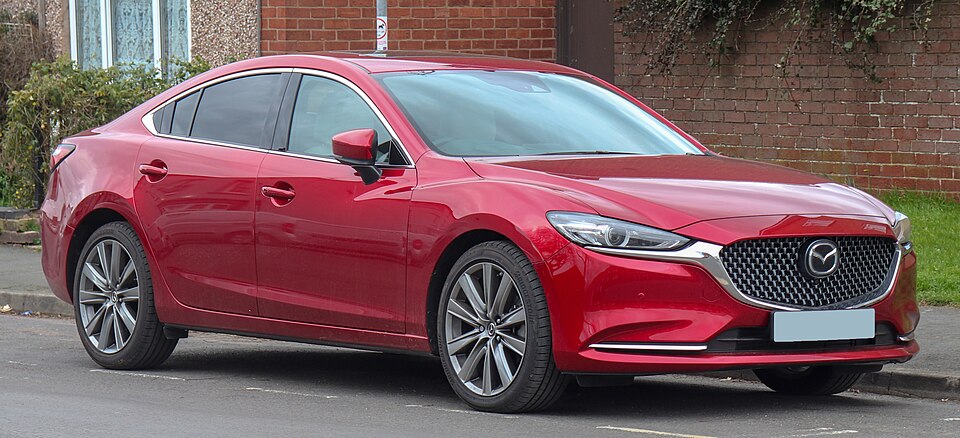
Mazda6 — photograph via Wikimedia Commons
Mazda6 · Photo: Vauxford · CC BY-SA 4.0 · Wikimedia Commons

Specs & fuel economy

Source: EPA fueleconomy.gov
ConfigurationPowertrainDriveEngine / motorCityHwyCombAnnual fuel*
6GasFWD2.5L 4-cyl263529$2,300
6GasFWD2.5L 4-cyl243327$2,500
6GasFWD2.5L 4-cyl turbo233126$2,600

*EPA estimate at 15,000 miles/year at EPA reference fuel and electricity prices. fueleconomy.gov record ids: 39846, 39845, 39847.

Emissions & certification

Source: EPA emission certificates
ConfigurationSmog ratingEmission standardWhere it can be sold newSmartWay
67 / 10California LEV-III SULEV30 / Federal Tier 3 Bin 30All 50 states (federal, all altitudes); California and states following California standards—
67 / 10Federal Tier 3 Bin 30 / California LEV-III SULEV30All 50 states (federal, all altitudes); California and states following California standards—
63 / 10Federal Tier 3 Bin 125 / California LEV-III ULEV125All 50 states (federal, all altitudes); California and states following California standards—

Certified for all fifty states, so it can be registered new anywhere in the U.S.

The smog rating scores tailpipe pollutants other than greenhouse gases, 1 (worst) to 10 (best), and is comparable only within a model year. The standard is the federal bin or California tier the configuration was certified to. Both come from the EPA certificate behind the window sticker.

Specifications filed with NHTSA

Source: NHTSA vPIC

Dimensions Exterior

Body styleSedan/Saloon
Doors4
GVWR classClass 1: 6,000 lb or less (2,722 kg or less)

Engine Basics

Cylinders4
Displacement2.5 L
Engine configurationIn-Line

Engine Output

Horsepower227 hp

Fuel Economy

FuelGasoline

Seating

Seating capacity5 seats

Transmission

DrivetrainFWD/Front-Wheel Drive
TransmissionAutomatic
Transmission speeds6

Driver assistance

Standard: Adaptive cruise control, Anti-lock brakes, Automatic emergency braking, Backup camera, Blind-spot monitoring, Electronic stability control, Forward collision warning, Lane departure warning, Lane keeping assist, Parking assist

Filed by the manufacturer with NHTSA under the federal vehicle-identification rule and decoded from the VIN pattern — not a manufacturer press kit, so it describes the configurations we could identify rather than every trim (seen: Grand Touring, Grand Touring Reserve, Signature, Sport). Figures for the trim you are looking at may differ.

Dimensions & weight

Source: Transport Canada
Length192.5 in
Width (body, without mirrors)72.4 in
Height57.1 in
Wheelbase111.4 in
Track, front62.6 in
Track, rear62.2 in
Curb weight3,250 lb
Weight distribution, front/rear59/41

Measured by Transport Canada for its Canadian Vehicle Specifications database, which covers the North American versions of each model — here one configuration: 4-door Sedan. Where a range is shown, those versions differ. Width is the body without mirrors, which is why it can read narrower than a brochure figure. Before we used it we checked it against the US manufacturer press kits we hold (27 Sep 2026): wheelbase agreed within 1% on every vehicle we could compare, length on 98%, and the curb weight fell inside the manufacturer's range on 96%. Source dataset. Contains information licensed under the Open Government Licence – Canada. Licence.

Advertisement

Factory warranty running out?

The 2018 Mazda Mazda6 is in the years where transmission, electronics and drivetrain repairs land on the owner. What an extended plan does and does not cover is worth reading before a dealer quotes you one.

What to check before you buy →

Affiliate disclosure: some links on this page are affiliate links. If you request a quote or buy through them we may earn a commission at no extra cost to you. Nothing on this page changes because of it.

Recalls (2)

Source: NHTSA recall database
▲high

Fuel System, Gasoline

5321K
121,038 vehicles 86% reported repaired
Problem Mazda North American Operations (Mazda) is recalling certain 2018 Mazda3, Mazda6, 2019 CX-3, 2018-2019 MX-5, CX-5, CX-9, and 2019-2020 Mazda2 vehicles. The impeller inside the low-pressure fuel pump may crack and deform, potentially causing the fuel pump to fail. Risk Fuel pump failure may cause an engine stall, increasing the risk of a crash. Fix Dealers will replace the fuel pumps, free of charge. Owner notification letters were mailed July 18, 2022. Owners may contact Mazda customer service at 1-800-222-5500 Option 4. Mazda's number for this recall is 5321K.
NHTSA campaign 21V875000 reported Nov 12, 2021 Mazda North American Operations the full filing, and every vehicle covered →
▲high

Power Train

3719F
262,220 vehicles 93% reported repaired built Jan 15, 2018 – Apr 22, 2019
Problem Mazda North American Operations (Mazda) is recalling certain 2018-2019 CX-5, Mazda6, and 2019 Mazda3 vehicles. A software error in the powertrain control module (PCM) may cause the engine to stall. Risk An unexpected stall increases the risk of a crash. Fix Mazda will notify owners, and dealers will reprogram the PCM software, free of charge. The recall began August 20, 2019. Owners may contact Mazda customer service at 1-800-222-5500, option 4. Mazda's number for this recall is 3719F.
NHTSA campaign 19V497000 reported Jun 27, 2019 Mazda North American Operations the full filing, and every vehicle covered →

These are vehicle campaigns — the ones the automaker filed against this model. NHTSA also records equipment recalls, filed by a parts maker against a component (a tyre, a child seat, an aftermarket part), and those are not listed here or counted above. nhtsa.gov/recalls shows both for a VIN.

Whether any of this applies to one specific Mazda6

A campaign covers a build range, not a model year, so two identical-looking cars from 2018 can differ. Both of these check a VIN against the manufacturer’s own list, free, in about ten seconds. Mazda publishes its own lookup because federal rule 49 CFR 573.15 requires it to, and to keep it current to within seven days.

Hear about a recall before the letter does

The manufacturer’s letter is the last step of a recall: it has up to 60 days after filing to mail owners, at the address on the registration. We email you the day NHTSA posts a recall on the 2018 Mazda Mazda6, with what to do next. Nothing else, ever — no newsletter, no marketing, one-click unsubscribe in every message.

Advertisement

Parts & accessories for the 2018 Mazda Mazda6

Search by fitment on eBay Motors — OEM take-offs, aftermarket, and the trim pieces dealers no longer stock. The listing and the price are the seller's.

Find parts for this Mazda6 →

Owner complaints

Source: NHTSA complaint database
58complaints filed

1 involved a crash · 1 a fire · 1 injuries · 0 deaths reported

18 per 10,000 built · Mazda reported 32,933 Mazda6 built (its Early Warning production report to NHTSA)

Filed per year: 2019: 6 · 2020: 4 · 2021: 4 · 2022: 6 · 2023: 7 · 2024: 12 · 2025: 9 · 2026: 10

Most-cited components

Engine 32
Unspecified 9
Power Train 9
Fuel/Propulsion System 7
Electrical System 4
Service Brakes 4

In owners' own words

Filed with NHTSA by the people who own these cars, one per problem area. Quoted as written, with anything identifying removed.

The engine has developed an oil leak that is a known manufacturing defect of Mazda 2.5 litre engines TSB #SA-031-21. The oil drips on the hot exhaust and sends smoke into the cabin and probably could start a fire. Also if the engine runs out of oil, it will cause the car to shut off and stall in traffic
Engine Feb 7, 2024 NHTSA owner report · ODI 11570493
Was at a drive in window and car turned off and couldn't restart. Windows and lights would work but car wouldn't restart. Could of been driving and would of crashed. Had 3 people family in car. It was 9 pm had to have towed to nearest auto mechanic place 150.00. They are diagnosing and that is 186.00.
Electrical System Dec 14, 2023 NHTSA owner report · ODI 11560045
The contact owns a 2018 Mazda Mazda6. The contact stated that he had experienced a transmission surged on five separate occasions since owning the vehicle. There were no warning lights illuminated.
Power Train at 10,000 miles Aug 12, 2022 NHTSA owner report · ODI 11478968
The contact owns a 2018 Mazda Mazda6. The contact received notification of NHTSA Campaign Number: 21V875000 (Fuel System, Gasoline) however, the part to do the recall repair was not yet available. The dealer was made aware of the issue; however, the contact was informed that the parts were not yet available.
Fuel/Propulsion System at 49,000 miles Apr 14, 2022 NHTSA owner report · ODI 11460796
After only 3 years and less than 17,000 miles of driving, the soul red crystal metallic paint is chipping in many spots on the front of the body. There are at least 100 small chips on the hood, bumper, and front fenders. All of this occurred under normal driving conditions
Structure May 24, 2021 NHTSA owner report · ODI 11418333
The driver side mirror vibrates at highway speeds making it extremely hard to see what's in the glass
Visibility/Wiper at 15,000 miles Mar 31, 2021 NHTSA owner report · ODI 11405758

Complaint counts are raw owner reports to NHTSA, not verified defects, and scale with how many were sold. Use them to spot patterns, not to rank.

Reported by Mazda itself: 7 death-or-injury claims on this model year in its quarterly Early Warning reports to NHTSA (49 CFR 579.21): 7 injured, as claimed, not verified — about 21 per 100,000 built. Every Mazda6 model year, by year and system → Dated and by system, they are exhibit F of the defect dossier.

When owners reported it

Reported at 11k

miles, typically

Half the 15 owner reports with an odometer reading on file fall between 8,000 and 26,000 miles. That is when problems get reported, which is not the same as when they start — and not a failure rate, because nobody knows how many of these cars never had a problem at all.

Too few readings for a curve — the 15 on file: 5 under 10k, 5 10k–20k, 2 20k–30k, 1 40k–50k, 1 60k–70k, 1 70k–80k.

Odometer readings as filed by owners with NHTSA. Readings under 100 or over 400,000 miles are dropped as data entry rather than history, and a component needs at least 12 readings before a median is shown for it.

Crash ratings

Source: NHTSA NCAP
ConfigurationOverallFrontalSideRolloverRollover risk
4 DR FWD★★★★★★★★★★★★★★★★★★★☆10%

NHTSA New Car Assessment Program. Standard driver-assist: automatic emergency braking.

Service bulletins & campaigns

Source: NHTSA manufacturer communications
Extended coverage on file 4 filings by the manufacturer with NHTSA naming this model year

The term and the vehicles it covers are the manufacturer’s, as NHTSA’s summary of each filing states them; a dealer checks one particular car by its VIN. Every Mazda warranty extension (9) → · Every warranty extension on file, all makes →

Communicationsfiled with NHTSA 549
Most recentmanufacturer date 2026-09-11
Kindsas classified by NHTSA 504 service bulletins, 37 warranty extensions, 8 others

Most often about: Equipment, Engine, Electrical System, Power Train, Unknown Or Other.

  • SA-041-26a Service bulletin
    2026-09-11 · Electrical System
  • DESCRIPTION If you encounter any type of electrical concern (e.g, dead battery, engine no start, DTC(s) stored...), interview the customer before proceeding with normal MGSS diagnosis by asking if any aftermarket devices have been installed. Aftermarket devices may be the cause of the electrical concern. Below are a few examples of unusual electrical concerns caused by aftermarket devices. Example
  • SA-041-26 Service bulletin
    2026-06-19 · Engine
  • This SA supersedes the previously issued SA(s) listed below. The changes are noted in Red. SA-061/25 12/17/25 DESCRIPTION If you encounter any type of electrical concern (e.g, dead battery, engine no start, DTC(s) stored...), interview the customer before proceeding with normal MGSS diagnosis by asking if any aftermarket devices have been installed. Aftermarket devices may be the cause of the elec
  • 01-008-26 Service bulletin
    2026-05-01 · Power Train
  • This bulletin supersedes the previously issued bulletin(s) listed below. The changes are noted in Red. 01-008/23 06/05/23 Some vehicles may exhibit rattling noises from the engine compartment and oil leakage from the drive belt auto tensioner. This may be caused by insufficient sealing at the drive belt auto tensioner damper when the auto tensioner fully operates under both high ambient temperat
  • SA-031-26 Service bulletin
    2026-04-30 · Unknown Or Other
  • DESCRIPTION Some vehicles may require the replacement of a damaged VIN plate or vehicle certification label. To obtain a replacement VIN plate (bulkhead-mounted and visible through the lower-left area of the windshield), contact DAG (Dealer Assistance Group) using VIN Plate Request Form available on One Mazda. To obtain a replacement vehicle certification label (located on the B􀀀pillar or front do
  • SA-029-26 Service bulletin
    2026-04-21 · Engine
  • This Service Alert supersedes the previously issued SA listed below: The changes are noted in Red. SA-011/24 02/12/24, 06/06/24, 07/29/24 DESCRIPTION Mazda has developed factory recommended scheduled maintenance services that support all major vehicle systems. Mazda recommends dealers follow the scheduled maintenance tables as cited in the vehicle-specific workshop manual or owner's manual. Servic
  • SA-026-26 Service bulletin
    2026-04-16 · Engine
  • This Service Alert supersedes the previously issued M-Tip(s) listed below. The changes are noted in Red text. MT-002/19 09/30/19 and 12/19/19 DESCRIPTION If an engine assembly is replaced after a catastrophic internal mechanical failure, clean the intake manifold internally before installing a replacement engine assembly. If the intake manifold is not cleaned properly, the replacement engine may f
  • SA-021-26 Service bulletin
    2026-04-04 · Structure — Body
  • This Service Alert supersedes the previously issued SAs and bulletin(s) listed below: The changes are noted below in red. SA-010/23 02/09/23 DESCRIPTION Some customers may experience one or more electrical malfunctions after a vehicle body repair. A newly painted fender stay (2) may be causing a poor front harness (1) ground connection. The front fender stay (2) newly painted surface at ground poi
  • SA-014-26 Service bulletin
    2026-03-11 · Engine
  • This Service Alert supersedes the previously issued SA(s) and TSB(s) listed below: The changes are noted in Red. SA-035/24 05/31/24 DESCRIPTION There is a concern that some water pumps are being replaced that are not faulty, due to signs of a very small coolant leak from the bleed hole. This Service Alert is to inform you about the water pump sealing mechanism and the criteria if replacement is ne

A service bulletin is the manufacturer telling its dealers how to diagnose or repair a known condition. It is not a recall, not a finding that the vehicle is defective, and the work is not automatically free — though a bulletin is often what a dealer works from when you describe a symptom, so quoting the document number can save a diagnosis. The count is every communication filed; the list shows the most recent, one entry per campaign, because a single campaign is usually filed as several documents on the same day. The summaries are NHTSA's; the full documents come from the manufacturer.

Diagnostic trouble codes on file

Source: NHTSA manufacturer communications and complaints

Codes documented against this model year in the federal record. A code appearing here does not mean this vehicle will set it — it means the code is part of this nameplate-year's documented history.

CodeWhat it meansMost often filed underWhere it appears
P0126
P0126 on Mazda →
Manufacturer-defined — the meaning is set by the automaker, not the standard.Engine35 bulletins
P0524
P0524 on Mazda →
Engine oil pressure has been measured below the safe limit.Engine10 bulletins
U3000
U3000 on Mazda →
Manufacturer-defined — the meaning is set by the automaker, not the standard.Electrical System · Battery →8 bulletins
C1001
C1001 on Mazda →
Manufacturer-defined — the meaning is set by the automaker, not the standard.Forward Collision Avoidance7 bulletins
P2B61
P2B61 on Mazda →
Manufacturer-defined — the meaning is set by the automaker, not the standard.Engine7 bulletins
P3400
P3400 on Mazda →
Manufacturer-defined — the meaning is set by the automaker, not the standard.Engine7 bulletins
P055F
P055F on Mazda →
Manufacturer-defined — the meaning is set by the automaker, not the standard.Engine6 bulletins
P0780
P0780 on Mazda →
Manufacturer-defined — the meaning is set by the automaker, not the standard.Power Train5 bulletins · 1 owner report
B14F0
B14F0 on Mazda →
Manufacturer-defined — the meaning is set by the automaker, not the standard.Equipment Adaptive/Mobility5 bulletins
P061B
P061B on Mazda →
Manufacturer-defined — the meaning is set by the automaker, not the standard.Power Train5 bulletins
P0842
P0842 on Mazda →
Manufacturer-defined — the meaning is set by the automaker, not the standard.Power Train5 bulletins
P0847
P0847 on Mazda →
Manufacturer-defined — the meaning is set by the automaker, not the standard.Power Train5 bulletins

Generic codes (the second character is 0 or 2) mean the same thing on every vehicle sold in the United States. Manufacturer-specific codes (1 or 3) mean whatever the automaker assigned, and no honest source can define them for you — which is why the ones here carry the evidence instead of a definition. A code is a link when enough separate federal documents name it across the catalogue to be worth a page of its own; the rest are listed here, where the vehicle is the context that makes them mean something.

Affiliate disclosure: some links on this page are affiliate links. If you request a quote or buy through them we may earn a commission at no extra cost to you. Nothing on this page changes because of it.

At the New York inspection station

Source: New York State DMV

In New York’s inspection lanes over the 12 months to Oct 10, 2026, the 2018 Mazda Mazda6 failed the emissions check on 1.8% of first inspections — lower than the 3.0% for every 2018 model-year vehicle inspected; and the safety inspection on 2.7% (every 2018 vehicle: 1.9%).

New York inspections 1.8%

failed emissions

818 initial inspections of 804 vehicles.

MeasureThe 2018 Mazda6Every 2018 vehicleBehind it
Failed the emissions check1.8%3.0%814
Failed the safety inspection2.7%1.9%818
Air-bag warning lamp stayed lit0%0.22%818
Miles driven a year9,14610,002odometer at inspection
Average odometer75,72882,833odometer at inspection

New York’s emissions test on these model years is an on-board diagnostics check: it fails a car whose check-engine light is on or whose self-tests have not finished. First inspections only, so a car that failed and came back is counted once; private and special plates, not taxis, livery or commercial plates. A rate appears only where at least 200 inspections stand behind it. “Every 2018 vehicle” is every 2018 model-year car, SUV and pickup inspected in the same window, all makes. This is the state’s record of test results, not a reliability score by itself. Source: New York State Department of Motor Vehicles, Vehicle Inspections (data.ny.gov, Open NY terms).

Common questions about the 2018 Mazda6

Source: EPA, NHTSA and manufacturer press kits

Does the 2018 Mazda Mazda6 have any recalls?

NHTSA has posted 2 recall campaigns for the 2018 Mazda Mazda6. The most serious on file is 21V875000, covering Fuel System, Gasoline. Check your own VIN at nhtsa.gov/recalls; a recall applies to specific build ranges, not every car.

How safe is the 2018 Mazda Mazda6?

NHTSA gave the 2018 Mazda Mazda6 5 stars overall in its New Car Assessment Program tests — 5-star frontal crash, 5-star side crash, 4-star rollover. WhichTrim also grades it B (85/100) on its recall record, which is a different question from crash protection.

What is the fuel economy of the 2018 Mazda Mazda6?

Across the 3 EPA-rated configurations of the 2018 Mazda Mazda6, the best EPA combined figure is 29 mpg. Figures are the EPA's own, per configuration, and every one is listed above.

What are the dimensions of the 2018 Mazda Mazda6?

Transport Canada measured it at 192.5 in long, 72.4 in wide (body, without mirrors), 57.1 in tall, on a 111.4 in wheelbase. Curb weight: 3,250 lb. Those are its measurements of the North American versions; every figure is in the table above.

What do owners complain about on the 2018 Mazda Mazda6?

Owners have filed 58 complaints with NHTSA about the 2018 Mazda Mazda6, most often about engine, unspecified, power train. Of those, 1 involved a crash, 1 a fire, 1 reported injuries. Complaints are unverified owner reports, so treat the pattern as a signal and the individual report as an anecdote.

How clean is the 2018 Mazda Mazda6?

The EPA smog rating for the 2018 Mazda Mazda6 runs 3 to 7 out of 10 across its configurations. That score covers tailpipe pollutants other than greenhouse gases, and it only compares vehicles within the same model year. It is certified for all fifty states, so it can be registered new anywhere in the U.S. Its configurations were certified to different standards — California LEV-III SULEV30, California LEV-III ULEV125, Federal Tier 3 Bin 125, Federal Tier 3 Bin 30 — which the table above lists per configuration.

Are there service bulletins for the 2018 Mazda Mazda6?

The manufacturer has filed 549 service bulletins and related communications with NHTSA for the 2018 Mazda Mazda6, most often covering equipment, engine, electrical system. The most recent is dated 2026-09-11. A bulletin is not a recall: it is the repair procedure a manufacturer sends its dealers for a condition it knows about, and the work is not automatically paid for. It is still worth knowing — if the symptom matches, quoting the bulletin number at the service desk can save a diagnosis. The document numbers and summaries are listed above.

How does the 2018 Mazda Mazda6 do at state inspection?

In New York’s inspection lanes over the 12 months to Oct 10, 2026, the 2018 Mazda Mazda6 failed the emissions check on 1.8% of first inspections — lower than the 3.0% for every 2018 model-year vehicle inspected; and the safety inspection on 2.7% (every 2018 vehicle: 1.9%). The figures are New York State DMV’s own inspection records, first inspections only, and the table above sets each one against every vehicle of the same model year.

What we hold, and what an empty row means

Paid vehicle-history reports will not tell you the difference between “nothing happened to this car” and “we never received that record” — both of the big two say as much in their own help pages. Most of what is on this page comes from complete federal registers, so we can tell you which is which, row by row.

DataHeldSourceWhat it covers — or what empty means
Fuel economy & configurations3 configurationsEPA certification recordsEvery configuration the EPA certified for sale, with its own test figures.
Emission certificates3 configurationsEPA emission certificatesSmog rating, standard and the sales area that decides where the car can be sold new.
Recalls2NHTSA recall campaignsA complete federal register: every campaign covering this model year, with severity and advisory flags.
Owner complaints58NHTSA complaint databaseAlso complete, but unverified: these are reports owners filed, not findings. Counts scale with how many were sold.
Crash ratings1 testedNHTSA NCAPOnly the configurations NHTSA chose to crash-test, which is never all of them.
Service bulletins549NHTSA manufacturer communicationsEverything the manufacturer told its dealers about a defect or malfunction, short of a recall.
InvestigationsnoneNHTSA Office of Defects InvestigationNo defect investigation has been opened.
Driver-assist crash reportsnoneNHTSA Standing General Order 2021-01No report has been filed. Only entities named in the order report, and only crashes they hear of — so this is also what an unequipped car, or a manufacturer without telematics, looks like.
Specifications filed with NHTSA12 fieldsNHTSA vPIC, decoded from VIN patternsWhat the manufacturer filed under the federal VIN rule — a configuration, not the full trim ladder.
Measured dimensions7 fieldsTransport Canada, Canadian Vehicle SpecificationsLength, width, height, wheelbase, track and curb weight, measured on the North American versions.
Trims, pricing & equipmentnoneManufacturer press kitWe have not transcribed a press kit for this model year yet. This is our gap, not the manufacturer's — the one row here where an empty cell means we are behind.

Rebuilt nightly; this page was generated 2026-10-26. Every figure above is traceable to the source named beside it, and the JSON for this page carries the same values with their identifiers.

Sources & method

Safety Signal starts every model-year at 100 and subtracts points per open NHTSA recall campaign by severity: critical 15 (fire risk, park-outside or do-not-drive advisories), high 8 (brakes, steering, airbags, loss of drive power, structure, battery), moderate 6, minor 3 (software, labels, lighting fixed by an update). The most serious recall counts in full and each further one counts 85% of the one before, because a vehicle sold in millions is recalled more often than a rare one without being more dangerous — and because a flat subtraction bottomed the scale out, scoring a vehicle with 22 recalls within a point of one with six. A ≥ 90, B ≥ 80, C ≥ 70, D ≥ 60, otherwise F. Read it as what it counts: recall campaigns on the federal record, weighted by severity. The damping reduces the sales bias by roughly 40% but does not remove it: like our complaint counts, this is not normalized by how many were sold, so a best-seller still scores somewhat worse than an obscure model with the same real risk. NHTSA crash ratings, do-not-drive and park-outside advisories, and the crash, fire, injury and death counts in owner complaints are reported separately on every page and never blended into the letter — a vehicle can hold five stars and a poor letter at once, and where that happens we say so rather than leave you to notice. Because the scale subtracts from a clean sheet, a model year too new to have been recalled, complained about or bulletined scores full marks on an empty record; we label those grades provisional rather than present them as earned.

EPA figures come from fueleconomy.gov vehicle records. Recalls, complaints, investigations and crash ratings come from NHTSA's public flat files, refreshed nightly.

JSON for this page · API