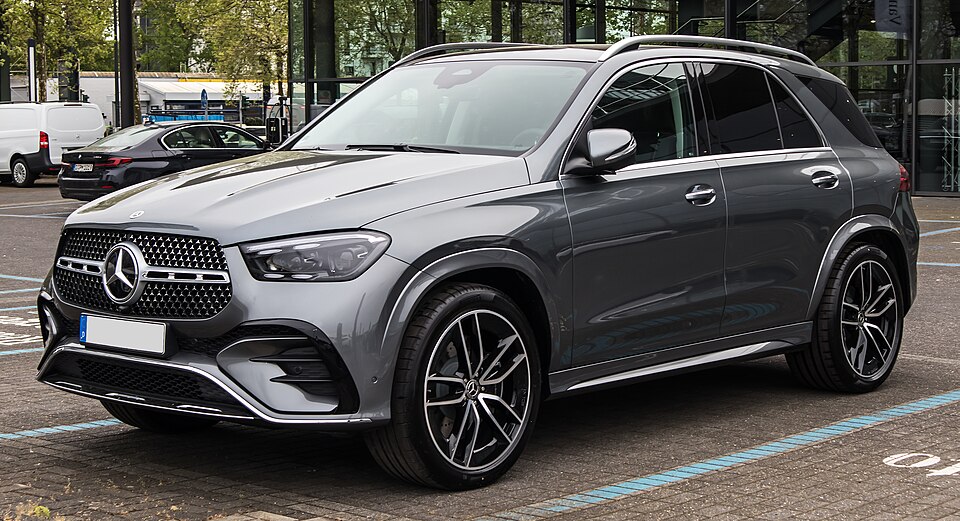
2016 Mercedes-Benz GLE-Class
The 2016 Mercedes-Benz GLE-Class is sold in the U.S. as a plug-in hybrid, gas and diesel midsize or large SUV with 11 EPA-rated configurations. The most efficient version, the GLE350 d 4matic, is EPA-rated at 25 mpg combined. NHTSA lists 17 recall campaigns for this model year, 1 rated critical, which gives it a Safety Signal grade of F. Owners have filed 98 complaints, most often about the fuel/propulsion system.
Specs & fuel economy
Source: EPA fueleconomy.gov| Configuration | Powertrain | Drive | Engine / motor | City | Hwy | Comb | Range | kWh/100mi | Charge (240V) | Annual fuel* |
|---|---|---|---|---|---|---|---|---|---|---|
| GLE550e 4matic | Plug-in hybrid | 4WD | 3.0L 6-cyl turbo + 85 kW DCPM | 20 | 23 | 21 (25 MPGe blended) | 12 mi electric | 68 | 1.9 h | $3,700 |
| GLE350 | Gas | RWD | 3.5L 6-cyl | 18 | 23 | 20 | — | — | — | $3,900 |
| GLE400 4matic | Gas | 4WD | 3.0L 6-cyl turbo | 18 | 22 | 20 | — | — | — | $3,900 |
| GLE450 AMG Coupe | Gas | 4WD | 3.0L 6-cyl turbo | 17 | 23 | 20 | — | — | — | $3,900 |
| GLE350 4matic | Gas | 4WD | 3.5L 6-cyl | 18 | 22 | 19 | — | — | — | $4,100 |
| GLE350 4matic | Gas | 4WD | 3.5L 6-cyl | 18 | 22 | 19 | — | — | — | $4,100 |
| AMG GLE63 | Gas | 4WD | 5.5L 8-cyl turbo | 13 | 17 | 15 | — | — | — | $5,150 |
| AMG GLE63 S | Gas | 4WD | 5.5L 8-cyl turbo | 13 | 17 | 15 | — | — | — | $5,150 |
| AMG GLE63 S Coupe | Gas | 4WD | 5.5L 8-cyl turbo | 14 | 18 | 15 | — | — | — | $5,150 |
| GLE350 d 4matic | Diesel | 4WD | 3.0L 6-cyl turbo | 23 | 29 | 25 | — | — | — | $3,600 |
| GLE300 d 4matic | Diesel | 4WD | 2.1L 4-cyl turbo | 22 | 29 | 24 | — | — | — | $3,750 |
*EPA estimate at 15,000 miles/year at EPA reference fuel and electricity prices. fueleconomy.gov record ids: 37526, 36619, 36782, 36778, 36551, 36552, 36781, 36779, 36780, 36705.
Factory warranty running out?
The 2016 Mercedes-Benz GLE-Class is in the years where high-voltage electronics and module repairs land on the owner. Compare extended-coverage quotes in about two minutes.
Compare coverage →Affiliate disclosure: some links on this page are affiliate links. If you request a quote or buy through them we may earn a commission at no extra cost to you. Nothing on this page changes because of it.
Recalls (17)
Source: NHTSA recall databaseFuel System, Diesel
2023010002 & ...0003Structure
2021070010Communication
2019120008Suspension
2018070015Tires
2018010010Visibility
2018020002Steering
2017050013Air Bags
Suspension
Visibility
Air Bags
2016120004Exterior Lighting
2016100003Seats
2016090003Seat Belts
Electrical System
Power Train
MFR ID CodeNHTSA defect investigations
Electrical System:Propulsion System — Pedestrian alert sounds closed
NHTSA received a petition on or about July 18, 2022, requesting that Federal Motor Vehicle Safety Standard (FMVSS) 141 be applied to all electric and hybrid vehicles operating in the United States. The petition can be reviewed at NHTSA.gov under ODI Number 11486072. FMVSS 141 establishes performance requirements for pedestrian alert sounds for motor vehicles. The standard applies to hybrid and electric vehicles that have a gross vehicle weight rating of 4,536 KG or less or are defined as low-speed vehicles. The standard became fully applicable to all such vehicles manufactured on or after March 1, 2021.On January 27, 2023, NHTSA opened Defect Petition (DP) 22-005 to evaluate the subject matt
Opened Jan 27, 2023 · closed Aug 7, 2023 · action DP22005
Structure:Body:Roof And Pillars — Front Roof Panel Detachment closed
On January 8, 2021, after ongoing review with Mercedes Benz, the National Highway Traffic Safety Administration (NHTSA) Office of Defects Investigation (ODI) opened PE21-001 to assess allegations of front roof panel detachments while driving at highway speeds in certain 2015 Mercedes-Benz (Mercedes) C-Class vehicles.The subject front roof panel is a stationary panel composed of polycarbonate and is attached to the vehicle via adhesive at the time of manufacture. The panel is found on subject vehicles equipped with panoramic sunroofs. Over time, the subject panels may exhibit cosmetic degradation leading to replacement of the panel, a procedure which entails: removal of the old panel and adhe
Opened Jan 8, 2021 · closed Oct 14, 2021 · action PE21001
Owner complaints
Source: NHTSA complaint database10 involved a crash · 4 a fire · 5 injuries · 0 deaths reported
Filed per year: 2016: 4 · 2017: 13 · 2018: 8 · 2019: 5 · 2020: 8 · 2021: 12 · 2022: 8 · 2023: 9 · 2024: 16 · 2025: 12 · 2026: 3
Most-cited components
What owners describe
Complaint counts are raw owner reports to NHTSA, not verified defects, and scale with how many were sold. Use them to spot patterns, not to rank.
Crash ratings
Source: NHTSA NCAP| Configuration | Overall | Frontal | Side | Rollover | Rollover risk |
|---|---|---|---|---|---|
| SUV 4WD | not rated | not rated | not rated | ★★★★☆ | 18% |
| SUV RWD | not rated | not rated | not rated | ★★★★☆ | 20% |
NHTSA New Car Assessment Program.
Other GLE-Class model years
2026 Mercedes-Benz GLE-Class
3 recalls · 10 complaints
C2025 Mercedes-Benz GLE-Class
3 recalls · 29 complaints
F2024 Mercedes-Benz GLE-Class
5 recalls · 37 complaints
F2023 Mercedes-Benz GLE-Class
5 recalls · 31 complaints
F2022 Mercedes-Benz GLE-Class
11 recalls · 70 complaints
F2021 Mercedes-Benz GLE-Class
22 recalls · 88 complaints
F2020 Mercedes-Benz GLE-Class
35 recalls · 121 complaints
D2019 Mercedes-Benz GLE-Class
6 recalls · 30 complaints
F2018 Mercedes-Benz GLE-Class
9 recalls · 55 complaints
F2017 Mercedes-Benz GLE-Class
12 recalls · 71 complaints
Sources & method
Safety Signal starts every model-year at 100 and subtracts points per open NHTSA recall campaign by severity: critical 15 (fire risk, park-outside or do-not-drive advisories), high 8 (brakes, steering, airbags, loss of drive power, structure, battery), moderate 6, minor 3 (software, labels, lighting fixed by an update). Floor 35. A ≥ 90, B ≥ 80, C ≥ 70, D ≥ 60, otherwise F. Complaint counts and NHTSA crash ratings are shown separately and are not blended into the grade.
EPA figures come from fueleconomy.gov vehicle records. Recalls, complaints, investigations and crash ratings come from NHTSA's public flat files, refreshed weekly.