⌘K
HomeMercedes-BenzCLS-Class2018
Mercedes-Benz · Compact car

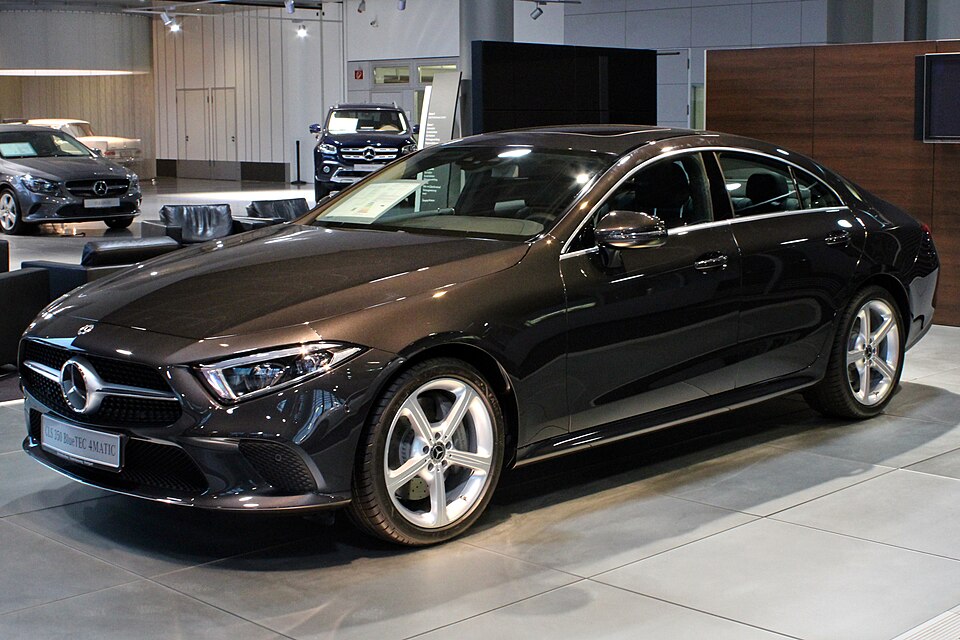
2018 Mercedes-Benz CLS-Class

Gas
Compact Cars
3 EPA-rated configurations
Data refreshed 2026-09-11
A
Safety Signal
97 / 100 from the NHTSA recall record
RecallsNHTSA campaigns1
Complaintsowner reports to NHTSA0
Crash ratingNHTSA overall
Fuel economybest combined, EPA21 mpg
20232022202120202019201820172016

The 2018 Mercedes-Benz CLS-Class is sold in the U.S. as a gas compact car with 3 EPA-rated configurations. The most efficient version, the CLS550, is EPA-rated at 21 mpg combined. NHTSA lists 1 recall campaign for this model year, which gives it a Safety Signal grade of A.

Specs & fuel economy

Source: EPA fueleconomy.gov
ConfigurationPowertrainDriveEngine / motorCityHwyCombAnnual fuel*
CLS550GasRWD4.7L 8-cyl turbo182621$3,700
CLS550 4maticGas4WD4.7L 8-cyl turbo172520$3,900
AMG CLS63 S 4maticGas4WD5.5L 8-cyl turbo162218$4,300

*EPA estimate at 15,000 miles/year at EPA reference fuel and electricity prices. fueleconomy.gov record ids: 39390, 39391, 39392.

Factory warranty running out?

The 2018 Mercedes-Benz CLS-Class is in the years where transmission, electronics and drivetrain repairs land on the owner. Compare extended-coverage quotes in about two minutes.

Compare coverage →

Affiliate disclosure: some links on this page are affiliate links. If you request a quote or buy through them we may earn a commission at no extra cost to you. Nothing on this page changes because of it.

Recalls (1)

Source: NHTSA recall database
minor

Electrical System

2021020025
1,292,258 vehicles
ProblemMercedes-Benz USA, LLC (MBUSA) is recalling certain 2016 - 2021 CLA-Class, GLA-Class, GLE-Class, GLS-Class, SLC-Class, A-Class, GT-Class, C-Class, E-Class, S-Class, CLS-Class, SL-Class, B-Class, GLB-Class, GLC-Class, and G-Class vehicles. Please refer to the Part 573 report for specific vehicle model details. The software design of the communication module may fail to communicate the correct vehicle location for the emergency call system (eCall) in the event of a crash.RiskFailure of the eCall system may result in emergency responders being dispatched to the wrong location, increasing the risk of injury following a crash.FixMBUSA will notify owners, and the communication module software will be updated by a dealer, or through an over-the-air (OTA) update, free of charge. The recall began March 12, 2021. Owners may contact MBUSA customer service at 1-877-762-8267. MBUSA's number for this recall is 2021020025.
NHTSA campaign 21V058000reported Feb 5, 2021Mercedes-Benz USA, LLC

NHTSA defect investigations

Air Bags:Frontal:Passenger Side:Inflator Module — Desiccated Air Bag Inflator Rupture open

From 2000 through 2017, Takata produced millions of air bag inflators using two types of phase-stabilized ammonium nitrate ("PSAN") propellant -- propellant 2004 and propellant 2004L. After prolonged exposure to high temperature cycles and humidity, inflators using propellant 2004 can degrade, causing the propellant to burn too quickly when ignited. The rapid burning can cause the inflator to rupture during deployment, potentially causing serious or even fatal injury to vehicle occupants. See 2016 Blomquist Report at www.nhtsa.gov/sites/nhtsa.gov/files/documents/expert_report-hrblomquist.pdf.Consequently, all frontal inflators using propellant 2004 that do not contain a "desiccant" (a substa

Opened Sep 17, 2021 · action EA21002

Owner complaints

Source: NHTSA complaint database

No owner complaints on file with NHTSA for this model year.

Crash ratings

Source: NHTSA NCAP

NHTSA has not published 5-Star crash ratings for this model year.

Other CLS-Class model years

Sources & method

Safety Signal starts every model-year at 100 and subtracts points per open NHTSA recall campaign by severity: critical 15 (fire risk, park-outside or do-not-drive advisories), high 8 (brakes, steering, airbags, loss of drive power, structure, battery), moderate 6, minor 3 (software, labels, lighting fixed by an update). Floor 35. A ≥ 90, B ≥ 80, C ≥ 70, D ≥ 60, otherwise F. Complaint counts and NHTSA crash ratings are shown separately and are not blended into the grade.

EPA figures come from fueleconomy.gov vehicle records. Recalls, complaints, investigations and crash ratings come from NHTSA's public flat files, refreshed weekly.

JSON for this page · API