⌘K
Your vehicleHome›Hyundai›Kona› 2023
Active NHTSA advisory: park outside and away from structures until repaired. Check your VIN at nhtsa.gov/recalls and see the recall details below.
Hyundai · Compact SUV

2023 Hyundai Kona

Electric Gas
Small Sport Utility Vehicle 2WD
6 EPA-rated configurations
Data refreshed 2026-10-26
C
Safety Signal
78 / 100 from the NHTSA recall record
Recalls1 critical 2
Complaints4 crash · 3 injured reported 75
Crash ratingNHTSA overall 5★
EV rangebest configuration, EPA 258 mi
Fuel economybest combined, EPA 32 mpg
Starting MSRP12 trims · manufacturer $22,140
2027202620252024202320222021202020192018

The 2023 Hyundai Kona is sold in the U.S. as an electric and gas compact SUV with 6 EPA-rated configurations. Its longest-range version, the Kona Electric, is EPA-rated at 258 miles with 120 MPGe combined efficiency. NHTSA lists 2 recall campaigns for this model year, 1 rated critical, which gives it a Safety Signal grade of C. Owners have filed 75 complaints, most often about the electrical system. NHTSA crash-tested it at 5 stars overall. Manufacturer pricing runs from $22,140 to $41,550 across 12 trims.

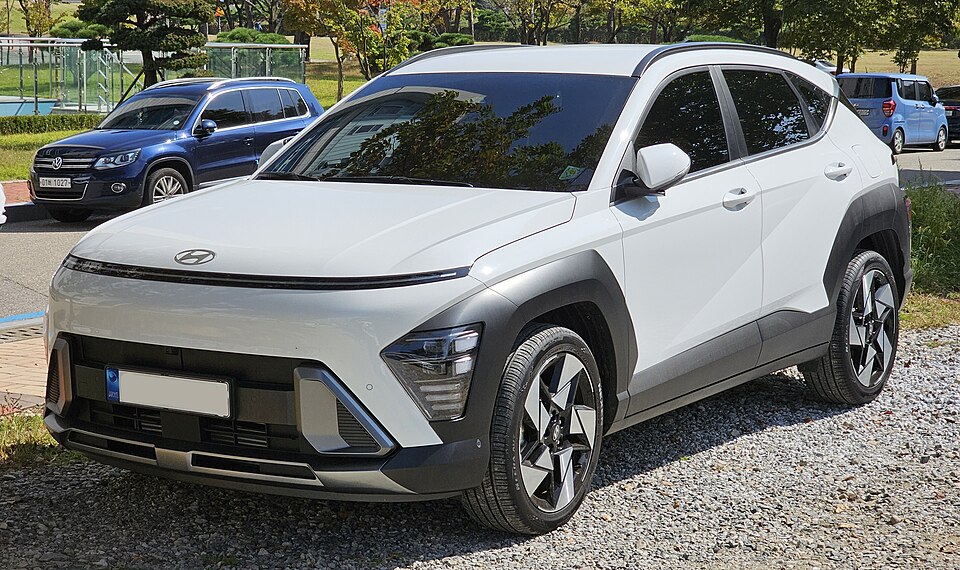
Hyundai Kona — photograph via Wikimedia Commons
Hyundai Kona · Photo: Damian B Oh · CC BY-SA 4.0 · Wikimedia Commons

Trims & pricing

Source: manufacturer press kitWhich trim should I buy? → Compare a trim →
TrimPowertrainDriveMSRPHPTorqueMPG combSeatsCargo (2nd row)Wheels
SEGasFWD$22,140147 hp132 lb-ft32 mpg519.2 cu-ft16 in
SEGasAWD$23,640147 hp132 lb-ft30 mpg519.2 cu-ft16 in
SELGasFWD$23,950147 hp132 lb-ft32 mpg519.2 cu-ft17 in
SELGasAWD$25,450147 hp132 lb-ft30 mpg519.2 cu-ft17 in
N LineGasFWD$27,850195 hp195 lb-ft32 mpg519.2 cu-ft18 in
N LineGasAWD$29,350195 hp195 lb-ft29 mpg519.2 cu-ft18 in
LimitedGasFWD$28,950195 hp195 lb-ft32 mpg519.2 cu-ft18 in
LimitedGasAWD$30,450195 hp195 lb-ft29 mpg519.2 cu-ft18 in
NGasFWD$34,950276 hp289 lb-ft23 mpg519.2 cu-ft19 in
Kona Electric SEElectricFWD$33,550201 hp291 lb-ft120 MPGe519.2 cu-ft17 in
Kona Electric SELElectricFWD$37,300201 hp291 lb-ft120 MPGe519.2 cu-ft17 in
Kona Electric LimitedElectricFWD$41,550201 hp291 lb-ft120 MPGe519.2 cu-ft17 in

MSRP excludes destination. Open a trim for the complete spec sheet and standard/optional equipment. Have the car in front of you? Decode its VIN to see which of these trims it is and what it was priced at.

Specs & fuel economy

Source: EPA fueleconomy.gov
ConfigurationPowertrainDriveEngine / motorCityHwyCombRangekWh/100miCharge (240V)Annual fuel*
Kona ElectricElectricFWDTBD134106120 MPGe258 mi27.59.5 h$600
Kona FWDGasFWD2.0L 4-cyl303532———$2,100
Kona FWDGasFWD1.6L 4-cyl turbo293532———$2,100
Kona AWDGasAWD2.0L 4-cyl283330———$2,250
Kona AWDGasAWD1.6L 4-cyl turbo273229———$2,300
Kona NGasFWD2.0L 4-cyl turbo202723———$3,550

*EPA estimate at 15,000 miles/year at EPA reference fuel and electricity prices. fueleconomy.gov record ids: 46000, 45323, 45375, 45325, 45324, 45536.

Emissions & certification

Source: EPA emission certificates
ConfigurationSmog ratingEmission standardWhere it can be sold newSmartWay
Kona Electric10 / 10Federal Tier 3 Bin 0 / California ZEVAll 50 states (federal, all altitudes); California and states following California standardsSmartWay Elite
Kona AWD, Kona FWD7 / 10Federal Tier 3 Bin 30 / California LEV-III SULEV30All 50 states (federal, all altitudes); California and states following California standards—
Kona AWD, Kona FWD5 / 10Federal Tier 3 Bin 70 / California LEV-III ULEV70All 50 states (federal, all altitudes); California and states following California standards—
Kona N3 / 10Federal Tier 3 Bin 125 / California LEV-III ULEV125All 50 states (federal, all altitudes); California and states following California standards—

Certified for all fifty states, so it can be registered new anywhere in the U.S.

The smog rating scores tailpipe pollutants other than greenhouse gases, 1 (worst) to 10 (best), and is comparable only within a model year. The standard is the federal bin or California tier the configuration was certified to. Both come from the EPA certificate behind the window sticker.

New-vehicle warranty

Source: manufacturer press kits, make-level
Basic 5 yr / 60,000 mi Powertrain 10 yr / 100,000 mi

As stated in Hyundai's press kits for the 2022–2023 model years (4 kits); this model year's own kit states no warranty terms, so the make's are shown. Confirm the term for this car with the dealer.

Advertisement

Factory warranty running out?

The 2023 Hyundai Kona is in the years where high-voltage electronics and module repairs land on the owner. What an extended plan does and does not cover is worth reading before a dealer quotes you one.

What to check before you buy →

Affiliate disclosure: some links on this page are affiliate links. If you request a quote or buy through them we may earn a commission at no extra cost to you. Nothing on this page changes because of it.

Recalls (2)

Source: NHTSA recall database
▲high

Fuel System, Gasoline

262-023G
54,647 vehicles 83% reported repaired built Oct 5, 2021 – Apr 25, 2023
Problem Hyundai Motor America (Hyundai) is recalling certain 2019-2022 Veloster N, 2019-2023 Genesis G70, 2022-2023 Elantra N, and Kona N vehicles. The fuel pump may fail, which can result in a loss of drive power. Risk A loss of drive power can increase the risk of a crash. Fix Dealers will update engine control module software. In addition, dealers will inspect and replace the fuel pump assembly, as necessary. All repairs will be performed free of charge. Owner notification letters were mailed beginning September 9, 2024. Some interim notification letters, notifying owners of the safety risk, were mailed September 3, 2024. Owners may contact Hyundai customer service at 1-855-371-9460. Hyundai's numbers for this recall are 262 and 023G.
NHTSA campaign 24V528000 reported Jul 11, 2024 Hyundai Motor America the full filing, and every vehicle covered →
!critical

Power Train

246
Park outside 52,109 vehicles 93% reported repaired
Problem Hyundai Motor America (Hyundai) is recalling certain 2023-2024 Palisade Tucson, 2023 Sonata, Elantra, and Kona vehicles. The electronic controller for the Idle Stop & Go oil pump assembly may contain damaged electrical components that can cause the pump controller to overheat. Risk An electric oil pump assembly that overheats increases the risk of a vehicle fire. Fix Owners are advised to park outside and away from structures until the recall repair is complete. Dealers will inspect and replace the electric oil pump controller, as necessary, free of charge. Owner notification letters were mailed starting September 7, 2023. Owners may contact Hyundai customer service at 1-855-371-9460. Hyundai's number for this recall is 246.
NHTSA campaign 23V526000 reported Jul 27, 2023 Hyundai Motor America the full filing, and every vehicle covered →

These are vehicle campaigns — the ones the automaker filed against this model. NHTSA also records equipment recalls, filed by a parts maker against a component (a tyre, a child seat, an aftermarket part), and those are not listed here or counted above. nhtsa.gov/recalls shows both for a VIN.

Whether any of this applies to one specific Kona

A campaign covers a build range, not a model year, so two identical-looking cars from 2023 can differ. Both of these check a VIN against the manufacturer’s own list, free, in about ten seconds. Hyundai publishes its own lookup because federal rule 49 CFR 573.15 requires it to, and to keep it current to within seven days.

Hear about a recall before the letter does

The manufacturer’s letter is the last step of a recall: it has up to 60 days after filing to mail owners, at the address on the registration. We email you the day NHTSA posts a recall on the 2023 Hyundai Kona, with what to do next. Nothing else, ever — no newsletter, no marketing, one-click unsubscribe in every message.

Advertisement

Parts & accessories for the 2023 Hyundai Kona

Search by fitment on eBay Motors — OEM take-offs, aftermarket, and the trim pieces dealers no longer stock. The listing and the price are the seller's.

Find parts for this Kona →

Owner complaints

Source: NHTSA complaint database
75complaints filed

4 involved a crash · 0 a fire · 3 injuries · 0 deaths reported

8.7 per 10,000 built · Hyundai reported 85,744 Kona built (its Early Warning production report to NHTSA)

Filed per year: 2022: 4 · 2023: 26 · 2024: 17 · 2025: 15 · 2026: 13

Most-cited components

Electrical System 31
Unspecified 20
Forward Collision Avoidance 15
Power Train 11
Engine 11
Vehicle Speed Control 7

In owners' own words

Filed with NHTSA by the people who own these cars, one per problem area. Quoted as written, with anything identifying removed.

The knock sensor on the engine fails when exposed to any amount of water. The car is designed in a way that lets on too much. It’s something that is VERY common amongst owners of these vehicles. It’s a safety flaw that needs to be fixed because it puts the car in “limp” mode. That makes the car instantly halt acceleration.
Engine Mar 10, 2024 NHTSA owner report · ODI 11576498
The horn has been replaced multiple times for failing without ANY warning. The service department at the Hyundai dealer said that this is a known problem for the horns. The horns short out because moisture builds up and damages the wiring, causing them to fail without warning.
Electrical System Feb 10, 2025 NHTSA owner report · ODI 11641784
Had left Costco and while driving away down road to intersection, the 2023 Kona SEL abruptly locked the brakes and briefly skidded, as it displayed Emergency Braking Activated message on display.
Forward Collision Avoidance Jan 30, 2024 NHTSA owner report · ODI 11568881
Car tends to jerk and almost jump when first pulling out of almost anywhere. Seems to have happened with other people with the same car. When you turn after pulling out sometimes, the car will jump and the suspension sounds like it’s jumping.
Suspension Nov 28, 2023 NHTSA owner report · ODI 11557297
Been waiting six months for Hyundai part to fix a fire hazard. They knowingly installed a defective part during manufacturing of the vehicle. A scared to drive the car knowing it can catch fire at any moment. Hyundai refuses to compensate in any way
Power Train Nov 17, 2023 NHTSA owner report · ODI 11555589
The rear door Latch opens while vehicle is moving and I've have taken it to service and they don't know what failure is al about. Its a manufacture failure
Structure Nov 14, 2023 NHTSA owner report · ODI 11555097

Complaint counts are raw owner reports to NHTSA, not verified defects, and scale with how many were sold. Use them to spot patterns, not to rank.

Reported by Hyundai itself: 18 death-or-injury claims on this model year in its quarterly Early Warning reports to NHTSA (49 CFR 579.21): 22 injured, as claimed, not verified — about 21 per 100,000 built. Every Kona model year, by year and system → Dated and by system, they are exhibit F of the defect dossier.

Crash ratings

Source: NHTSA NCAP
ConfigurationOverallFrontalSideRolloverRollover risk
SUV AWD★★★★★★★★★★★★★★★★★★★☆14%
SUV FWD★★★★★★★★★★★★★★★★★★★☆14%
SUV FWDnot rated★★★★☆★★★★★not rated—
SUV FWDnot ratednot rated★★★★★★★★★☆14%

NHTSA New Car Assessment Program. Standard driver-assist: forward collision warning, lane departure warning, automatic emergency braking.

Service bulletins & campaigns

Source: NHTSA manufacturer communications
Extended coverage on file 2 filings by the manufacturer with NHTSA naming this model year

The term and the vehicles it covers are the manufacturer’s, as NHTSA’s summary of each filing states them; a dealer checks one particular car by its VIN. Every Hyundai warranty extension (62) → · Every warranty extension on file, all makes →

Communicationsfiled with NHTSA 97
Most recentmanufacturer date 2026-10-08
Kindsas classified by NHTSA 52 service bulletins, 22 service campaigns, 12 others

Most often about: Electrical System, Engine, Air Bags, Visibility/Wiper, Power Train.

  • 26-EM-016H TSB Service bulletin
    2026-10-08 · Engine
  • Some vehicles equipped with internal combustion engines may exhibit higher-than-expected engine oil consumption. This bulletin outlines the combustion chamber cleaning procedure for vehicles diagnosed with this condition. All internal combustion engines consume some engine oil during normal operation, depending on driving conditions and mileage, and this procedure should only be performed when dee
  • 26-EM-015H TSB Service bulletin
    2026-10-07 · Engine
  • Certain vehicles equipped with internal combustion engines may exhibit higher-than-expected engine oil consumption. This bulletin provides the inspection and repair procedures for vehicles exhibiting this condition. All internal combustion engines consume engine oil as part of normal engine operation. Oil consumption rates may vary based on mileage, operating conditions, driving habits, and mainte
  • 9C5 OL Service campaign
    2026-09-09 · Fuel/Propulsion System
  • Hyundai has determined that certain Kona Electric and Ioniq Electric vehicles are eligible for a BMS software update. This update to the BMS software improves the system’s diagnostic capability.
  • 26-AT-004H TSB Service bulletin
    2026-06-05 · Power Train
  • This bulletin provides information related to a Transmission Control Unit (TCU) software update for some vehicles equipped with an 8-speed wet dual clutch transmission (8WDCT). The software update revises the touch point learning variation, improving drivability and judder symptoms. Certain 8WDCTs (indicated by a new part number) received an updated clutch spring. The correct TCU software update m
  • 26-GI-002H TSB Service bulletin
    2026-05-27 · Electrical System
  • This bulletin provides information related to the navigation and head unit software changes introduced in the 2026 1st Navigation Map and Software Update. The changes may vary depending on vehicle type, model, and navigation system. Refer to the 2026 1st Navigation Map and Software Update Key Improvements and Additional Improvements tables in this TSB for a list of specific changes. The software c
  • Z07 OL Warranty extension
    2026-05-16 · Unknown Or Other
  • Certain 2021-2023 model year Kona, 2021-2023 model year Kona Electric, and 2022-2023 model year Kona N vehicles may experience an inoperable horn that may be caused by foreign substances causing internal parts to oxidize. At Hyundai, we are committed to providing vehicles of outstanding quality and value. In an effort to meet this commitment, the warranty coverage for the horn assembly replacement
  • 26-EE-003H TSB Service bulletin
    2026-04-18 · Electrical System
  • Some vehicles may exhibit difficulty starting in cold weather. This bulletin provides the procedure to perform an inspection on the starter magnetic switch for potential freezing and, if necessary, replace the starter magnetic switch (solenoid) assembly.
  • 11032523 Other
    2026-04-10 · Air Bags
  • The National Highway Traffic Safety Administration (NHTSA) has identified the presence of substandard and dangerous driver’s-side airbag inflators manufactured by Jilin Province Detiannuo Automobile Safety System Co., Ltd. (DTN). These inflators were not supplied, approved, or authorized by the vehicle manufacturers and have primarily been found in vehicles that previously experienced a crash and

A service bulletin is the manufacturer telling its dealers how to diagnose or repair a known condition. It is not a recall, not a finding that the vehicle is defective, and the work is not automatically free — though a bulletin is often what a dealer works from when you describe a symptom, so quoting the document number can save a diagnosis. The count is every communication filed; the list shows the most recent, one entry per campaign, because a single campaign is usually filed as several documents on the same day. The summaries are NHTSA's; the full documents come from the manufacturer.

Diagnostic trouble codes on file

Source: NHTSA manufacturer communications and complaints

Codes documented against this model year in the federal record. A code appearing here does not mean this vehicle will set it — it means the code is part of this nameplate-year's documented history.

CodeWhat it meansMost often filed underWhere it appears
P1AA6
P1AA6 on Hyundai →
Manufacturer-defined — the meaning is set by the automaker, not the standard.Power Train4 bulletins
P1AA7
P1AA7 on Hyundai →
Manufacturer-defined — the meaning is set by the automaker, not the standard.Power Train4 bulletins
P1AAF
P1AAF on Hyundai →
Manufacturer-defined — the meaning is set by the automaker, not the standard.Power Train4 bulletins
P0088
P0088 on Hyundai →
Fuel rail pressure is above what the system commanded.Fuel/Propulsion System · Fuel pump →2 bulletins

Generic codes (the second character is 0 or 2) mean the same thing on every vehicle sold in the United States. Manufacturer-specific codes (1 or 3) mean whatever the automaker assigned, and no honest source can define them for you — which is why the ones here carry the evidence instead of a definition. A code is a link when enough separate federal documents name it across the catalogue to be worth a page of its own; the rest are listed here, where the vehicle is the context that makes them mean something.

Affiliate disclosure: some links on this page are affiliate links. If you request a quote or buy through them we may earn a commission at no extra cost to you. Nothing on this page changes because of it.

At the New York inspection station

Source: New York State DMV

In New York’s inspection lanes over the 12 months to Oct 10, 2026, the 2023 Hyundai Kona failed the emissions check on 0.55% of first inspections — lower than the 1.6% for every 2023 model-year vehicle inspected; and the safety inspection on 1.9% (every 2023 vehicle: 1.1%).

New York inspections 0.55%

failed emissions

3,291 initial inspections of 3,233 vehicles.

MeasureThe 2023 KonaEvery 2023 vehicleBehind it
Failed the emissions check0.55%1.6%3,080
Failed the safety inspection1.9%1.1%3,291
Air-bag warning lamp stayed lit0.15%0.16%3,291
Miles driven a year9,39810,038odometer at inspection
Average odometer30,61132,673odometer at inspection

New York’s emissions test on these model years is an on-board diagnostics check: it fails a car whose check-engine light is on or whose self-tests have not finished. First inspections only, so a car that failed and came back is counted once; private and special plates, not taxis, livery or commercial plates. A rate appears only where at least 200 inspections stand behind it. “Every 2023 vehicle” is every 2023 model-year car, SUV and pickup inspected in the same window, all makes. This is the state’s record of test results, not a reliability score by itself. Source: New York State Department of Motor Vehicles, Vehicle Inspections (data.ny.gov, Open NY terms).

Common questions about the 2023 Kona

Source: EPA, NHTSA and manufacturer press kits

How much does the 2023 Hyundai Kona cost?

Manufacturer pricing runs from $22,140 for the SE FWD to $41,550 for the Kona Electric Limited FWD, across 12 trims. Those are MSRPs from the manufacturer's own press material; they exclude destination, options, taxes and whatever the dealer adds. Every trim and price is listed above.

Does the 2023 Hyundai Kona have any recalls?

NHTSA has posted 2 recall campaigns for the 2023 Hyundai Kona, 1 of them rated critical. The most serious on file is 23V526000, covering Power Train. 1 of them was filed with no repair available at the time — NHTSA's file records what the manufacturer had in hand on the filing date, not what exists today. There is an active park outside advisory — act on it before driving. Check your own VIN at nhtsa.gov/recalls; a recall applies to specific build ranges, not every car.

How safe is the 2023 Hyundai Kona?

NHTSA gave the 2023 Hyundai Kona 5 stars overall in its New Car Assessment Program tests — 5-star frontal crash, 5-star side crash, 4-star rollover. WhichTrim also grades it C (78/100) on its recall record, which is a different question from crash protection.

What is the fuel economy of the 2023 Hyundai Kona?

Across the 6 EPA-rated configurations of the 2023 Hyundai Kona, the best EPA combined figure is 32 mpg (MPGe on the electrified versions) and the longest EPA range is 258 miles on a charge. Figures are the EPA's own, per configuration, and every one is listed above.

What do owners complain about on the 2023 Hyundai Kona?

Owners have filed 75 complaints with NHTSA about the 2023 Hyundai Kona, most often about electrical system, unspecified, forward collision avoidance. Of those, 4 involved a crash, 3 reported injuries. Complaints are unverified owner reports, so treat the pattern as a signal and the individual report as an anecdote.

How clean is the 2023 Hyundai Kona?

The EPA smog rating for the 2023 Hyundai Kona runs 3 to 10 out of 10 across its configurations. That score covers tailpipe pollutants other than greenhouse gases, and it only compares vehicles within the same model year. It is certified for all fifty states, so it can be registered new anywhere in the U.S. Its configurations were certified to different standards — California LEV-III SULEV30, California LEV-III ULEV125, California LEV-III ULEV70, California ZEV, Federal Tier 3 Bin 0, Federal Tier 3 Bin 125, Federal Tier 3 Bin 30, Federal Tier 3 Bin 70 — which the table above lists per configuration.

Are there service bulletins for the 2023 Hyundai Kona?

The manufacturer has filed 97 service bulletins and related communications with NHTSA for the 2023 Hyundai Kona, most often covering electrical system, engine, air bags. The most recent is dated 2026-10-08. A bulletin is not a recall: it is the repair procedure a manufacturer sends its dealers for a condition it knows about, and the work is not automatically paid for. It is still worth knowing — if the symptom matches, quoting the bulletin number at the service desk can save a diagnosis. The document numbers and summaries are listed above.

How does the 2023 Hyundai Kona do at state inspection?

In New York’s inspection lanes over the 12 months to Oct 10, 2026, the 2023 Hyundai Kona failed the emissions check on 0.55% of first inspections — lower than the 1.6% for every 2023 model-year vehicle inspected; and the safety inspection on 1.9% (every 2023 vehicle: 1.1%). The figures are New York State DMV’s own inspection records, first inspections only, and the table above sets each one against every vehicle of the same model year.

Which 2023 Hyundai Kona trim is the best value?

$19,410 separates the cheapest of the 12 trims from the most expensive, so the answer depends on which of the differences you would actually use. Every trim has its own page here with the manufacturer's full specification and equipment list, plus a short summary of exactly what it adds over the base trim — worth reading before a dealer frames the walk-up for you. The trim-by-trim ladder shows what every step up costs and what it makes standard.

What we hold, and what an empty row means

Paid vehicle-history reports will not tell you the difference between “nothing happened to this car” and “we never received that record” — both of the big two say as much in their own help pages. Most of what is on this page comes from complete federal registers, so we can tell you which is which, row by row.

DataHeldSourceWhat it covers — or what empty means
Fuel economy & configurations6 configurationsEPA certification recordsEvery configuration the EPA certified for sale, with its own test figures.
Emission certificates6 configurationsEPA emission certificatesSmog rating, standard and the sales area that decides where the car can be sold new.
Recalls2NHTSA recall campaignsA complete federal register: every campaign covering this model year, with severity and advisory flags.
Owner complaints75NHTSA complaint databaseAlso complete, but unverified: these are reports owners filed, not findings. Counts scale with how many were sold.
Crash ratings4 testedNHTSA NCAPOnly the configurations NHTSA chose to crash-test, which is never all of them.
Service bulletins97NHTSA manufacturer communicationsEverything the manufacturer told its dealers about a defect or malfunction, short of a recall.
InvestigationsnoneNHTSA Office of Defects InvestigationNo defect investigation has been opened.
Driver-assist crash reportsnoneNHTSA Standing General Order 2021-01No report has been filed. Only entities named in the order report, and only crashes they hear of — so this is also what an unequipped car, or a manufacturer without telematics, looks like.
Specifications filed with NHTSAnoneNHTSA vPIC, decoded from VIN patternsWe had no VIN pattern to decode for this model year, or the manufacturer filed nothing usable.
Trims, pricing & equipment12 trimsManufacturer press kitTranscribed from the manufacturer's own press material, every value carrying the document it came from.

Rebuilt nightly; this page was generated 2026-10-26. Every figure above is traceable to the source named beside it, and the JSON for this page carries the same values with their identifiers.

Sources & method

Safety Signal starts every model-year at 100 and subtracts points per open NHTSA recall campaign by severity: critical 15 (fire risk, park-outside or do-not-drive advisories), high 8 (brakes, steering, airbags, loss of drive power, structure, battery), moderate 6, minor 3 (software, labels, lighting fixed by an update). The most serious recall counts in full and each further one counts 85% of the one before, because a vehicle sold in millions is recalled more often than a rare one without being more dangerous — and because a flat subtraction bottomed the scale out, scoring a vehicle with 22 recalls within a point of one with six. A ≥ 90, B ≥ 80, C ≥ 70, D ≥ 60, otherwise F. Read it as what it counts: recall campaigns on the federal record, weighted by severity. The damping reduces the sales bias by roughly 40% but does not remove it: like our complaint counts, this is not normalized by how many were sold, so a best-seller still scores somewhat worse than an obscure model with the same real risk. NHTSA crash ratings, do-not-drive and park-outside advisories, and the crash, fire, injury and death counts in owner complaints are reported separately on every page and never blended into the letter — a vehicle can hold five stars and a poor letter at once, and where that happens we say so rather than leave you to notice. Because the scale subtracts from a clean sheet, a model year too new to have been recalled, complained about or bulletined scores full marks on an empty record; we label those grades provisional rather than present them as earned.

EPA figures come from fueleconomy.gov vehicle records. Recalls, complaints, investigations and crash ratings come from NHTSA's public flat files, refreshed nightly. Trim-level specifications and pricing are transcribed from the manufacturer's official press kit; every value carries its source in the data file.

JSON for this page · API