⌘K
HomeHyundaiKona2019
Hyundai · Compact SUV

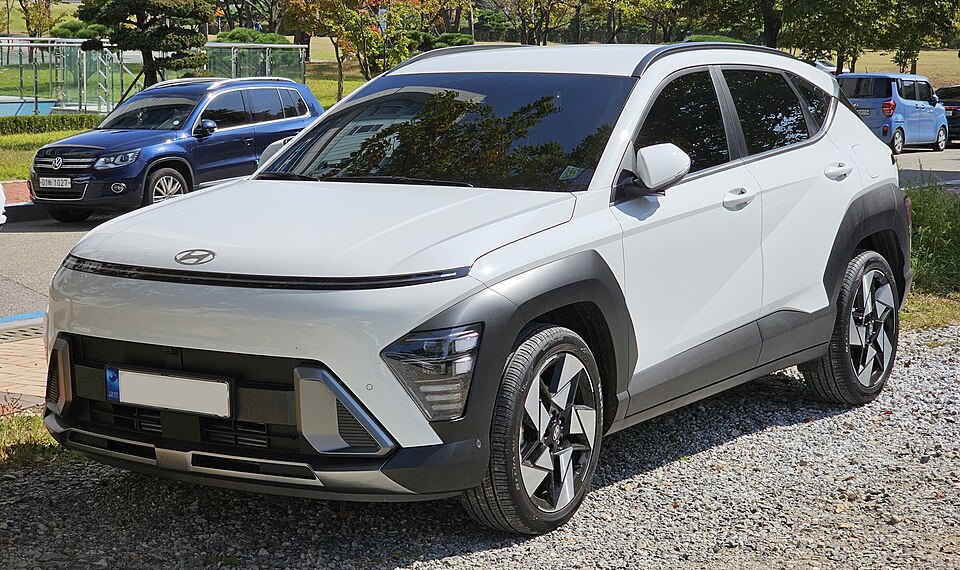
2019 Hyundai Kona

ElectricGas
Small Sport Utility Vehicle 2WD
5 EPA-rated configurations
Data refreshed 2026-09-11
F
Safety Signal
52 / 100 from the NHTSA recall record
Recalls3 critical4
Complaintsowner reports to NHTSA242
Crash ratingNHTSA overall5★
EV rangebest configuration, EPA258 mi
Fuel economybest combined, EPA30 mpg
2027202620252024202320222021202020192018
Active NHTSA advisory: park outside and away from structures until repaired. Check your VIN at nhtsa.gov/recalls and see the recall details below.

The 2019 Hyundai Kona is sold in the U.S. as a electric and gas compact SUV with 5 EPA-rated configurations. Its longest-range version, the Kona Electric, is EPA-rated at 258 miles with 120 MPGe combined efficiency. NHTSA lists 4 recall campaigns for this model year, 3 rated critical, which gives it a Safety Signal grade of F. Owners have filed 242 complaints, most often about the engine. NHTSA crash-tested it at 5 stars overall.

Specs & fuel economy

Source: EPA fueleconomy.gov
ConfigurationPowertrainDriveEngine / motorCityHwyCombRangekWh/100miCharge (240V)Annual fuel*
Kona ElectricElectricFWD150 kW AC PMSM132108120 MPGe258 mi289 h$650
Kona FWDGasFWD1.6L 4-cyl turbo283230$2,100
Kona FWDGasFWD2.0L 4-cyl273330$2,100
Kona AWDGasAWD1.6L 4-cyl turbo262927$2,300
Kona AWDGasAWD2.0L 4-cyl253027$2,300

*EPA estimate at 15,000 miles/year at EPA reference fuel and electricity prices. fueleconomy.gov record ids: 40585, 40271, 40431, 40286, 40432.

Factory warranty running out?

The 2019 Hyundai Kona is in the years where high-voltage electronics and module repairs land on the owner. Compare extended-coverage quotes in about two minutes.

Compare coverage →

Affiliate disclosure: some links on this page are affiliate links. If you request a quote or buy through them we may earn a commission at no extra cost to you. Nothing on this page changes because of it.

Recalls (4)

Source: NHTSA recall database
!critical

Engine

203
158,493 vehicles
ProblemHyundai Motor America (Hyundai) is recalling certain 2019-2020 Elantra, 2019-2021 Kona and Veloster vehicles equipped with 2.0L Nu MPI engines. The piston oil rings may not have been properly heat-treated, which could result in engine damage.RiskA damaged engine may stall, increasing the risk of a crash. In addition, oil may leak onto hot exhaust components, increasing the risk of a fire.FixDealers will inspect and, if necessary, replace the engine, free of charge. In addition, Hyundai will deploy Piston Ring Noise Sensing System (PNSS) software. Owner notification letters were mailed August 24, 2021. Owners may contact Hyundai customer service at 1-855-371-9460.
NHTSA campaign 21V301000reported Apr 28, 2021Hyundai Motor America
!critical

Electrical System

200
Park outside4,696 vehiclesElectric only
ProblemHyundai Motor America (Hyundai) is recalling certain 2019-2020 Kona Electric and 2020 Ioniq Electric vehicles. The lithium-ion (Li-ion) battery may short-circuit.RiskAn electrical short in the Li-ion battery increases the risk of a fire.FixOwners are advised to park their vehicles outside and away from structures until the interim action is complete. Hyundai will notify owners, and as an interim action, owners have the option to follow provided instructions to perform a battery update through the vehicle's infotainment system or request a Hyundai dealer to provide the update. Once parts are available, dealers will inspect the Battery System Assembly (BSA), and replace it if necessary. Repairs will be performed free of charge.
NHTSA campaign 21V127000reported Mar 1, 2021Hyundai Motor America
minor

Service Brakes, Hydraulic

199
8,176 vehiclesElectric only
ProblemHyundai Motor America (Hyundai) is recalling certain 2019-2020 Nexo Fuel Cell and 2019-2021 Kona Electric vehicles. The Integrated Electronic Brake (IEB) system may detect an abnormal sensor signal and as a result, may significantly reduce braking performance.RiskReduced braking power could lengthen the distance required to stop the vehicle, increasing the risk of a crash.FixHyundai will notify owners, and dealers will update the IEB software, free of charge. The recall began January 25, 2021. Owners may contact Hyundai customer service at 1-855-371-9460. Hyundai's number for this recall is 199.
NHTSA campaign 20V748000reported Dec 1, 2020Hyundai Motor America
!critical

Electrical System

196
Park outside6,707 vehiclesElectric only
ProblemHyundai Motor America (Hyundai) is recalling certain 2019-2020 Kona Electric vehicles. The lithium-ion (Li-ion) battery may short-circuit.RiskAn electrical short in the Li-ion battery increases the risk of a fire.FixHyundai will notify owners, and dealers will update the Battery Management System (BMS) software and inspect the Li-ion battery, replacing it if necessary, free of charge. Owners are advised to park their vehicles outside and away from structures until the repair is complete. The recall began November 13, 2020. Owners may contact Hyundai customer service at 1-855-371-9460. Hyundai's number for this recall is 196.
NHTSA campaign 20V630000reported Oct 13, 2020Hyundai Motor America

NHTSA defect investigations

Electrical System:Propulsion System — Pedestrian alert sounds closed

NHTSA received a petition on or about July 18, 2022, requesting that Federal Motor Vehicle Safety Standard (FMVSS) 141 be applied to all electric and hybrid vehicles operating in the United States. The petition can be reviewed at NHTSA.gov under ODI Number 11486072. FMVSS 141 establishes performance requirements for pedestrian alert sounds for motor vehicles. The standard applies to hybrid and electric vehicles that have a gross vehicle weight rating of 4,536 KG or less or are defined as low-speed vehicles. The standard became fully applicable to all such vehicles manufactured on or after March 1, 2021.On January 27, 2023, NHTSA opened Defect Petition (DP) 22-005 to evaluate the subject matt

Opened Jan 27, 2023 · closed Aug 7, 2023 · action DP22005

Engine — Loss of Motive Power closed

The National Highway Traffic Safety Administration (NHTSA) received a letter dated July 13, 2022, petitioning the Agency to initiate a safety defect investigation into loss of motive power allegations attributed to oil drain pan assembly failures on certain Hyundai Motor America, Inc. and Kia America, Inc. vehicles spanning Model Years (MY) 2005-2021. The Petitioners cited examples of complaints indicating that the subject vehicles were experiencing rapid loss of engine oil due to oil drain plug back outs, resulting in loss of motive power and/or catastrophic engine damage. Additional complaints were provided which alleged that the oil drain pans lack sufficient structural integrity and are

Opened Sep 12, 2022 · closed Dec 12, 2023 · action DP22003

Owner complaints

Source: NHTSA complaint database
242complaints filed

13 involved a crash · 6 a fire · 7 injuries · 0 deaths reported

Filed per year: 2018: 1 · 2019: 8 · 2020: 9 · 2021: 62 · 2022: 33 · 2023: 23 · 2024: 34 · 2025: 39 · 2026: 33

Most-cited components

Engine134
Electrical System60
Unspecified24
Power Train23
Fuel/Propulsion System20
Forward Collision Avoidance9

What owners describe

“The battery in my electrical vehicle is recalled due to the potential for shorting and fires. The dealer performed a software update but states that they cannot request a replacement battery because the manufacturer will reject it because a specific code was not generated during the software update. The manufacturer te…”Aug 17, 2021 · Electrical System · NHTSA owner report
“The contact owns a 2019 Hyundai Kona. The contact received notification of NHTSA Campaign Number: 21V301000 (Engine) however, the part to do the recall repair was not yet available. The contact stated while driving approximately 35-40 MPH, the vehicle experienced unintended acceleration and a loud sound was heard befor…”Aug 16, 2021 · Engine · NHTSA owner report
“The contact owns a 2019 Hyundai Kona. The contact stated that the battery warning light was illuminated. The contact stated he continued to drive to his destination with the warning light illuminated. The contact took the vehicle to the local dealer and the mechanic was unable to determine the cause of the failure. The…”Aug 16, 2021 · Electrical System · NHTSA owner report

Complaint counts are raw owner reports to NHTSA, not verified defects, and scale with how many were sold. Use them to spot patterns, not to rank.

Crash ratings

Source: NHTSA NCAP
ConfigurationOverallFrontalSideRolloverRollover risk
SUV AWD★★★★★★★★★★★★★★★★★★★☆14%
SUV FWD★★★★★★★★★★★★★★★★★★★☆14%

NHTSA New Car Assessment Program. Standard driver-assist: forward collision warning, lane departure warning, automatic emergency braking.

Other Kona model years

Sources & method

Safety Signal starts every model-year at 100 and subtracts points per open NHTSA recall campaign by severity: critical 15 (fire risk, park-outside or do-not-drive advisories), high 8 (brakes, steering, airbags, loss of drive power, structure, battery), moderate 6, minor 3 (software, labels, lighting fixed by an update). Floor 35. A ≥ 90, B ≥ 80, C ≥ 70, D ≥ 60, otherwise F. Complaint counts and NHTSA crash ratings are shown separately and are not blended into the grade.

EPA figures come from fueleconomy.gov vehicle records. Recalls, complaints, investigations and crash ratings come from NHTSA's public flat files, refreshed weekly.

JSON for this page · API