⌘K
HomeHyundaiElantra2017
Hyundai · Midsize car

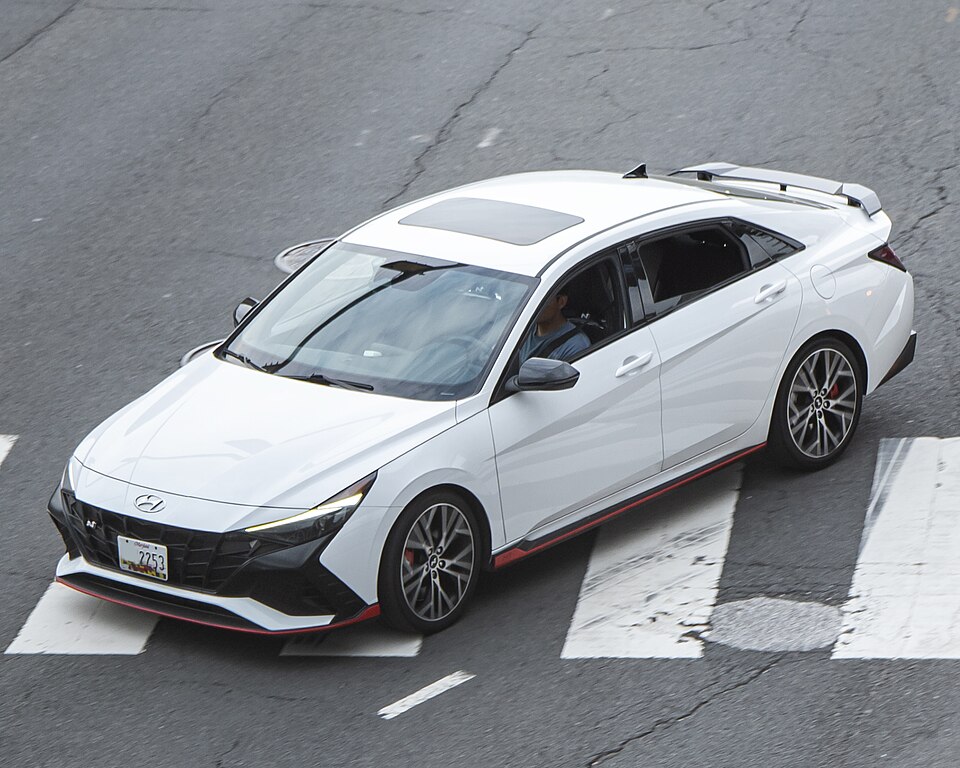
2017 Hyundai Elantra

Gas
Midsize Cars
8 EPA-rated configurations
Data refreshed 2026-09-11
D
Safety Signal
68 / 100 from the NHTSA recall record
RecallsNHTSA campaigns4
Complaintsowner reports to NHTSA790
Crash ratingNHTSA overall5★
Fuel economybest combined, EPA35 mpg
20262025202420232022202120202019201820172016

The 2017 Hyundai Elantra is sold in the U.S. as a gas midsize car with 8 EPA-rated configurations. The most efficient version, the Elantra, is EPA-rated at 35 mpg combined. NHTSA lists 4 recall campaigns for this model year, which gives it a Safety Signal grade of D. Owners have filed 790 complaints, most often about the engine. NHTSA crash-tested it at 5 stars overall.

Specs & fuel economy

Source: EPA fueleconomy.gov
ConfigurationPowertrainDriveEngine / motorCityHwyCombAnnual fuel*
ElantraGasFWD1.4L 4-cyl turbo324035$1,800
Elantra SEGasFWD2.0L 4-cyl293833$1,900
ElantraGasFWD2.0L 4-cyl283732$1,950
ElantraGasFWD2.0L 4-cyl263629$2,150
ElantraGasFWD1.6L 4-cyl turbo263329$2,150
Elantra GTGasFWD2.0L 4-cyl243227$2,300
ElantraGasFWD1.6L 4-cyl turbo223025$2,500

*EPA estimate at 15,000 miles/year at EPA reference fuel and electricity prices. fueleconomy.gov record ids: 37384, 37225, 37226, 37227, 38177, 37340, 37353, 38178.

Factory warranty running out?

The 2017 Hyundai Elantra is in the years where transmission, electronics and drivetrain repairs land on the owner. Compare extended-coverage quotes in about two minutes.

Compare coverage →

Affiliate disclosure: some links on this page are affiliate links. If you request a quote or buy through them we may earn a commission at no extra cost to you. Nothing on this page changes because of it.

Recalls (4)

Source: NHTSA recall database
high

Steering

161
99 vehicles
ProblemHyundai Motor America (Hyundai) is recalling certain 2017 Elantra vehicles. The affected vehicles may have a damaged Electronic Power Steering (MDPS) connector resulting in a loss of electric power steering assistance.RiskLoss of power steering assist would require higher steering effort, especially at lower speeds, which may increase the risk of a crash.FixHyundai will notify owners, and dealers will replace the EPS motor, free of charge. The recall is expected to begin April 28, 2017. Owners may contact Hyundai customer service at 1-800-243-7766. Hyundai's number for this recall 161.
NHTSA campaign 17V213000reported Mar 28, 2017Hyundai Motor America
high

Service Brakes, Hydraulic

157
33,803 vehicles
ProblemHyundai Motor Company (Hyundai) is recalling certain 2017 Elantra vehicles. In the affected vehicles, the brake booster may fail, resulting in a loss of power brake assist.RiskA loss of power brake assist can lengthen the distance needed to stop the vehicle, increasing the risk of a crash.FixHyundai has notified owners, and dealers will replace the brake system booster assembly, free of charge. The recall began on February 6, 2017. Owners may contact Hyundai customer service at 1-800-633-5151. Hyundai's number for this recall is 157.
NHTSA campaign 17V063000reported Jan 26, 2017Hyundai Motor America
high

Air Bags

156
110 vehicles
ProblemHyundai Motor Company (Hyundai) is recalling certain model year 2017 Hyundai Elantra vehicles manufactured April 15, 2016, to September 13, 2016, and Sonata vehicles manufactured May 27, 2016 to September 16, 2016. In these vehicles, the end seal for the driver's frontal air bag inflator may not have been properly installed, possibly resulting in reduced inflation of the frontal air bag in the event of a crash.RiskIn the event of a crash, an air bag that does not inflate fully increases the risk of injury.FixHyundai will notify owners, and dealers will replace the driver's frontal air bag module, free of charge. The recall began February 13, 2017. Owners may contact Hyundai customer service at 1-855-371-9460. Hyundai's number for this recall is 156.
NHTSA campaign 16V956000reported Dec 30, 2016Hyundai Motor America
high

Air Bags

144
33 vehicles
ProblemHyundai Motor Company (Hyundai) is recalling certain model year 2015-2016 Sonata vehicles manufactured May 29, 2014 to February 11, 2016, 2017 Elantra vehicles manufactured January 12, 2016 to February 22, 2016, and one 2016 Sonata Hybrid vehicle manufactured October 15, 2015. In these vehicles, the driver's frontal air bag may be missing a chemical enhancer required for the second stage air bag deployment, resulting in the second stage not deploying in certain crashes. The primary stage will deploy as intended.RiskAn air bag that does not inflate increases the risk of injury.FixHyundai will notify owners, and dealers will replace the driver's frontal air bag module, free of charge. The recall began on May 5,2016. Owners may contact Hyundai customer service at 1-855-371-9460. Hyundai's number for this recall is 144.
NHTSA campaign 16V232000reported Apr 21, 2016Hyundai Motor America

NHTSA defect investigations

Engine — Loss of Motive Power closed

The National Highway Traffic Safety Administration (NHTSA) received a letter dated July 13, 2022, petitioning the Agency to initiate a safety defect investigation into loss of motive power allegations attributed to oil drain pan assembly failures on certain Hyundai Motor America, Inc. and Kia America, Inc. vehicles spanning Model Years (MY) 2005-2021. The Petitioners cited examples of complaints indicating that the subject vehicles were experiencing rapid loss of engine oil due to oil drain plug back outs, resulting in loss of motive power and/or catastrophic engine damage. Additional complaints were provided which alleged that the oil drain pans lack sufficient structural integrity and are

Opened Sep 12, 2022 · closed Dec 12, 2023 · action DP22003

Owner complaints

Source: NHTSA complaint database
790complaints filed

37 involved a crash · 6 a fire · 24 injuries · 0 deaths reported

Filed per year: 2016: 7 · 2017: 35 · 2018: 44 · 2019: 68 · 2020: 87 · 2021: 137 · 2022: 127 · 2023: 109 · 2024: 77 · 2025: 60 · 2026: 39

Most-cited components

Engine309
Structure134
Unspecified131
Electrical System113
Steering71
Power Train67

What owners describe

“I bought a vehicle used and it malfunctions in six days. It is a safety hazard to me the driver and other drivers on the roads. The vehicle is weighing heavy on the passenger side the car is not parallel. Also the vehicle stalls while driving. The pedal stops giving power to the car. I attempted to fix the car and the …”Jul 19, 2026 · Power Train · NHTSA owner report
“My vehicle was brought to an authorized Hyundai dealership In November 2025 to complete safety recall campaign KSDS (Campaign 966). Soon after picking up the vehicle after the dealer flashed the ECU, the vehicle went into a permanent, dangerous "limp mode" that severely limits the engine's RPMs, making it impossible to…”Jun 7, 2026 · Engine · NHTSA owner report
“I am writing to formally log a critical safety and product reliability complaint regarding my Hyundai Elantra GT. The vehicle has suffered catastrophic engine failure characterized by severe rod knock. This failure occurred without any prior warning from the vehicle’s onboard diagnostic systems, exposing an engineeri…”May 14, 2026 · Fuel/Propulsion System · NHTSA owner report

Complaint counts are raw owner reports to NHTSA, not verified defects, and scale with how many were sold. Use them to spot patterns, not to rank.

Crash ratings

Source: NHTSA NCAP
ConfigurationOverallFrontalSideRolloverRollover risk
5 HB FWD★★★★★★★★★☆★★★★★★★★★☆11%
4 DR FWD★★★★☆★★★★☆★★★★★★★★★☆11%
4 DR FWD★★★★☆★★★★☆★★★★☆★★★★☆11%

NHTSA New Car Assessment Program.

Compare the 2017 Elantra with

Other Elantra model years

Sources & method

Safety Signal starts every model-year at 100 and subtracts points per open NHTSA recall campaign by severity: critical 15 (fire risk, park-outside or do-not-drive advisories), high 8 (brakes, steering, airbags, loss of drive power, structure, battery), moderate 6, minor 3 (software, labels, lighting fixed by an update). Floor 35. A ≥ 90, B ≥ 80, C ≥ 70, D ≥ 60, otherwise F. Complaint counts and NHTSA crash ratings are shown separately and are not blended into the grade.

EPA figures come from fueleconomy.gov vehicle records. Recalls, complaints, investigations and crash ratings come from NHTSA's public flat files, refreshed weekly.

JSON for this page · API