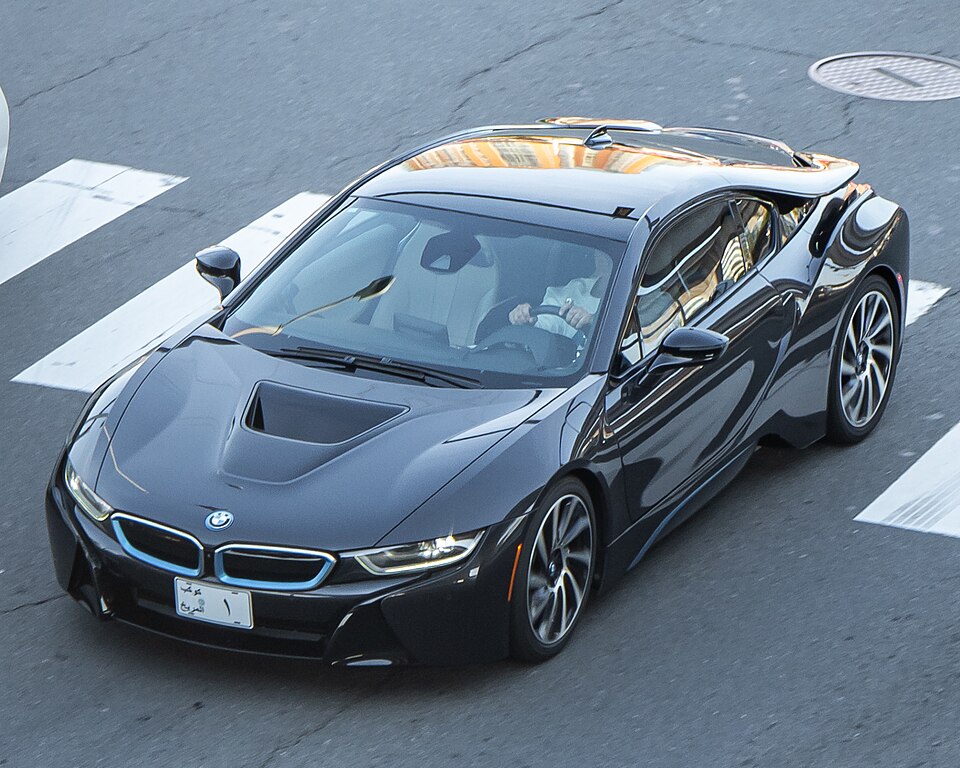
2020 BMW i8
Plug-in hybrid Compact car
The 2020 BMW i8 is sold in the U.S. as a plug-in hybrid compact car with 2 EPA-rated configurations. The most efficient version, the I8 Coupe, is EPA-rated at 27 mpg combined. NHTSA lists 1 recall campaign for this model year, 1 rated critical, which gives it a Safety Signal grade of B. Owners have filed 1 complaints, most often about electrical system.
Specs & fuel economy (EPA)
| Configuration | Powertrain | Drive | Engine / motor | City | Hwy | Comb | Range | kWh/100mi | Charge (240V) | Annual fuel* |
|---|---|---|---|---|---|---|---|---|---|---|
| I8 Coupe | Plug-in hybrid | AWD | 1.5L 3-cyl turbo + 105kW DCPM | 26 | 29 | 27 (36 MPGe blended) | 18 mi electric | 49 | 3 h | $2,850 |
| I8 Roadster | Plug-in hybrid | AWD | 1.5L 3-cyl turbo + 105kW DCPM | 26 | 29 | 27 (36 MPGe blended) | 18 mi electric | 49 | 3 h | $2,850 |
*EPA estimate at 15,000 miles/year and EPA reference fuel/electricity prices. Source: fueleconomy.gov vehicle records.
Out of factory warranty soon?
The 2020 BMW i8 is in the years where high-voltage electronics and module repairs land on the owner. Compare extended-coverage quotes in about two minutes.
Compare coverage →Affiliate disclosure: some links on this page are affiliate links. If you request a quote or buy through them we may earn a commission at no extra cost to you. Data on this page is never influenced by that.
Recalls (1)
Electrical System
criticalProblem: BMW of North America, LLC (BMW) is recalling certain 2020-2021 530e, 530e xDrive, 530e iPerformance and X3 xDrive30e and MINI Cooper Countryman All4 SE, 2020 BMW i8, and 2021 330e, 330e xDrive, 745Le xDrive and X5 xDrive45e vehicles. Debris may have entered one or more of the hybrid battery cells during their production.
Risk: The debris could result in a short-circuit, increasing the risk of fire or injury.
Fix: BMW will inspect and, if necessary, replace the battery module free of charge. The remedy is currently being developed. Until the remedy is completed, drivers are instructed to not charge their vehicles. Drivers are instructed to not drive in manual mode, sport mode, and to not use the shift paddles. Owners were notified of the safety risk October 23, 2020. The recall began November 24, 2020. Owners may contact BMW customer service at 1-800-525-7417.
NHTSA investigations
Electrical System:Propulsion System — Pedestrian alert sounds (closed)
NHTSA received a petition on or about July 18, 2022, requesting that Federal Motor Vehicle Safety Standard (FMVSS) 141 be applied to all electric and hybrid vehicles operating in the United States. The petition can be reviewed at NHTSA.gov under ODI Number 11486072. FMVSS 141 establishes performance requirements for pedestrian alert sounds for motor vehicles. The standard applies to hybrid and electric vehicles that have a gross vehicle weight rating of 4,536 KG or less or are defined as low-speed vehicles. The standard became fully applicable to all such vehicles manufactured on or after March 1, 2021.On January 27, 2023, NHTSA opened Defect Petition (DP) 22-005 to evaluate the subject matt
Opened Jan 27, 2023 · closed Aug 7, 2023 · action DP22005
Owner complaints
1 complaints filed
0 involved a crash, 0 a fire, 0 injuries, 0 deaths reported by owners.
Filed by year — 2021: 1
Most-cited components
- Electrical System — 1
Complaint counts are raw owner reports to NHTSA, not verified defects, and scale with how many were sold. Use them to spot patterns, not to rank.
Crash ratings
NHTSA has not published 5-Star crash ratings for this model year.
Other i8 model years
Sources & method
Safety Signal starts every model-year at 100 and subtracts points per open NHTSA recall campaign by severity: critical 15 (fire risk, park-outside or do-not-drive advisories), high 8 (brakes, steering, airbags, loss of drive power, structure, battery), moderate 6, minor 3 (software, labels, lighting fixed by an update). Floor 35. A ≥ 90, B ≥ 80, C ≥ 70, D ≥ 60, otherwise F. Complaint counts and NHTSA crash ratings are shown separately and are not blended into the grade.
EPA figures come from fueleconomy.gov vehicle records (ids 42369, 42370). Recalls, complaints, investigations and crash ratings come from NHTSA's public flat files, refreshed weekly.