⌘K
Your vehicleHome›Tesla›Model S› 2016
Tesla · Large Hatchback

2016 Tesla Model S

Electric
Large Cars
13 EPA-rated configurations
Data refreshed 2026-10-26
F
Safety Signal
53 / 100 from the NHTSA recall record
Counts recalls, not crash safety — this vehicle earned 5 of 5 stars from NHTSA. A much-recalled best-seller scores low here; see the methodology.
Recalls1 critical 10
Complaints92 crash · 12 fire · 64 injured · 8 died reported 649
Crash ratingNHTSA overall 5★
EV rangebest configuration, EPA 315 mi
20262025202420232022202120202019201820172016

The 2016 Tesla Model S is sold in the U.S. as an electric large hatchback with 13 EPA-rated configurations. Its longest-range version, the Model S AWD - P100D, is EPA-rated at 315 miles with 98 MPGe combined efficiency. NHTSA lists 10 recall campaigns for this model year, 1 rated critical, which gives it a Safety Signal grade of F. Owners have filed 649 complaints, most often about the suspension. NHTSA crash-tested it at 5 stars overall.

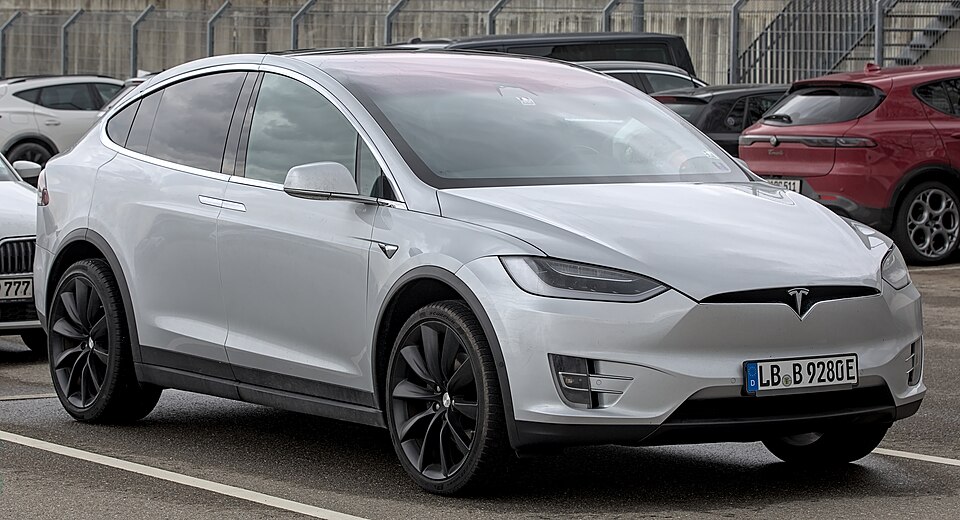
Tesla Model X — photograph via Wikimedia Commons
Tesla Model X (2012 generation) · Photo: Alexander Migl · CC BY-SA 4.0 · Wikimedia Commons

Specs & fuel economy

Source: EPA fueleconomy.gov
ConfigurationPowertrainDriveEngine / motorCityHwyCombRangekWh/100miCharge (240V)Annual fuel*
Model S AWD - 60DElectricAWD193 (front) 193 (rear) (60 kW-hr battery pack)101107104 MPGe218 mi3212 h$700
Model S AWD - 75DElectricAWD193 (front) 193 (rear) (75 kW-hr battery pack)102105103 MPGe259 mi3312 h$750
Model S AWD - 90DElectricAWD193 (front) 193 (rear) (90 kW-hr battery pack)101107103 MPGe294 mi3312 h$750
Model S AWD - 70DElectricAWD193 (front) 193 (rear) (70 kW-hr battery pack)101102101 MPGe240 mi3312 h$750
Model S AWD - 85DElectricAWD193 (front) 193 (rear) (85 kW-hr battery pack)95106100 MPGe270 mi3412 h$750
Model S (60 kW-hr battery pack)ElectricRWD285 kW AC Induction (60 kW-hr battery pack)9810199 MPGe210 mi3410 h$750
Model S (75 kW-hr battery pack)ElectricRWD285 kW AC Induction (75 kW-hr battery pack)9710098 MPGe249 mi3412 h$750
Model S AWD - P100DElectricAWD193 (front) 375 (rear) (100 kW-hr battery pack)9210598 MPGe315 mi3512 h$800
Model S AWD - P90DElectricAWD193 (front) 375 (rear) (90 kW-hr battery pack)9110095 MPGe270 mi3512 h$800
Model S AWD - P85DElectricAWD193 (front) 375 (rear) (85 kW-hr battery pack)899893 MPGe253 mi3612 h$800
Model S (70 kW-hr battery pack)ElectricRWD285 kW AC Induction (70 kW-hr battery pack)889089 MPGe234 mi3810 h$850
Model S (85 kW-hr battery pack)ElectricRWD285 kW AC Induction (85 kW-hr battery pack)889089 MPGe265 mi3812 h$850
Model S (90 kW-hr battery pack)ElectricRWD285 kW AC Induction (90 kW-hr battery pack)889089 MPGe265 mi3812 h$850

*EPA estimate at 15,000 miles/year at EPA reference fuel and electricity prices. fueleconomy.gov record ids: 38171, 37422, 37240, 37238, 37239, 38170, 37421, 38172, 37242, 37241.

Emissions & certification

Source: EPA emission certificates
ConfigurationSmog ratingEmission standardWhere it can be sold newSmartWay
Model S (60 kW-hr battery pack), Model S (70 kW-hr battery pack), Model S (75 kW-hr battery pack), Model S (85 kW-hr battery pack), Model S (90 kW-hr battery pack), Model S AWD - 60D, Model S AWD - 70D, Model S AWD - 75D, Model S AWD - 85D, Model S AWD - 90D, Model S AWD - P100D, Model S AWD - P85D, Model S AWD - P90D10 / 10Bin 1 / ZEVAll 50 states (federal, all altitudes); California and states following California standardsSmartWay Elite

Certified for all fifty states, so it can be registered new anywhere in the U.S.

The smog rating scores tailpipe pollutants other than greenhouse gases, 1 (worst) to 10 (best), and is comparable only within a model year. The standard is the federal bin or California tier the configuration was certified to. Both come from the EPA certificate behind the window sticker.

Specifications filed with NHTSA

Source: NHTSA vPIC

Dimensions Exterior

Body styleHatchback/Liftback/Notchback
Doors5
GVWR classClass 1: 6,000 lb or less (2,722 kg or less)

Fuel Economy

FuelElectric

Filed by the manufacturer with NHTSA under the federal vehicle-identification rule and decoded from the VIN pattern — not a manufacturer press kit, so it describes the configurations we could identify rather than every trim. Figures for the trim you are looking at may differ.

Dimensions & weight

Source: Transport Canada
Length195.7 in
Width (body, without mirrors)77.2 in
Height56.7 in
Wheelbase116.5 in
Track, front65.4 in
Track, rear66.9 in
Curb weight4,420–4,936 lb
Weight distribution, front/rear47/53 to 50/50

Measured by Transport Canada for its Canadian Vehicle Specifications database, which covers the North American versions of each model — here 4 configurations: 70 4-door Sedan RWD, 70D 4-door Sedan AWD, 90D 4-door Sedan AWD, P90D 4-door Sedan AWD. Where a range is shown, those versions differ. Width is the body without mirrors, which is why it can read narrower than a brochure figure. Before we used it we checked it against the US manufacturer press kits we hold (27 Sep 2026): wheelbase agreed within 1% on every vehicle we could compare, length on 98%, and the curb weight fell inside the manufacturer's range on 96%. Source dataset. Contains information licensed under the Open Government Licence – Canada. Licence.

Advertisement

Factory warranty running out?

The 2016 Tesla Model S is in the years where high-voltage electronics and module repairs land on the owner. What an extended plan does and does not cover is worth reading before a dealer quotes you one.

What to check before you buy →

Affiliate disclosure: some links on this page are affiliate links. If you request a quote or buy through them we may earn a commission at no extra cost to you. Nothing on this page changes because of it.

Recalls (10)

Source: NHTSA recall database
○minor

Seat Belts

SB-24-00-008
125,233 vehicles 90% reported repaired
Problem Tesla, Inc. (Tesla) is recalling certain 2012-2024 Model S, 2015-2024 Model X, 2017-2023 Model 3, and 2020-2023 Model Y vehicles. In the event of an unbelted driver, the seat belt warning light and audible chime may not activate as intended. As such, these vehicles fail to comply with the requirements of Federal Motor Vehicle Safety Standard number 208, "Occupant Crash Protection." Risk A seat belt warning system that fails to alert occupants of an unbelted seat belt can increase the risk of injury during a crash. Fix Tesla will release an over-the-air (OTA) software update. Owner notification letters were mailed July 26, 2024. Owners may contact Tesla customer service at 1-877-798-3752. Tesla's number for this recall is SB-24-00-008.
Filed with NHTSADefect report PDF
NHTSA campaign 24V376000 reported May 28, 2024 Tesla, Inc. the full filing, and every vehicle covered →
○minor

Electrical System

SB-24-00-003
2,193,869 vehicles
Problem Tesla, Inc. (Tesla) is recalling certain 2012-2023 Model S, 2016-2024 Model X, 2017-2023 Model 3, 2019-2024 Model Y, and 2024 Cybertruck vehicles. An incorrect font size is displayed on the instrument panel for the Brake, Park, and Antilock Brake System (ABS) warning lights. As such, these vehicles fail to comply with the requirements of Federal Motor Vehicle Safety Standard number 105, "Hydraulic and Electric Brake Systems" and 135, "Light Vehicle Brake Systems." Risk Warning lights with a smaller font size can make critical safety information on the instrument panel difficult to read, increasing the risk of a crash. Fix Tesla began releasing an over-the-air (OTA) software update, free of charge. Owners may contact Tesla customer service at 1-877-798-3752. Tesla's number for this recall is SB-24-00-003.
Filed with NHTSARemedy instructions PDF
NHTSA campaign 24V051000 reported Jan 30, 2024 Tesla, Inc. the full filing, and every vehicle covered →
●moderate

Electrical System

SB-23-00-008
2,031,220 vehicles 99% reported repaired
Problem Tesla, Inc. (Tesla) is recalling 2012-2023 Model S, 2016-2023 Model X, 2017-2023 Model 3, and 2020-2023 Model Y vehicles equipped with all versions of Autosteer leading up to the version(s) that contains the recall remedy. In certain circumstances when Autosteer is engaged, the prominence and scope of the feature's controls may not be sufficient to prevent driver misuse of the SAE Level 2 advanced driver-assistance feature. Risk In certain circumstances when Autosteer is engaged, and the driver does not maintain responsibility for vehicle operation and is unprepared to intervene as necessary or fails to recognize when Autosteer is canceled or not engaged, there may be an increased risk of a crash. Fix Tesla will release an over-the-air (OTA) software update, free of charge. Owner notification letters were mailed February 10, 2024. Owners may contact Tesla customer service at 1-877-798-3752. Tesla's number for this recall is SB-23-00-008.
NHTSA campaign 23V838000 reported Dec 12, 2023 Tesla, Inc. the full filing, and every vehicle covered →
▲high

Steering

SB-23-00-001
362,758 vehicles 96% reported repaired
Problem Tesla, Inc. (Tesla) is recalling certain 2016-2023 Model S, Model X, 2017-2023 Model 3, and 2020-2023 Model Y vehicles equipped with Full Self-Driving Beta (FSD Beta) software or pending installation. The FSD Beta system may allow the vehicle to act unsafe around intersections, such as traveling straight through an intersection while in a turn-only lane, entering a stop sign-controlled intersection without coming to a complete stop, or proceeding into an intersection during a steady yellow traffic signal without due caution. In addition, the system may respond insufficiently to changes in posted speed limits or not adequately account for the driver's adjustment of the vehicle's speed to exc Risk FSD Beta software that allows a vehicle to exceed speed limits or travel through intersections in an unlawful or unpredictable manner increases the risk of a crash. Fix Tesla will release an over-the-air (OTA) software update, free of charge.  Owner notification letters were mailed April 15, 2023.  Owners may contact Tesla customer service at 1-877-798-3752.  Tesla's number for this recall is SB-23-00-001.
Filed with NHTSARemedy instructions PDF
NHTSA campaign 23V085000 reported Feb 15, 2023 Tesla, Inc. the full filing, and every vehicle covered →
▲high

Steering

SB-22-00-001
53,822 vehicles 100% reported repaired
Problem Tesla, Inc. (Tesla) is recalling certain 2016-2022 Model S and Model X, 2017-2022 Model 3, and 2020-2022 Model Y vehicles. The "rolling stop" functionality available as part of the Full Self-Driving (Beta) software may allow the vehicle to travel through an all-way stop intersection without first coming to a stop. Risk Failing to stop at a stop sign can increase the risk of a crash. Fix Tesla will perform an over-the-air (OTA) software update that disables the "rolling stop" functionality, free of charge. Owner notification letters were mailed March 28, 2022. Owners may contact Tesla customer service at 1-877-798-3752. Tesla's number for this recall is SB-22-00-001.
Filed with NHTSARemedy instructions PDF
NHTSA campaign 22V037000 reported Jan 27, 2022 Tesla, Inc. the full filing, and every vehicle covered →
▲high

Latches/Locks/Linkages

SB-21-11-003
130,441 vehicles
Problem Tesla, Inc. (Tesla) is recalling certain 2014-2021 Model S vehicles. The front trunk latch assembly may be misaligned, preventing the secondary hood latch from engaging. As such, these vehicles fail to comply with the requirements of Federal Motor Vehicle Safety Standard number 113, "Hood Latch System." Risk If the primary latch is inadvertently released and the secondary latch is not engaged, the hood could open unexpectedly, obstructing the driver's view and increasing the risk of a crash. Fix Tesla Service will inspect and reposition the latch assembly as necessary, free of charge. Owner notification letters were mailed February 18, 2022. Owners may contact Tesla customer service at 1-877-798-3752. Tesla's number for this recall is SB-21-11-003.
Filed with NHTSARemedy instructions PDF
NHTSA campaign 21V00B000 reported Dec 21, 2021 Tesla, Inc. the full filing, and every vehicle covered →
▲high

Back Over Prevention

SB-21-21-001
134,951 vehicles 87% reported repaired
Problem Tesla, Inc. (Tesla) is recalling certain 2012-2018 Tesla Model S and 2016-2018 Model X vehicles with a center display equipped with a NVIDIA Tegra 3 processor and an 8GB eMMC NAND flash memory device. When the 8GB eMMC NAND flash memory device for the center display reaches lifetime wear, the eMMC controller will no longer be able to maintain the integrity of the filesystem, causing a failure in some of the center display functions. Risk The eMMC controller wear-out condition can cause the loss of the rearview camera display, defrost/defog control settings, and exterior turn signal lighting, reducing visibility and increasing the risk of a crash. Fix Owners should ensure their vehicles are operating firmware release 2020.48.48.12 or newer, which will alert owners if the eMMC is approaching lifetime wear. Tesla will notify owners, and will replace the VCM daughterboard with one containing an enhanced eMMC controller, free of charge. The recall began March 29, 2021. Owners may contact Tesla customer service at 1-877-798-3752. Tesla's number for this recall is SB-21-21-001.
Filed with NHTSARemedy instructions PDF
NHTSA campaign 21V035000 reported Jan 29, 2021 Tesla, Inc. the full filing, and every vehicle covered →
!critical

Air Bags

SB-19-20-001
68,673 vehicles 88% reported repaired built Jan 1, 2014 – Dec 9, 2016
Problem Tesla, Inc. (Tesla) is recalling all 2014-2016 Model S vehicles equipped with certain air bag inflators assembled as part of the passenger frontal air bag modules used as original equipment or replacement equipment. In the event of a crash necessitating deployment of the passenger frontal air bag, these inflators may explode due to propellant degradation occurring after long-term exposure to absolute humidity and temperature cycling. Risk An inflator explosion may result in sharp metal fragments striking the driver or other occupants resulting in serious injury or death. Fix Tesla will notify owners, and Tesla Service Centers will replace the passenger frontal air bag modules, free of charge. The recall began May 29, 2019. Owners may contact Tesla customer service at 1-877-798-3752. Tesla's number for this recall is SB-19-20-001.
NHTSA campaign 19V002000 reported Jan 7, 2019 Tesla, Inc. the full filing, and every vehicle covered →
▲high

Steering

SB-18-32-002
70,421 vehicles 91% reported repaired built May 31, 2012 – Apr 9, 2016
Problem Tesla, Inc. (Tesla) is recalling certain 2012-2016 Tesla Model S vehicles equipped with Bosch steering racks. The aluminum bolts that attach the power steering gear assist motor to the gear housing may corrode and fracture causing a reduction or complete loss of power steering assist. Risk Loss of power steering assist would require a higher steering effort, especially at lower speeds, which may increase the risk of a crash. Fix Tesla will notify owners, and Tesla Service Centers will replace the steering gear mounting bolts and add a corrosion-preventative sealer, free of charge. The recall began May 7, 2019. Owners may contact Tesla customer service at 1-877-798-3752. Tesla's number for this recall is SB-18-32-002.
NHTSA campaign 18V204000 reported Mar 29, 2018 Tesla, Inc. the full filing, and every vehicle covered →
▲high

Parking Brake

SB-17-33-002
31,709 vehicles 92% reported repaired built Jul 12, 2012 – Nov 17, 2016
Problem Tesla, Inc. (Tesla) is recalling certain 2016 Model S and Model X vehicles. The electric parking brake calipers have an internal gear that may be improperly manufactured, possibly resulting in the gear fracturing during parking brake application or release. Risk If the gear breaks during parking brake release, the vehicle will not be able to be moved. If the gear breaks during parking brake application, the parking brake may not adequately hold the vehicle, potentially resulting in the vehicle rolling, increasing the risk of a crash. Fix Tesla will notify owners, and service centers will replace both the left and right electric parking brake calipers, free of charge. The recall began March 6, 2018. Owners may contact Tesla customer service at 1-877-798-3752. Tesla's number for this recall is SB-17-33-002.
Filed with NHTSAOwner letter PDF
NHTSA campaign 17V260000 reported Apr 19, 2017 Tesla Motors, Inc. the full filing, and every vehicle covered →

These are vehicle campaigns — the ones the automaker filed against this model. NHTSA also records equipment recalls, filed by a parts maker against a component (a tyre, a child seat, an aftermarket part), and those are not listed here or counted above. nhtsa.gov/recalls shows both for a VIN.

NHTSA defect investigations

Electrical System:Adas — FSD Collisions in Reduced Roadway Visibility Conditions open

The Office of Defects Investigation (ODI) is opening this Engineering Analysis to evaluate Tesla’s Full Self Driving Beta and Full Self Driving (Supervised) (collectively, FSD) degradation detection system. The focus of this investigation will be to assess the system’s ability, when encountering reduced roadway visibility conditions, to detect degradation and alert the driver with sufficient time to respond. ODI will evaluate the performance of FSD in degraded roadway conditions and the updates or modifications by Tesla to the degradation detection system, including the timing, purpose, and capabilities of the updates, and Tesla’s assessment of their safety impact. Tesla’s FSD is an advanced

Opened Mar 18, 2026 · action EA26002 · the investigation’s page →

Electrical System:Adas — Traffic safety violations while Full Self Driving ("FSD") is engaged open

The Office of Defects Investigation (“ODI”) is opening this Preliminary Evaluation (PE) to assess the scope, frequency, and potential safety consequences of FSD executing driving maneuvers that constitute traffic safety violations. This investigation concerns versions of FSD that Tesla has labeled as "FSD (Supervised)" and "FSD (Beta)." Tesla characterizes FSD as an SAE Level 2 partial automation system requiring a fully attentive driver who is engaged in the driving task at all times. Level 2 partial automation systems are designed to support and assist the driver in performing certain aspects of the driving task, requiring a driver to supervise and intervene as necessary.  The driver remains

Opened Oct 7, 2025 · action PE25012 · the investigation’s page →

Electrical System:Adas — Compliance with Standing General Order 2021-01 Reporting Requirements open

The Office of Defects Investigation (“ODI”) has identified numerous incident reports submitted by Tesla, Inc. (“Tesla”) in response to Standing General Order 2021-01 (the “SGO”), in which the reported crashes occurred several months or more before the dates of the reports. The majority of these reports involved crashes in which the Standing General Order in place at the time required a report to be submitted within one or five days of Tesla receiving notice of the crash. When the reports were submitted, Tesla submitted them in one of two ways. Many of the reports were submitted as part of a single batch, while others were submitted on a rolling basis. Preliminary engagement between ODI and T

Opened Aug 20, 2025 · action AQ25002 · the investigation’s page →

Electrical System:Adas:Autonomous/Self Driving — Actually Smart Summon sessions resulting in low-speed impacts. closed

On January 6, 2025, the Office of Defects Investigations (ODI) opened Preliminary Evaluation 24003 (PE24033) to investigate Actually Smart Summon (Summon) sessions resulting in crashes during active sessions. According to Tesla, Summon is a short-distance SAE Level 2 system, controlled by the user from a cell phone within a certain distance and intended for use in parking lots and on private property. ODI analyzed complaint data provided by Tesla as well as complaints submitted to ODI from consumers to identify Summon incidents resulting in crashes. ODI's analysis indicates that almost all Summon reported crashes involved minor property damage claims with no reported incidents involving a vu

Opened Jan 6, 2025 · closed Apr 3, 2026 · action PE24033 · the investigation’s page →

Electrical System:Adas — FSD Collisions in Reduced Roadway Visibility Conditions closed

On October 17, 2024, NHTSA’s Office of Defects Investigation (ODI) opened a Preliminary Evaluation (PE24031) of Tesla’s Full Self Driving Beta and Full Self Driving (Supervised) (collectively, FSD) to assess: the ability of the FSD system to detect and respond appropriately to reduced roadway visibility conditions; whether any other FSD crashes had occurred under degraded roadway visibility conditions that are similar in nature to the four SGO-reported crashes identified in the opening document, and if so, the contributing circumstances for each of those crashes; and any updates or modifications by Tesla to the FSD system that may affect the performance of FSD in degraded roadway visibility

Opened Oct 17, 2024 · closed Mar 18, 2026 · action PE24031 · the investigation’s page →

Electrical System:Adas:Driver Monitoring:Software — Recall 23V838 Remedy Effectiveness open

The Office of Defects Investigation (ODI) is opening a Recall Query to assess the remedy adequacy of Recall 23V838. On December 12, 2023, Tesla filed a Defect Information Report (Recall 23V838) applicable to all Tesla models produced and equipped with any version of its Autopilot system, which Tesla described as an SAE Level 2 (L2) Advanced Driver Assistance System (ADAS). Autopilot is the simultaneous engagement of Tesla’s Traffic-Aware Cruise Control (TACC) and Autosteer. In describing the safety defect, Tesla’s Defect Information Report (DIR) explained that “the prominence and scope of the system’s controls may be insufficient to prevent driver misuse,” and Tesla committed to the deployme

Opened Apr 25, 2024 · action RQ24009 · the investigation’s page →

Vehicle Speed Control — Sudden Unintended Acceleration open

The Office of Defects Investigation (ODI) received a petition requesting that ODI reevaluate its decision to deny DP20-001 on the basis that intermittent high electrical current demands on the vehicles' 12VDC systems may have caused some or all of the incidents examined by ODI in DP20-001. The petitioner bases this information on a review of open-source research and the DP20-001 denial. The petition and related materials can be reviewed at NHTSA.gov under the following ODI number: 11528471.

Opened Jun 29, 2023 · action DP23002 · the investigation’s page →

Unknown Or Other — Defect Petition Interlock Request closed

On March 21, 2023, the Office of Defects Investigation (ODI) received a petition requesting a “recall of all Tesla cars” produced from 2013 to the date on which the petition was filed due to what Petitioner considers to be the increased likelihood of pedal misapplication. Attached to the Petition is a paper authored by Petitioner. According to Petitioner, the differences in the operator controls between the subject Tesla vehicles and internal combustion engine powered vehicles promote driver pedal misapplication, leading to sudden unintended acceleration (SUA) incidents. To fix this alleged defect, Petitioner argues that the subject vehicles should be equipped with measures that require: (i)

Opened Apr 7, 2023 · closed Mar 18, 2026 · action DP23001 · the investigation’s page →

Electrical System:Propulsion System — Pedestrian alert sounds closed

NHTSA received a petition on or about July 18, 2022, requesting that Federal Motor Vehicle Safety Standard (FMVSS) 141 be applied to all electric and hybrid vehicles operating in the United States. The petition can be reviewed at NHTSA.gov under ODI Number 11486072. FMVSS 141 establishes performance requirements for pedestrian alert sounds for motor vehicles. The standard applies to hybrid and electric vehicles that have a gross vehicle weight rating of 4,536 KG or less or are defined as low-speed vehicles. The standard became fully applicable to all such vehicles manufactured on or after March 1, 2021. On January 27, 2023, NHTSA opened Defect Petition (DP) 22-005 to evaluate the subject mat

Opened Jan 27, 2023 · closed Aug 7, 2023 · action DP22005 · the investigation’s page →

Electrical System — Autopilot System Driver Controls closed

The Office of Defects Investigation (ODI) upgraded PE21020 to EA22002 on June 8, 2022, to extend work and deepen the PE21020 crash analysis, to supplement that analysis with additional data, and to perform vehicle evaluations to understand how Tesla’s Autopilot system may exacerbate human factors or behavioral safety risks by undermining the effectiveness of the driver’s supervision. To support this work, ODI collected additional crash information and assessed vehicle control authority, driver engagement technologies, and related human factors considerations associated with partial automation via analysis of peer vehicle data and hands-on vehicle evaluation, assessments from NHTSA human fact

Opened Jun 8, 2022 · closed Apr 25, 2024 · action EA22002 · the investigation’s page →

Air Bags:Frontal:Passenger Side:Inflator Module — Desiccated Air Bag Inflator Rupture open

From 2000 through 2017, Takata produced millions of air bag inflators using two types of phase-stabilized ammonium nitrate ("PSAN") propellant -- propellant 2004 and propellant 2004L. After prolonged exposure to high temperature cycles and humidity, inflators using propellant 2004 can degrade, causing the propellant to burn too quickly when ignited. The rapid burning can cause the inflator to rupture during deployment, potentially causing serious or even fatal injury to vehicle occupants. See 2016 Blomquist Report at www.nhtsa.gov/sites/nhtsa.gov/files/documents/expert_report-hrblomquist.pdf. Consequently, all frontal inflators using propellant 2004 that do not contain a "desiccant" (a subst

Opened Sep 17, 2021 · action EA21002 · the investigation’s page →

Electrical System:Adas — Autopilot & First Responder Scenes closed

On August 13, 2021, NHTSA?s Office of Defects Investigation (ODI) opened a Preliminary Evaluation (PE21-020) to assess the performance of Tesla?s Autopilot system (a system characterized by Tesla as an SAE Level 2 driving automation system designed to support and assist the driver in performing the driving task) available in Tesla vehicles. The investigation opening was motivated by an accumulation of crashes in which Tesla vehicles, operating with Autopilot engaged, struck stationary in-road or roadside first responder vehicles tending to pre-existing collision scenes. Upon opening the investigation, NHTSA indicated that the PE would also evaluate additional similar circumstance crashes of

Opened Aug 13, 2021 · closed Jun 8, 2022 · action PE21020 · the investigation’s page →

Suspension:Front — Fore Link Failure closed

The Office of Defects Investigation (ODI) opened this Preliminary Evaluation based on forty-three complaints alleging failure of the left or right front suspension fore links in Tesla model year (MY) 2015 through 2017 Model S and MY 2016 through 2017 Model X vehicles. The investigation has identified 426 instances of failure on part number 1041570-00-A or 1041575-00-A fore links. None of the instances resulted in any loss of vehicle control. One minor crash with no injuries is associated with the 426 instances fore link failures. A majority of the failures occurred between one to fifteen mph while parking in driveways or parking lots. In the eight instances where the vehicle was traveling mo

Opened Nov 22, 2020 · closed Aug 12, 2024 · action PE20020 · the investigation’s page →

Visibility:Defroster/Defogger/Hvac System — Loss of rearview camera closed

On November 20, 2020, the Office of Defects Investigation (ODI) opened Engineering Analysis (EA) 20-003 to investigate incidents of media control unit (MCU) failures resulting in loss of rearview camera in model year (MY) 2012-18 Tesla Model S and model year (MY) 2016-2018 Tesla Model X vehicles equipped with the NVIDIA Tegra 3 processor with an integrated 8GB eMMC NAND flash memory device. During its investigation, ODI learned that the expected usage life rating for the 8GB eMMC NAND flash memory device is approximately 3,000 “P/E” or Program-Erase cycles, after which the eMMC NAND flash memory device would become fully consumed and no longer be operational, leading to a failure of the medi

Opened Nov 12, 2020 · closed May 2, 2024 · action EA20003 · the investigation’s page →

Electrical System: Instrument Cluster/Panel — Loss of rearview camera closed

On June 22, 2020, the Office of Defects Investigations (ODI) opened Preliminary Evaluation PE20-010 to investigate incidents of media control unit (MCU) failures resulting in loss of rearview camera in model year (MY) 2012-2015 Tesla Model S vehicles equipped with the NVIDIA Tegra 3 processor with an integrated 8GB eMMC NAND flash memory device. EMMC NAND flash devices have a finite lifespan based upon the number of program/erase (P/E) cycles. The subject MCU allegedly fails prematurely due to memory wear-out of the eMMC NAND flash. Tesla used the same MCU with the Tegra 3 processor in approximately 159 thousand 2012-2018 Model S and 2016-2018 Model X vehicles built by Tesla through early-20

Opened Jun 22, 2020 · closed Nov 22, 2020 · action PE20010 · the investigation’s page →

Vehicle Speed Control:Springs — Sudden Unintended Acceleration closed

On December 19, 2019, NHTSA received a petition from Mr. Brian Sparks requesting that the Agency recall all [Tesla] Model S, Model X, and Model 3 vehicles produced from 2013 to the present due to sudden unintended acceleration (SUA). In his petition and follow-up submissions, the petitioner identified a total of 232 non-duplicative complaints to NHTSA, including 203 reporting crashes. On January 13, 2020, NHTSA's Office of Defects Investigation (ODI) opened Defect Petition DP20-001 to evaluate the petitioner?s request. ODI's evaluation included reviews of all complaints and supporting information referenced by the petitioner, as well as 14 additional complaints to NHTSA related to SUA crash

Opened Jan 13, 2020 · closed Jan 8, 2021 · action DP20001 · the investigation’s page →

Electrical System:Propulsion System:Traction Battery Thermal:Management:Software — Battery Management Software Updates closed

In a letter dated September 17, 2019, Mr. Edward Chen petitioned the NHTSA to initiate a defect investigation of certain Tesla Model S and Model X vehicles that received revised battery management software in one or more over-the-air (OTA) updates from Tesla, beginning in May 2019. The petitioner bases his request on vehicle fires that took place worldwide and OTA software updates Tesla made to the Battery Management System (BMS) of certain Tesla vehicles that resulted in loss of available vehicle mileage range and increased charging durations. On October 1, 2019, the Office of Defects Investigation (ODI) opened DP19-005 to evaluate the petitioner?s request. Information provided by Tesla in

Opened Oct 1, 2019 · closed Sep 28, 2021 · action DP19005 · the investigation’s page →

Forward Collision Avoidance — Automatic vehicle control systems closed

On May 7, 2016, a 2015 Tesla Model S collided with a tractor trailer crossing an uncontrolled intersection on a highway west of Williston, Florida, resulting in fatal injuries to the Tesla driver. Data obtained from the Model S indicated that:1) the Tesla was being operated in Autopilot mode at the time of the collision; 2) the Automatic Emergency Braking (AEB) system did not provide any warning or automated braking for the collision event; and 3) the driver took no braking, steering or other actions to avoid the collision. On June 28, 2016, NHTSA opened PE16-007 to ?examine the design and performance of any automated driving systems in use at the time of the crash.?The Office of Defects Inv

Opened Jun 28, 2016 · closed Jan 19, 2017 · action PE16007 · the investigation’s page →

Whether any of this applies to one specific Model S

A campaign covers a build range, not a model year, so two identical-looking cars from 2016 can differ. Both of these check a VIN against the manufacturer’s own list, free, in about ten seconds. Tesla publishes its own lookup because federal rule 49 CFR 573.15 requires it to, and to keep it current to within seven days.

Hear about a recall before the letter does

The manufacturer’s letter is the last step of a recall: it has up to 60 days after filing to mail owners, at the address on the registration. We email you the day NHTSA posts a recall on the 2016 Tesla Model S, with what to do next. Nothing else, ever — no newsletter, no marketing, one-click unsubscribe in every message.
Advertisement

Parts & accessories for the 2016 Tesla Model S

Search by fitment on eBay Motors — OEM take-offs, aftermarket, and the trim pieces dealers no longer stock. The listing and the price are the seller's.

Find parts for this Model S →

Owner complaints

Source: NHTSA complaint database
649complaints filed

92 involved a crash · 12 a fire · 64 injuries · 8 deaths reported

228 per 10,000 built · Tesla reported 28,404 Model S built (its Early Warning production report to NHTSA)

Filed per year: 2016: 74 · 2017: 72 · 2018: 39 · 2019: 34 · 2020: 152 · 2021: 91 · 2022: 70 · 2023: 38 · 2024: 34 · 2025: 16 · 2026: 29

In owners' own words

Filed with NHTSA by the people who own these cars, one per problem area. Quoted as written, with anything identifying removed.

Here is a new youtube video in which the owner pranks passengers using autopilot. Youtube. Com/watch?v=uml4pml22pm this is meant to be funny. I doubt that the other road users or indeed the passengers would have found it so amusing if they had known that their lives were being placed in danger.
Vehicle Speed Control at 3,000 miles Sep 20, 2016 NHTSA owner report · ODI 10908305
Here is a very dangerous development in the Tesla autopilot situation. Here is a new youtube video that shows how to defeat the autopilot nag and warning beeps by the use of 2 rubber bands. Youtube. Com/watch?v=whhrnhnm1xk this video has already had over 300 hits.
Steering at 10,000 miles Sep 17, 2016 NHTSA owner report · ODI 10907392
This is a complaint about seized brake calipers on the Model S and the failure of Tesla service to detect or remedy the problem. I believe this is a widespread problem on teslas caused by road dirt thrown onto the inside of the brake rotors. Here is one of many threads discussing the problem.
Service Brakes at 10,000 miles Sep 3, 2016 NHTSA owner report · ODI 10903406
While driving at 60 MPH on a highway front motor shorted loosing power and car slowed to a halt at a unsafe highway location
Engine at 3,000 miles Aug 16, 2016 NHTSA owner report · ODI 10896399
Here is a Model S freshly arrived in the junkyard. It has done just 210 miles and the front wheel and suspension has simply snapped off. There is absolutely zero crash damage. The wheel is gouged and the tire is peeled off showing that the wheel was still rolling forward when the wheel snapped off.
Suspension at 200 miles Aug 11, 2016 NHTSA owner report · ODI 10895158
On wednesday, july 13, 2016, my minor son was driving my Tesla (VIN ) northbound on round hill road in greenwich, connecticut, with the autopilot engaged. At approximately 3:50pm, the Tesla approached a vehicle that was parked partially on the shoulder of the road and partially on the road in front of 273 round hill road.
Structure at 3,000 miles Aug 4, 2016 NHTSA owner report · ODI 10893226

Complaint counts are raw owner reports to NHTSA, not verified defects, and scale with how many were sold. Use them to spot patterns, not to rank.

Reported by Tesla itself: 13 death-or-injury claims on this model year in its quarterly Early Warning reports to NHTSA (49 CFR 579.21): 7 killed, 16 injured, as claimed, not verified — about 46 per 100,000 built. Every Model S model year, by year and system → Dated and by system, they are exhibit F of the defect dossier.

When owners reported it

Reported at 27k

miles, typically

Half the 379 owner reports with an odometer reading on file fall between 5,000 and 54,000 miles. That is when problems get reported, which is not the same as when they start — and not a failure rate, because nobody knows how many of these cars never had a problem at all.

under 10k 130
10k–20k 33
20k–30k 38
30k–40k 32
40k–50k 34
50k–60k 31
60k–70k 34
70k–80k 16
80k–90k 8
90k–100k 9
100k–150k 13
150k + 1

Median mileage by component

ComponentReportsMedian milesVs same age
Suspension14611,0000.32×
Electrical System9350,7871.13×
Unspecified8839,000—
Steering625,0000.1×
Vehicle Speed Control565,0000.17×
Service Brakes3210,0000.25×
Exterior Lighting3051,0001.16×
Visibility/Wiper2442,0001.17×

Vs same age is this model year’s median for the system divided by the median of every 2016-model-year complaint about the same system, all makes: under 1× means owners of this car reported it at lower mileage. Here, owners reported earlier than same-age vehicles: suspension (0.32×), steering (0.1×), vehicle speed control (0.17×). Which systems go early across the whole fleet: the component study.

Odometer readings as filed by owners with NHTSA. Readings under 100 or over 400,000 miles are dropped as data entry rather than history, and a component needs at least 12 readings before a median is shown for it.

Crash ratings

Source: NHTSA NCAP
ConfigurationOverallFrontalSideRolloverRollover risk
5 HB AWD★★★★★★★★★★★★★★★★★★★★6%
5 HB RWD★★★★★★★★★★★★★★★★★★★★6%
5 HB AWDnot ratednot ratednot rated★★★★★6%
5 HB AWDnot ratednot rated★★★★★★★★★★6%
5 HB AWDnot ratednot ratednot rated★★★★★6%
5 HB AWDnot ratednot rated★★★★★★★★★★6%
5 HB AWDnot ratednot ratednot rated★★★★★6%
5 HB AWDnot ratednot rated★★★★★★★★★★6%
5 HB AWDnot ratednot ratednot rated★★★★★6%
5 HB AWDnot ratednot rated★★★★★★★★★★6%
5 HB RWDnot ratednot ratednot rated★★★★★6%

NHTSA New Car Assessment Program. Standard driver-assist: forward collision warning, lane departure warning.

Driver-assist crash reports (40)

Source: NHTSA Standing General Order 2021-01
40reports filed

2 fatality · 1 no injury reported · 37 severity unknown

Jun 2020 to Aug 2026 · 37 with an air bag deployment · 3 towed

What was engaged, and what was hit

System named: not named in the filings

Crash partner: Unknown 31 · Other 3 · Pole / Tree 2 · Animal 1

Filed by: Tesla, Inc.

IncidentSystemStruckInjury allegedStateSpeedReport
Aug 2026Level 2UnknownunknownCA18 mph13781-16422
Aug 2026Level 2UnknownfatalityCA—13781-16438
Aug 2026Level 2UnknownunknownCA30 mph13781-16509
Jul 2026Level 2UnknownunknownCA50 mph13781-15799
Jul 2026Level 2Pole / TreefatalityCA52 mph13781-15884
Jun 2026Level 2AnimalunknownNH76 mph13781-15430
May 2026Level 2UnknownunknownGA45 mph13781-14993
Apr 2026Level 2UnknownunknownNY9 mph13781-14686
Mar 2026Level 2UnknownunknownCA57 mph13781-14327
Jan 2026Level 2UnknownunknownWI33 mph13781-13990
Sep 2025Level 2UnknownunknownIN—13781-11797
Aug 2025Level 2UnknownunknownCA—13781-11709

Showing the 12 most recent of 40; every one is in this page’s JSON and the dataset.

A report under the General Order is a notice the manufacturer or operator must file within days of hearing of a crash in which a Level 2 driver-assist or automated-driving system was engaged within 30 seconds of impact. It is filed before anything is verified, and entities with telematics hear of far more crashes than entities that rely on complaints, so counts say as much about the reporting as about the car and are not comparable across makes. Nothing is normalised by fleet size. Every report on file, by make and year → · NHTSA’s page and files

Service bulletins & campaigns

Source: NHTSA manufacturer communications
Communicationsfiled with NHTSA 99
Most recentmanufacturer date 2025-06-03
Kindsas classified by NHTSA 60 service bulletins, 39 over-the-air updates

Most often about: Unknown Or Other, Equipment, Electrical System, Seats, Equipment Adaptive/Mobility.

  • SB-25-16-003 Service bulletin
    2025-06-03 · Electrical System
  • On certain Model S and Model X vehicles, the battery powered Pyrotechnic High Voltage (HV) Battery Disconnect will reach the end of its battery lifespan in the near future, which will trigger alerts and may limit the vehicle’s performance.
  • fsd-12-5-4-1_s3xy.pdf Over-the-air update
    2024-09-30 · Unknown Or Other
  • Tesla does not provide physical owner's manual copies. Instead, all available owner’s manual content is integrated into the vehicle software, and only the content relevant for a given vehicle, based on vehicle configuration and software version installed, is displayed on its touchscreen. This file contains all available owner’s manual content for the vehicle converted to PDF format, and given the
  • fsd-12-5-4_s3xy.pdf Over-the-air update
    2024-09-30 · Unknown Or Other
  • Tesla does not provide physical owner's manual copies. Instead, all available owner’s manual content is integrated into the vehicle software, and only the content relevant for a given vehicle, based on vehicle configuration and software version installed, is displayed on its touchscreen. This file contains all available owner’s manual content for the vehicle converted to PDF format, and given the
  • fsd-12-5-3_s3xy.pdf Over-the-air update
    2024-09-30 · Unknown Or Other
  • Tesla does not provide physical owner's manual copies. Instead, all available owner’s manual content is integrated into the vehicle software, and only the content relevant for a given vehicle, based on vehicle configuration and software version installed, is displayed on its touchscreen. This file contains all available owner’s manual content for the vehicle converted to PDF format, and given the
  • 2024.38_s3xy.pdf Over-the-air update
    2024-09-30 · Unknown Or Other
  • Tesla does not provide physical owner's manual copies. Instead, all available owner’s manual content is integrated into the vehicle software, and only the content relevant for a given vehicle, based on vehicle configuration and software version installed, is displayed on its touchscreen. This file contains all available owner’s manual content for the vehicle converted to PDF format, and given the
  • 2024.26.9_s3xy.pdf Over-the-air update
    2024-09-30 · Unknown Or Other
  • Tesla does not provide physical owner's manual copies. Instead, all available owner’s manual content is integrated into the vehicle software, and only the content relevant for a given vehicle, based on vehicle configuration and software version installed, is displayed on its touchscreen. This file contains all available owner’s manual content for the vehicle converted to PDF format, and given the
  • 2024.32_0824.pdf Over-the-air update
    2024-08-31 · Unknown Or Other
  • Tesla does not provide physical owner's manual copies. Instead, all available owner’s manual content is integrated into the vehicle software, and only the content relevant for a given vehicle, based on vehicle configuration and software version installed, is displayed on its touchscreen. This file contains all available owner’s manual content for the vehicle converted to PDF format, and given the
  • 2024.32.3_082024.pdf Over-the-air update
    2024-08-31 · Unknown Or Other
  • Tesla does not provide physical owner's manual copies. Instead, all available owner’s manual content is integrated into the vehicle software, and only the content relevant for a given vehicle, based on vehicle configuration and software version installed, is displayed on its touchscreen. This file contains all available owner’s manual content for the vehicle converted to PDF format, and given the

A service bulletin is the manufacturer telling its dealers how to diagnose or repair a known condition. It is not a recall, not a finding that the vehicle is defective, and the work is not automatically free — though a bulletin is often what a dealer works from when you describe a symptom, so quoting the document number can save a diagnosis. The count is every communication filed; the list shows the most recent, one entry per campaign, because a single campaign is usually filed as several documents on the same day. The summaries are NHTSA's; the full documents come from the manufacturer.

At the New York inspection station

Source: New York State DMV

In New York’s inspection lanes over the 12 months to Oct 10, 2026, the 2016 Tesla Model S failed the safety inspection on 2.8% of first inspections — higher than the 2.2% for every 2016 model-year vehicle inspected.

New York inspections 2.8%

failed the safety inspection

363 initial inspections of 361 vehicles.

MeasureThe 2016 Model SEvery 2016 vehicleBehind it
Failed the safety inspection2.8%2.2%363
Air-bag warning lamp stayed lit0%0.27%363
Miles driven a year9,21510,028odometer at inspection
Average odometer95,265103,109odometer at inspection

Electric vehicles get no emissions test in New York, so the safety inspection is the record here. First inspections only, so a car that failed and came back is counted once; private and special plates, not taxis, livery or commercial plates. A rate appears only where at least 200 inspections stand behind it. “Every 2016 vehicle” is every 2016 model-year car, SUV and pickup inspected in the same window, all makes. This is the state’s record of test results, not a reliability score by itself. Source: New York State Department of Motor Vehicles, Vehicle Inspections (data.ny.gov, Open NY terms).

Common questions about the 2016 Model S

Source: EPA, NHTSA and manufacturer press kits

Does the 2016 Tesla Model S have any recalls?

NHTSA has posted 10 recall campaigns for the 2016 Tesla Model S, 1 of them rated critical. The most serious on file is 19V002000, covering Air Bags. Check your own VIN at nhtsa.gov/recalls; a recall applies to specific build ranges, not every car.

How safe is the 2016 Tesla Model S?

NHTSA gave the 2016 Tesla Model S 5 stars overall in its New Car Assessment Program tests — 5-star frontal crash, 5-star side crash, 5-star rollover. WhichTrim also grades it F (53/100) on its recall record, which is a different question from crash protection.

What is the fuel economy of the 2016 Tesla Model S?

Across the 13 EPA-rated configurations of the 2016 Tesla Model S, the longest EPA range is 315 miles on a charge. Figures are the EPA's own, per configuration, and every one is listed above.

What are the dimensions of the 2016 Tesla Model S?

Transport Canada measured it at 195.7 in long, 77.2 in wide (body, without mirrors), 56.7 in tall, on a 116.5 in wheelbase. Curb weight: 4,420–4,936 lb depending on configuration. Those are its measurements of the North American versions; every figure is in the table above.

What do owners complain about on the 2016 Tesla Model S?

Owners have filed 649 complaints with NHTSA about the 2016 Tesla Model S, most often about suspension, unspecified, electrical system. Of those, 92 involved a crash, 12 a fire, 64 reported injuries. Complaints are unverified owner reports, so treat the pattern as a signal and the individual report as an anecdote.

How clean is the 2016 Tesla Model S?

The EPA smog rating for the 2016 Tesla Model S is 10 out of 10. That score covers tailpipe pollutants other than greenhouse gases, and it only compares vehicles within the same model year. It is certified for all fifty states, so it can be registered new anywhere in the U.S. Its configurations were certified to different standards — Bin 1, ZEV — which the table above lists per configuration.

Are there service bulletins for the 2016 Tesla Model S?

The manufacturer has filed 99 service bulletins and related communications with NHTSA for the 2016 Tesla Model S, most often covering unknown or other, equipment, electrical system. The most recent is dated 2025-06-03. A bulletin is not a recall: it is the repair procedure a manufacturer sends its dealers for a condition it knows about, and the work is not automatically paid for. It is still worth knowing — if the symptom matches, quoting the bulletin number at the service desk can save a diagnosis. The document numbers and summaries are listed above.

How does the 2016 Tesla Model S do at state inspection?

In New York’s inspection lanes over the 12 months to Oct 10, 2026, the 2016 Tesla Model S failed the safety inspection on 2.8% of first inspections — higher than the 2.2% for every 2016 model-year vehicle inspected. The figures are New York State DMV’s own inspection records, first inspections only, and the table above sets each one against every vehicle of the same model year.

What we hold, and what an empty row means

Paid vehicle-history reports will not tell you the difference between “nothing happened to this car” and “we never received that record” — both of the big two say as much in their own help pages. Most of what is on this page comes from complete federal registers, so we can tell you which is which, row by row.

DataHeldSourceWhat it covers — or what empty means
Fuel economy & configurations13 configurationsEPA certification recordsEvery configuration the EPA certified for sale, with its own test figures.
Emission certificates13 configurationsEPA emission certificatesSmog rating, standard and the sales area that decides where the car can be sold new.
Recalls10NHTSA recall campaignsA complete federal register: every campaign covering this model year, with severity and advisory flags.
Owner complaints649NHTSA complaint databaseAlso complete, but unverified: these are reports owners filed, not findings. Counts scale with how many were sold.
Crash ratings20 testedNHTSA NCAPOnly the configurations NHTSA chose to crash-test, which is never all of them.
Service bulletins99NHTSA manufacturer communicationsEverything the manufacturer told its dealers about a defect or malfunction, short of a recall.
Investigations18NHTSA Office of Defects InvestigationOpen and closed defect investigations, with the agency's own narrative.
Driver-assist crash reports40NHTSA Standing General Order 2021-01Crashes the manufacturer or operator reported with a Level 2 or automated-driving system engaged. Notices, filed before verification; not comparable across makes.
Specifications filed with NHTSA4 fieldsNHTSA vPIC, decoded from VIN patternsWhat the manufacturer filed under the federal VIN rule — a configuration, not the full trim ladder.
Measured dimensions7 fieldsTransport Canada, Canadian Vehicle SpecificationsLength, width, height, wheelbase, track and curb weight, measured on the North American versions.
Trims, pricing & equipmentnoneManufacturer press kitWe have not transcribed a press kit for this model year yet. This is our gap, not the manufacturer's — the one row here where an empty cell means we are behind.

Rebuilt nightly; this page was generated 2026-10-26. Every figure above is traceable to the source named beside it, and the JSON for this page carries the same values with their identifiers.

Sources & method

Safety Signal starts every model-year at 100 and subtracts points per open NHTSA recall campaign by severity: critical 15 (fire risk, park-outside or do-not-drive advisories), high 8 (brakes, steering, airbags, loss of drive power, structure, battery), moderate 6, minor 3 (software, labels, lighting fixed by an update). The most serious recall counts in full and each further one counts 85% of the one before, because a vehicle sold in millions is recalled more often than a rare one without being more dangerous — and because a flat subtraction bottomed the scale out, scoring a vehicle with 22 recalls within a point of one with six. A ≥ 90, B ≥ 80, C ≥ 70, D ≥ 60, otherwise F. Read it as what it counts: recall campaigns on the federal record, weighted by severity. The damping reduces the sales bias by roughly 40% but does not remove it: like our complaint counts, this is not normalized by how many were sold, so a best-seller still scores somewhat worse than an obscure model with the same real risk. NHTSA crash ratings, do-not-drive and park-outside advisories, and the crash, fire, injury and death counts in owner complaints are reported separately on every page and never blended into the letter — a vehicle can hold five stars and a poor letter at once, and where that happens we say so rather than leave you to notice. Because the scale subtracts from a clean sheet, a model year too new to have been recalled, complained about or bulletined scores full marks on an empty record; we label those grades provisional rather than present them as earned.

EPA figures come from fueleconomy.gov vehicle records. Recalls, complaints, investigations and crash ratings come from NHTSA's public flat files, refreshed nightly.

JSON for this page · API