HomeToyotaPrius › 2019

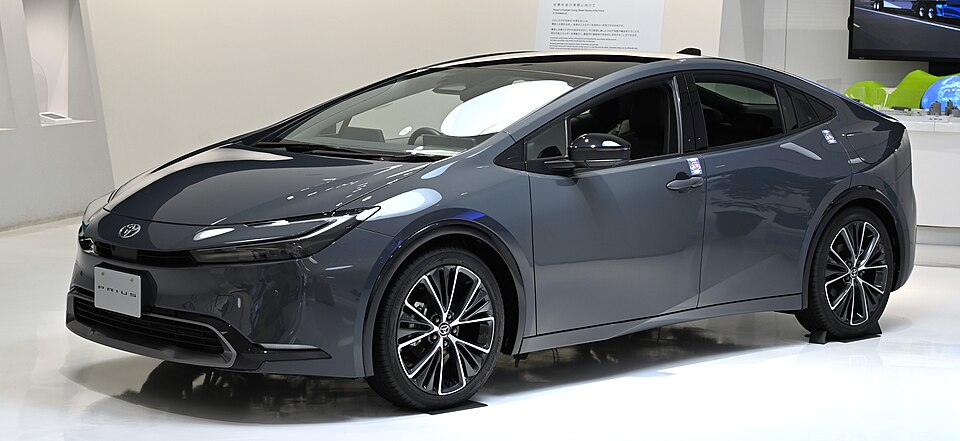
2019 Toyota Prius

Hybrid Midsize car

202720262025202420232022202120202019201820172016
Specs & fuel economyRecallsComplaintsCrash ratings
B
Safety Signal
81 / 100
BSafety Signal · 81 / 100
3Recalls · NHTSA campaigns
30Complaints · owner reports
5★Crash rating · NHTSA overall
56 mpgFuel economy · best combined

The 2019 Toyota Prius is sold in the U.S. as a hybrid midsize car with 3 EPA-rated configurations. The most efficient version, the Prius Eco, is EPA-rated at 56 mpg combined. NHTSA lists 3 recall campaigns for this model year, which gives it a Safety Signal grade of B. Owners have filed 30 complaints, most often about service brakes. NHTSA crash-tested it at 5 stars overall.

Specs & fuel economy (EPA)

ConfigurationPowertrainDriveEngine / motorCityHwyCombAnnual fuel*
Prius EcoHybridFWD1.8L 4-cyl + 207V Li-Ion585356$1,100
PriusHybridFWD1.8L 4-cyl + 207V Li-Ion545052$1,200
Prius AWDHybridPart-time 4WD1.8L 4-cyl + 202V Ni-MH524850$1,250

*EPA estimate at 15,000 miles/year and EPA reference fuel/electricity prices. Source: fueleconomy.gov vehicle records.

Out of factory warranty soon?

The 2019 Toyota Prius is in the years where transmission, electronics and drivetrain repairs land on the owner. Compare extended-coverage quotes in about two minutes.

Compare coverage →

Affiliate disclosure: some links on this page are affiliate links. If you request a quote or buy through them we may earn a commission at no extra cost to you. Data on this page is never influenced by that.

Recalls (3)

Electrical System

high
3,751 vehicles

Problem: Toyota Motor Engineering & Manufacturing (Toyota) is recalling certain 2019 Prius vehicles. An electrical short circuit in the combination meter could occur, causing the speedometer, the odometer, and the fuel gauge to go blank. As such, these vehicles fail to comply with the requirements of Federal Motor Vehicle Safety Standard (FMVSS) number 101, "Controls and Displays."

Risk: A blank main display will not show important information like vehicle speed or fuel level. Driving with an inoperative display can increase the risk of a crash.

Fix: Toyota will notify owners, and dealers will inspect the flash memory chip (ROM) production date, and if necessary, replace it along with the combination meter circuit board, free of charge. The recall began February 7, 2020. Owners may contact Toyota customer service at 1-888-270-9371. Toyota's numbers for this recall are 19TA21 and 19TB21.

NHTSA campaign 19V876000 · reported Dec 11, 2019 · Toyota Motor Engineering & Manufacturing

Electronic Stability Control (Esc)

high
6,925 vehicles

Problem: Toyota Motor Engineering & Manufacturing (Toyota) is recalling certain 2019 Lexus LS500, LC500, ES300h, UX250h, LS500h, Toyota Prius, RAV4 HV, 2019-2020 Toyota Prius Prime, and 2020 Corolla HV vehicles. The brake booster pump may fail causing a deactivation of the Vehicle Stability Control system and a loss of braking assist. As such, these vehicles fail to comply with the requirements of Federal Motor Vehicle Safety Standard (FMVSS) number 126, "Electronic Stability Control Systems."

Risk: Deactivation of the vehicle stability control system or a loss of braking assist increases the risk of a crash.

Fix: Toyota will notify owners, and dealers will inspect and, if necessary, replace the brake booster pump, free of charge. The recall began September 20, 2019. Toyota owners may contact Toyota customer service at 1-888-270-9371 and Lexus owners may contact Lexus customer service at 1-800-255-3987. Toyota's numbers for this recall are K1L/K0L. Lexus' numbers for this recall are K2F/KLF.

NHTSA campaign 19V544000 · reported Jul 24, 2019 · Toyota Motor Engineering & Manufacturing

Equipment

minor
3,634 vehicles

Problem: Gulf States Toyota (GST) is recalling certain 2019 C-HR, 4Runner, Avalon, Avalon Hybrid, Camry, Camry Hybrid, Highlander, Land Cruiser, Prius, RAV4, Sequoia, Tacoma, Sienna, Tundra and Yaris vehicles. The text on the load capacity label may become illegible. As such, these vehicles fail to comply with the requirements of Federal Motor Vehicle Safety Standard (FMVSS) number 110, "Tire Selection and Rims."

Risk: If the driver cannot read the label, they may unknowingly overload the vehicle, increasing the risk of a crash.

Fix: GST will notify owners, and dealers will provide corrected load carrying capacity modification labels, free of charge. The recall began May 24, 2019. Owners may contact GST customer service at 1-800-444-1074. GST's number for this recall is 19R1.

NHTSA campaign 19V244000 · reported Mar 27, 2019 · Gulf States Toyota, Inc.

NHTSA investigations

Electrical System:Propulsion System — Pedestrian alert sounds (closed)

NHTSA received a petition on or about July 18, 2022, requesting that Federal Motor Vehicle Safety Standard (FMVSS) 141 be applied to all electric and hybrid vehicles operating in the United States. The petition can be reviewed at NHTSA.gov under ODI Number 11486072. FMVSS 141 establishes performance requirements for pedestrian alert sounds for motor vehicles. The standard applies to hybrid and electric vehicles that have a gross vehicle weight rating of 4,536 KG or less or are defined as low-speed vehicles. The standard became fully applicable to all such vehicles manufactured on or after March 1, 2021.On January 27, 2023, NHTSA opened Defect Petition (DP) 22-005 to evaluate the subject matt

Opened Jan 27, 2023 · closed Aug 7, 2023 · action DP22005

Owner complaints

30 complaints filed

7 involved a crash, 0 a fire, 2 injuries, 0 deaths reported by owners.

Filed by year — 2019: 4 · 2020: 3 · 2021: 2 · 2022: 2 · 2023: 7 · 2024: 4 · 2025: 5 · 2026: 3

Most-cited components

  • Service Brakes — 9
  • Unknown Or Other — 8
  • Engine — 6
  • Vehicle Speed Control — 4
  • Air Bags — 4
“The contact owns a 2019 Toyota Prius. The contact stated while at a complete stop, another vehicle crashed into the rear of the vehicle and the vehicle began to accelerate unintendedly. The air bags failed to deploy. The brake pedal was depressed but failed to respond. The contact stated that he was able to prevent a c…”Jan 30, 2023 · Air Bags · NHTSA owner report
“Whenever it rains the warning message clean parking assist sensor comes on while you are driving. Even after you clean the sensors the warning continues to beep contiously. You can press the back button but it will not stop. Also proximity sensor comes on with this incident. After the rain stops the problem stops.”Jun 9, 2022 · Forward Collision Avoidance · NHTSA owner report
“At low speeds when the windows are down and music is playing on the internal speakers, it can drown out the pedestrian warning sound making it impossible for pedestrians to hear it”Feb 10, 2022 · Unknown Or Other · NHTSA owner report

Complaint counts are raw owner reports to NHTSA, not verified defects, and scale with how many were sold. Use them to spot patterns, not to rank.

Crash ratings

ConfigurationOverallFrontalSideRolloverRollover risk
5 HB AWD★★★★★★★★★☆★★★★★★★★★☆11%
5 HB FWD★★★★★★★★★☆★★★★★★★★★☆11%

NHTSA New Car Assessment Program. Standard driver-assist: forward collision warning, lane departure warning, automatic emergency braking.

Other Prius model years

A

2027 Prius

0 recalls · 0 complaints

A

2026 Prius

1 recalls · 9 complaints

A

2025 Prius

2 recalls · 18 complaints

B

2024 Prius

4 recalls · 23 complaints

B

2023 Prius

4 recalls · 19 complaints

A

2022 Prius

1 recalls · 24 complaints

A

2021 Prius

0 recalls · 6 complaints

A

2020 Prius

0 recalls · 14 complaints

B

2018 Prius

1 recalls · 37 complaints

D

2017 Prius

3 recalls · 91 complaints

F

2016 Prius

5 recalls · 154 complaints

Sources & method

Safety Signal starts every model-year at 100 and subtracts points per open NHTSA recall campaign by severity: critical 15 (fire risk, park-outside or do-not-drive advisories), high 8 (brakes, steering, airbags, loss of drive power, structure, battery), moderate 6, minor 3 (software, labels, lighting fixed by an update). Floor 35. A ≥ 90, B ≥ 80, C ≥ 70, D ≥ 60, otherwise F. Complaint counts and NHTSA crash ratings are shown separately and are not blended into the grade.

EPA figures come from fueleconomy.gov vehicle records (ids 41163, 41161, 41162). Recalls, complaints, investigations and crash ratings come from NHTSA's public flat files, refreshed weekly.

JSON for this page · API