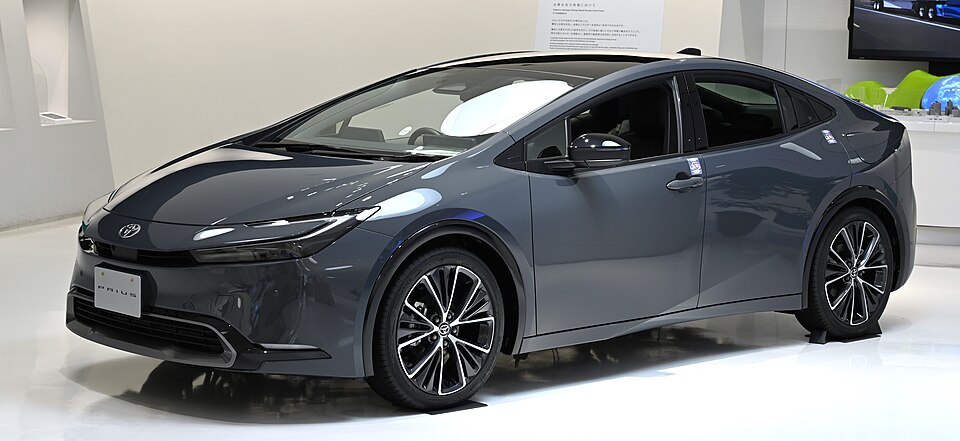
2017 Toyota Prius Prime
The 2017 Toyota Prius Prime is sold in the U.S. as a plug-in hybrid midsize sedan. The most efficient version, the Prius Prime, is EPA-rated at 54 mpg combined. NHTSA lists no recall campaigns for this model year so far (Safety Signal A). Owners have filed 42 complaints, most often about the visibility/wiper.

Specs & fuel economy
Source: EPA fueleconomy.gov| Configuration | Powertrain | Drive | Engine / motor | City | Hwy | Comb | Range | kWh/100mi | Charge (240V) | Annual fuel* |
|---|---|---|---|---|---|---|---|---|---|---|
| Prius Prime | Plug-in hybrid | FWD | 1.8L 4-cyl + 16 and 37 kW AC Induction | 55 | 53 | 54 (78 MPGe blended) | 25 mi electric | 25 | 2 h | $1,250 |
*EPA estimate at 15,000 miles/year at EPA reference fuel and electricity prices. fueleconomy.gov record ids: 38531.
Emissions & certification
Source: EPA emission certificates| Configuration | Smog rating | Emission standard | Where it can be sold new | SmartWay |
|---|---|---|---|---|
| Prius Prime | 8–9 / 10 | Federal Tier 3 Bin 30 / California LEV-III SULEV30/PZEV | All 50 states (federal, all altitudes); California and states following California standards | SmartWay Elite |
Certified for all fifty states, so it can be registered new anywhere in the U.S.
The smog rating scores tailpipe pollutants other than greenhouse gases, 1 (worst) to 10 (best), and is comparable only within a model year. The standard is the federal bin or California tier the configuration was certified to. Both come from the EPA certificate behind the window sticker.
Specifications filed with NHTSA
Source: NHTSA vPICDimensions Exterior
| Body style | Sedan/Saloon |
| Doors | 5 |
| GVWR class | Class 1: 6,000 lb or less (2,722 kg or less) |
Engine Basics
| Cylinders | 4 |
| Displacement | 1.8 L |
| Engine configuration | In-Line |
Engine Output
| Horsepower | 96 hp |
Fuel Economy
| Fuel | Electric |
Seating
| Seat rows | 2 |
| Seating capacity | 4 seats |
Transmission
| Drivetrain | 4x2 |
| Transmission | Electronic Continuously Variable (e-CVT) |
Driver assistance
Standard: Adaptive cruise control, Anti-lock brakes, Automatic emergency braking, Backup camera, Electronic stability control, Forward collision warning, Lane departure warning, Lane keeping assist, Pedestrian automatic emergency braking
Filed by the manufacturer with NHTSA under the federal vehicle-identification rule and decoded from the VIN pattern — not a manufacturer press kit, so it describes one configuration rather than every trim (seen: Three/Four/Four Adv). Figures for the trim you are looking at may differ.
Factory warranty running out?
The 2017 Toyota Prius Prime is in the years where high-voltage electronics and module repairs land on the owner. What an extended plan does and does not cover is worth reading before a dealer quotes you one.
What to check before you buy →Affiliate disclosure: some links on this page are affiliate links. If you request a quote or buy through them we may earn a commission at no extra cost to you. Nothing on this page changes because of it.
Recalls (0)
Source: NHTSA recall databaseNo NHTSA recall campaigns are on file for the 2017 Toyota Prius Prime. New campaigns appear here within a week of NHTSA posting them.
These are vehicle campaigns — the ones the automaker filed against this model. NHTSA also records equipment recalls, filed by a parts maker against a component (a tyre, a child seat, an aftermarket part), and those are not listed here or counted above. nhtsa.gov/recalls shows both for a VIN.
NHTSA defect investigations
Electrical System:Propulsion System — Pedestrian alert sounds closed
NHTSA received a petition on or about July 18, 2022, requesting that Federal Motor Vehicle Safety Standard (FMVSS) 141 be applied to all electric and hybrid vehicles operating in the United States. The petition can be reviewed at NHTSA.gov under ODI Number 11486072. FMVSS 141 establishes performance requirements for pedestrian alert sounds for motor vehicles. The standard applies to hybrid and electric vehicles that have a gross vehicle weight rating of 4,536 KG or less or are defined as low-speed vehicles. The standard became fully applicable to all such vehicles manufactured on or after March 1, 2021. On January 27, 2023, NHTSA opened Defect Petition (DP) 22-005 to evaluate the subject mat
Opened Jan 27, 2023 · closed Aug 7, 2023 · action DP22005 · the investigation’s page →
Hear about a recall before the letter does
The manufacturer’s letter is the last step of a recall: it has up to 60 days after filing to mail owners, at the address on the registration. We email you the day NHTSA posts a recall on the 2017 Toyota Prius Prime, with what to do next. Nothing else, ever — no newsletter, no marketing, one-click unsubscribe in every message.
Parts & accessories for the 2017 Toyota Prius Prime
Search by fitment on eBay Motors — OEM take-offs, aftermarket, and the trim pieces dealers no longer stock. The listing and the price are the seller's.
Find parts for this Prius Prime →Owner complaints
Source: NHTSA complaint database5 involved a crash · 0 a fire · 3 injuries · 0 deaths reported
12 per 10,000 built · Toyota reported 34,022 Prius Prime built (its Early Warning production report to NHTSA)
Filed per year: 2017: 9 · 2018: 8 · 2019: 1 · 2020: 4 · 2021: 6 · 2022: 1 · 2023: 4 · 2024: 3 · 2025: 4 · 2026: 2
Most-cited components
In owners' own words
Filed with NHTSA by the people who own these cars, one per problem area. Quoted as written, with anything identifying removed.
This vehicle rear ended another vehicle in peak hour stop and go traffic. The estimated speed at the time of impact was 10-15 MPH. There was exensive front end damage to the vehicle. The air bags did not deploy. Unclear if the AEB engaged but the driver actively tried braking but not successful in avoiding the collision
The following systems malfunctioned all at the same time on 2021-07-23 at approximately 5:00pm CDT traveling at ~70mph on the interstate in normal conditions in HV system mode: -Low Braking Power -ABS Control System Malfunction -Lane Departure Alert Malfunction -Traction Control Malfunction -Pre-Collision System Malfunction -This is…
Large screen sometimes goes blank and reboots, as if the car was just restarted. Vehicle is traveling when this occurs. Typically happens at cruising speeds
I lost power on overpass. Hybrid malfunction light, collision light, engine light all came on. Almost matching recall, but Toyota service told me it's a module and would cost 1200$ to fix. I told them no. charged me 144$ and I erased code, with no problem since? Toyota does not care and I complained?
Summary: have owned my Prius Prime for eight months and have needed to repair one windshield chip, replace my windshield once, and currently have another crack that cannot be repaired. Details: purchased my Prius Prime dec 10, 2017.
Car has loud continuous creaking/squeaking noise from left rear of the car. Sounds like it is coming from the suspension or body flexing when driving. It occurs when turning and reversing out of parking spaces. Also happens when car is going uphill and downhill and on winding roads. Driver seat also squeaks when in a certain position.
Complaint counts are raw owner reports to NHTSA, not verified defects, and scale with how many were sold. Use them to spot patterns, not to rank.
Reported by Toyota itself: 29 death-or-injury claims on this model year in its quarterly Early Warning reports to NHTSA (49 CFR 579.21): 32 injured, as claimed, not verified — about 85 per 100,000 built. Every Prius Prime model year, by year and system → Dated and by system, they are exhibit F of the defect dossier.
When owners reported it
miles, typically
Half the 17 owner reports with an odometer reading on file fall between 2,000 and 10,000 miles. That is when problems get reported, which is not the same as when they start — and not a failure rate, because nobody knows how many of these cars never had a problem at all.
Odometer readings as filed by owners with NHTSA. Readings under 100 or over 400,000 miles are dropped as data entry rather than history, and a component needs at least 12 readings before a median is shown for it.
Crash ratings
Source: NHTSA NCAPNHTSA has not published 5-Star crash ratings for this model year.
Service bulletins & campaigns
Source: NHTSA manufacturer communicationsMost often about: Equipment, Electrical System, Structure, Engine, Back Over Prevention.
- T-SB-0055-24 Rev2 Service bulletin2026-01-07 · Unknown Or Other
- Some 2005 – 2026 Toyota vehicles that have undergone water intrusion may exhibit a condition in which a musty odor is present. Follow the procedures in this bulletin to remediate the odor and address this condition. The purpose of this Service Bulletin is to provide general guidelines and procedures for odor remediation. This Service Bulletin provides a guide on how to prepare and treat the interi
- T-TT-0784-25 Rev1 Service bulletin2025-06-17 · Engine
- Some ECUs can set a DTC that is common with other ECUs. This can lead to accidental use of the wrong repair manual when diagnosing these type of DTCs.
- T-TT-0784-25 Service bulletin2025-06-13 · Engine
- Some ECUs can set a DTC that is common with other ECUs. This can lead to accidental use of the wrong repair manual when diagnosing these type of DTCs.
- T-SB-0058-23 Rev1 Service campaign2025-06-13 · Electrical System
- The air conditioning dye injection tool kit has been developed to aid in identifying the location of air conditioning refrigerant leaks. The procedures outlined in this Service Bulletin aid in locating, inspecting, and repairing refrigerant leaks.
- T-SB-0039-24 Rev2 Service bulletin2024-12-06 · Structure — Body
- The condition known as acid rain is caused by airborne chemicals or particles in the atmosphere, which mix with rainwater, nighttime dew, or high humidity to form acidic compounds. If these contaminants settle and remain on a painted vehicle surface, especially the horizonal areas of the hood, roof, and decklid, significant damage can occur. This damage is the result of actual etching of the paint
- T-SB-0038-24 Rev2 Service bulletin2024-12-06 · Structure — Body
- To prevent brake rotor rust from forming during transportation and storage, wheel film will be used instead of a cardboard type of anti-rust cover. The purpose of the wheel film is to shield the disc brake rotor from weather elements and initial rust before the vehicle is delivered to the customer. Consequently, the film should remain on the wheel for as long as possible.
- T-SB-0035-24 Rev2 Service bulletin2024-12-06 · Structure — Body
- Acid rain results from rainwater or other airborne moisture that become acidic due to industrial chemical impurities in the atmosphere. If these acidic compounds settle on an exposed vehicle, especially the horizontal areas such as the hood, roof, and decklid, significant damage to the painted surfaces can occur. Acid rain damage can typically be identified on vehicles by the presence of stains on
- T-SB-0061-23 Rev2 Service bulletin2024-12-05 · Structure — Body
- Toyota vehicles are currently protected with RapgardTM protective film designed to protect the horizontal painted surfaces. This material protects from acid rain, environmental fallout, and rail contamination. Follow the Removal Procedure in this bulletin to remove the RapgardTM protective film within 90 days from initial application.
A service bulletin is the manufacturer telling its dealers how to diagnose or repair a known condition. It is not a recall, not a finding that the vehicle is defective, and the work is not automatically free — though a bulletin is often what a dealer works from when you describe a symptom, so quoting the document number can save a diagnosis. The count is every communication filed; the list shows the most recent, one entry per campaign, because a single campaign is usually filed as several documents on the same day. The summaries are NHTSA's; the full documents come from the manufacturer.
At the New York inspection station
Source: New York State DMVIn New York’s inspection lanes over the 12 months to Oct 10, 2026, the 2017 Toyota Prius Prime failed the emissions check on 1.4% of first inspections — lower than the 3.7% for every 2017 model-year vehicle inspected; and the safety inspection on 2.0% (every 2017 vehicle: 2.1%).
failed emissions
1,966 initial inspections of 1,923 vehicles.
| Measure | The 2017 Prius Prime | Every 2017 vehicle | Behind it |
|---|---|---|---|
| Failed the emissions check | 1.4% | 3.7% | 1,962 |
| Failed the safety inspection | 2.0% | 2.1% | 1,966 |
| Air-bag warning lamp stayed lit | 0.36% | 0.25% | 1,966 |
| Miles driven a year | 10,362 | 10,048 | odometer at inspection |
| Average odometer | 96,168 | 93,238 | odometer at inspection |
New York’s emissions test on these model years is an on-board diagnostics check: it fails a car whose check-engine light is on or whose self-tests have not finished. First inspections only, so a car that failed and came back is counted once; private and special plates, not taxis, livery or commercial plates. A rate appears only where at least 200 inspections stand behind it. “Every 2017 vehicle” is every 2017 model-year car, SUV and pickup inspected in the same window, all makes. This is the state’s record of test results, not a reliability score by itself. Source: New York State Department of Motor Vehicles, Vehicle Inspections (data.ny.gov, Open NY terms).
Prius Prime by model year
all years, side by side →Common questions about the 2017 Prius Prime
Source: EPA, NHTSA and manufacturer press kitsDoes the 2017 Toyota Prius Prime have any recalls?
No NHTSA recall campaigns are on file for the 2017 Toyota Prius Prime. New campaigns appear here within a week of NHTSA posting them, and a clean sheet on a recent model year often just means the vehicle is new.
How safe is the 2017 Toyota Prius Prime?
NHTSA has not published a crash-test rating for the 2017 Toyota Prius Prime yet. On the recall record WhichTrim grades it A (100/100), which measures open and severe recalls rather than crash protection.
What is the fuel economy of the 2017 Toyota Prius Prime?
For the 2017 Toyota Prius Prime, the best EPA combined figure is 54 mpg (MPGe on the electrified versions). Figures are the EPA's own, per configuration, and every one is listed above.
What do owners complain about on the 2017 Toyota Prius Prime?
Owners have filed 42 complaints with NHTSA about the 2017 Toyota Prius Prime, most often about visibility/wiper, electrical system, unspecified. Of those, 5 involved a crash, 3 reported injuries. Complaints are unverified owner reports, so treat the pattern as a signal and the individual report as an anecdote.
How clean is the 2017 Toyota Prius Prime?
The EPA smog rating for the 2017 Toyota Prius Prime runs 8 to 9 out of 10 across its configurations. That score covers tailpipe pollutants other than greenhouse gases, and it only compares vehicles within the same model year. It is certified for all fifty states, so it can be registered new anywhere in the U.S. Its configurations were certified to different standards — California LEV-III SULEV30/PZEV, Federal Tier 3 Bin 30 — which the table above lists per configuration.
Are there service bulletins for the 2017 Toyota Prius Prime?
The manufacturer has filed 108 service bulletins and related communications with NHTSA for the 2017 Toyota Prius Prime, most often covering equipment, electrical system, structure. The most recent is dated 2026-01-07. A bulletin is not a recall: it is the repair procedure a manufacturer sends its dealers for a condition it knows about, and the work is not automatically paid for. It is still worth knowing — if the symptom matches, quoting the bulletin number at the service desk can save a diagnosis. The document numbers and summaries are listed above.
How does the 2017 Toyota Prius Prime do at state inspection?
In New York’s inspection lanes over the 12 months to Oct 10, 2026, the 2017 Toyota Prius Prime failed the emissions check on 1.4% of first inspections — lower than the 3.7% for every 2017 model-year vehicle inspected; and the safety inspection on 2.0% (every 2017 vehicle: 2.1%). The figures are New York State DMV’s own inspection records, first inspections only, and the table above sets each one against every vehicle of the same model year.
What we hold, and what an empty row means
Paid vehicle-history reports will not tell you the difference between “nothing happened to this car” and “we never received that record” — both of the big two say as much in their own help pages. Most of what is on this page comes from complete federal registers, so we can tell you which is which, row by row.
| Data | Held | Source | What it covers — or what empty means |
|---|---|---|---|
| Fuel economy & configurations | 1 configurations | EPA certification records | Every configuration the EPA certified for sale, with its own test figures. |
| Emission certificates | 1 configurations | EPA emission certificates | Smog rating, standard and the sales area that decides where the car can be sold new. |
| Recalls | none | NHTSA recall campaigns | No campaign has been filed. Because the register is complete, an empty row here means there is nothing to find — not that we are missing it. |
| Owner complaints | 42 | NHTSA complaint database | Also complete, but unverified: these are reports owners filed, not findings. Counts scale with how many were sold. |
| Crash ratings | none | NHTSA NCAP | NHTSA has not tested this model year. Cars are selected for testing, so untested is not unsafe. |
| Service bulletins | 108 | NHTSA manufacturer communications | Everything the manufacturer told its dealers about a defect or malfunction, short of a recall. |
| Investigations | 1 | NHTSA Office of Defects Investigation | Open and closed defect investigations, with the agency's own narrative. |
| Driver-assist crash reports | none | NHTSA Standing General Order 2021-01 | No report has been filed. Only entities named in the order report, and only crashes they hear of — so this is also what an unequipped car, or a manufacturer without telematics, looks like. |
| Specifications filed with NHTSA | 12 fields | NHTSA vPIC, decoded from VIN patterns | What the manufacturer filed under the federal VIN rule — a configuration, not the full trim ladder. |
| Trims, pricing & equipment | none | Manufacturer press kit | We have not transcribed a press kit for this model year yet. This is our gap, not the manufacturer's — the one row here where an empty cell means we are behind. |
Rebuilt nightly; this page was generated 2026-10-26. Every figure above is traceable to the source named beside it, and the JSON for this page carries the same values with their identifiers.
Sources & method
Safety Signal starts every model-year at 100 and subtracts points per open NHTSA recall campaign by severity: critical 15 (fire risk, park-outside or do-not-drive advisories), high 8 (brakes, steering, airbags, loss of drive power, structure, battery), moderate 6, minor 3 (software, labels, lighting fixed by an update). The most serious recall counts in full and each further one counts 85% of the one before, because a vehicle sold in millions is recalled more often than a rare one without being more dangerous — and because a flat subtraction bottomed the scale out, scoring a vehicle with 22 recalls within a point of one with six. A ≥ 90, B ≥ 80, C ≥ 70, D ≥ 60, otherwise F. Read it as what it counts: recall campaigns on the federal record, weighted by severity. The damping reduces the sales bias by roughly 40% but does not remove it: like our complaint counts, this is not normalized by how many were sold, so a best-seller still scores somewhat worse than an obscure model with the same real risk. NHTSA crash ratings, do-not-drive and park-outside advisories, and the crash, fire, injury and death counts in owner complaints are reported separately on every page and never blended into the letter — a vehicle can hold five stars and a poor letter at once, and where that happens we say so rather than leave you to notice. Because the scale subtracts from a clean sheet, a model year too new to have been recalled, complained about or bulletined scores full marks on an empty record; we label those grades provisional rather than present them as earned.
EPA figures come from fueleconomy.gov vehicle records. Recalls, complaints, investigations and crash ratings come from NHTSA's public flat files, refreshed nightly.