Honda HR-V
Every model year 2016–2027: recalls, owner complaints, NHTSA crash ratings and EPA efficiency side by side, each value traced to the file it came from.
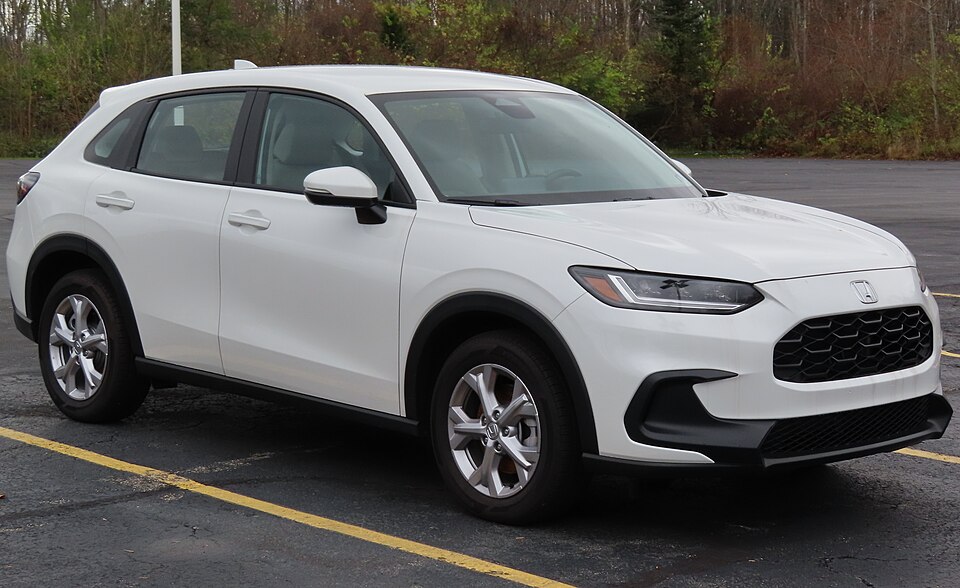

Every Honda HR-V model year
Source: NHTSA · EPA · one row per year| Year | Powertrains | Safety | Recalls | Complaints | Crash | Best efficiency | |
|---|---|---|---|---|---|---|---|
| 2027 | Gas | A | 0 | 6 | — | 28 mpg | |
| 2026 | Gas | A | 0 | 18 | ★★★★★ | 28 mpg | |
| 2025 | Gas | A | 1 | 48 | ★★★★★ | 28 mpg | |
| 2024 | Gas | C | 4 | 110 | ★★★★★ | 28 mpg | |
| 2023 | Gas | C | 3 | 687 | ★★★★★ | 28 mpg | |
| 2022 | Gas | B | 3 | 89 | ★★★★★ | 30 mpg | |
| 2021 | Gas | C | 4 | 64 | ★★★★★ | 30 mpg | |
| 2020 | Gas | C | 5 | 85 | ★★★★★ | 30 mpg | |
| 2019 | Gas | D | 7 | 236 | ★★★★★ | 30 mpg | |
| 2018 | Gas | C | 3 | 160 | ★★★★★ | 31 mpg | |
| 2017 | Gas | A | 0 | 123 | ★★★★★ | 31 mpg | |
| 2016 | Gas | B | 2 | 243 | ★★★★★ | 31 mpg |
Which model year the record favours
Source: recalls and complaints per year on the roadOn the filed record so far, the 2017 is the cleanest HR-V year we hold, and the 2023 the one to check hardest.
Both figures are divided by the number of years the car has been on sale, because otherwise the oldest year on the page loses every time simply for having been around longer. The current model year and any year under three on the road are left out: their records are not finished.
Which Honda HR-V years reported which system early
Source: NHTSA complaints, odometer at reportEarliest on the record: 2017 electrical system complaints at 0.79× the mileage of same-age vehicles (median 27,815 miles). Latest: 2019 fuel/propulsion system at 1.59× (28,000 miles).
Each cell is that model year’s median odometer when owners reported the system, divided by the median for the same system across every make’s complaints on the same model year. under 0.67× reported early; 1.5× or more late; a dash means too few readings. When problems get reported, not how often — complaint counts are in the table above. Across the whole fleet: which systems go first.
What owners filed about the Honda HR-V, by system
Source: NHTSA complaints, recalls, investigations and manufacturer communicationsEvery system, every year →The systems the federal record is deep on for this nameplate: the complaints per model year, the mileage owners reported them at, and every recall, investigation and manufacturer bulletin filed under the heading — each one linked, none a failure rate.
What changed year to year
Source: computed from the filed record- 2023: best combined mpg 30 → 28; 4 → 2 EPA configurations
- 2019: best combined mpg 31 → 30; 5 → 4 EPA configurations
| Head-to-head | Verdict | |
|---|---|---|
| 2027 HR-V vs Chevrolet Equinox · Compact SUV | Equinox +29 | |
| 2027 HR-V vs Kia Sportage · Compact SUV | Sportage +27 | |
| 2027 HR-V vs Kia Sorento · Compact SUV | Sorento +10.6 | |
| 2027 HR-V vs Jeep Wrangler · Compact SUV | HR-V +5.3 | |
| 2026 HR-V vs Nissan Rogue · Compact SUV | HR-V +6 | |
| 2026 HR-V vs Hyundai Tucson · Compact SUV | Tucson +7.1 |
Common questions about the Honda HR-V
Source: EPA, NHTSA and manufacturer press kitsWhich Honda HR-V year is the best used buy?
On the recall record, the 2017 HR-V comes out top of the years before the current one: Safety Signal grade A (100/100), 0 recalls and 123 owner complaints on file. That ranks paperwork, not condition — a specific car's history and service record still decide it.
What Honda HR-V years should I avoid?
2019 has the weakest recall record in this range. The year pages list every campaign, its severity and whether a repair exists yet. Every HR-V model year ranked, with the reasons.
How many recalls does the Honda HR-V have?
Across model years 2016–2027, NHTSA has posted 32 recall campaigns for the Honda HR-V. They are counted per model year in the table above, because a campaign almost never covers the whole run — it covers a build range.