⌘K
Your vehicleHome›Honda›Clarity› 2017
Honda · Midsize Sedan

2017 Honda Clarity

Electric Hydrogen fuel cell
Midsize Cars
2 EPA-rated configurations
Data refreshed 2026-10-26
C
Safety Signal
79 / 100 from the NHTSA recall record
RecallsNHTSA campaigns 3
Complaintsnone reporting a crash, fire or injury 5
Crash ratingnot rated by NHTSA —
EV rangebest configuration, EPA 89 mi
Fuel economybest combined, EPA 68 mpg
20212020201920182017

The 2017 Honda Clarity is sold in the U.S. as an electric and hydrogen fuel cell midsize sedan with 2 EPA-rated configurations. Its longest-range version, the Clarity EV, is EPA-rated at 89 miles with 114 MPGe combined efficiency. NHTSA lists 3 recall campaigns for this model year, which gives it a Safety Signal grade of C. Owners have filed 5 complaints, most often about the electrical system.

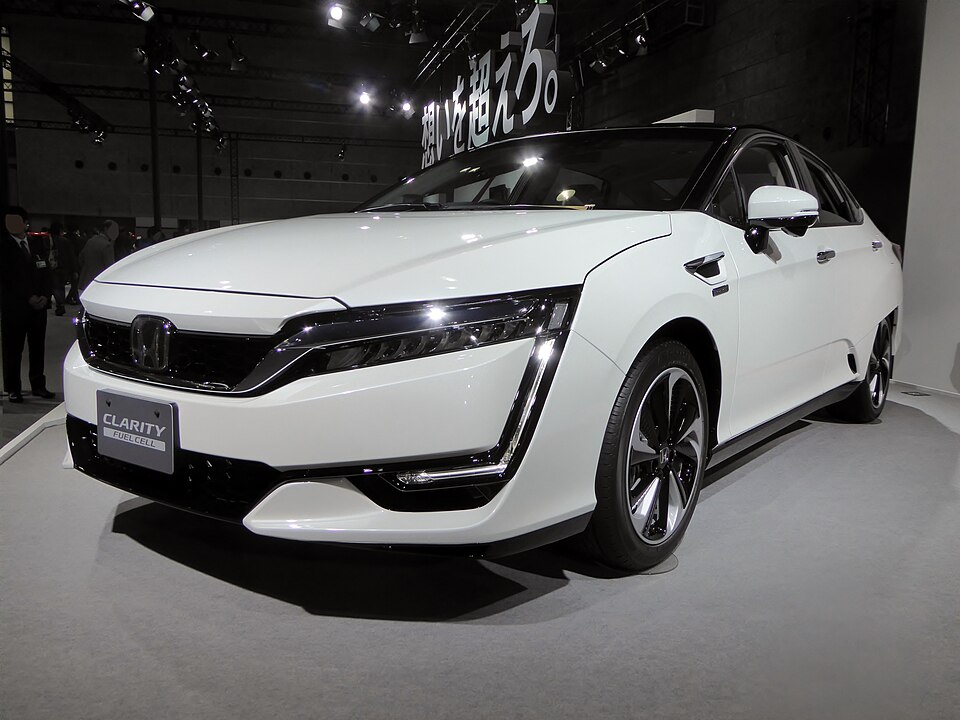
Honda Clarity — photograph via Wikimedia Commons
Honda Clarity · Photo: Tokumeigakarinoaoshima · CC BY-SA 4.0 · Wikimedia Commons

Specs & fuel economy

Source: EPA fueleconomy.gov
ConfigurationPowertrainDriveEngine / motorCityHwyCombRangekWh/100miCharge (240V)Annual fuel*
Clarity EVElectricFWD120 kW AC PMSM126103114 MPGe89 mi304 h$700
Clarity FCVHydrogen fuel cellFWD130 kW AC PMSM696768————

*EPA estimate at 15,000 miles/year at EPA reference fuel and electricity prices. fueleconomy.gov record ids: 39191, 47526.

Emissions & certification

Source: EPA emission certificates
ConfigurationSmog ratingEmission standardWhere it can be sold newSmartWay
Clarity EV10 / 10Federal Tier 3 Bin 0 / ZEVAll 50 states (federal, all altitudes); California and states following California standardsSmartWay Elite
Clarity FCV10 / 10Federal Tier 3 Bin 0 / California ZEVAll 50 states (federal, all altitudes); California and states following California standardsSmartWay Elite

Certified for all fifty states, so it can be registered new anywhere in the U.S.

The smog rating scores tailpipe pollutants other than greenhouse gases, 1 (worst) to 10 (best), and is comparable only within a model year. The standard is the federal bin or California tier the configuration was certified to. Both come from the EPA certificate behind the window sticker.

Specifications filed with NHTSA

Source: NHTSA vPIC

Dimensions Exterior

Body styleSedan/Saloon
Doors4
GVWR classClass 1D: 5,001 - 6,000 lb (2,268 - 2,722 kg)

Fuel Economy

FuelCompressed Hydrogen/Hydrogen

Seating

Seat rows2
Seating capacity5 seats

Transmission

Drivetrain4x2

Driver assistance

Standard: Adaptive cruise control, Anti-lock brakes, Backup camera, Blind-spot monitoring, Electronic stability control, Forward collision warning, Lane departure warning, Lane keeping assist

Filed by the manufacturer with NHTSA under the federal vehicle-identification rule and decoded from the VIN pattern — not a manufacturer press kit, so it describes one configuration rather than every trim (seen: Electric Touring). Figures for the trim you are looking at may differ.

Advertisement

Factory warranty running out?

The 2017 Honda Clarity is in the years where high-voltage electronics and module repairs land on the owner. What an extended plan does and does not cover is worth reading before a dealer quotes you one.

What to check before you buy →

Affiliate disclosure: some links on this page are affiliate links. If you request a quote or buy through them we may earn a commission at no extra cost to you. Nothing on this page changes because of it.

Recalls (3)

Source: NHTSA recall database
▲high

Equipment

N5H
1,082 vehicles 62% reported repaired built Nov 17, 2016 – Dec 28, 2017
Problem Honda (American Honda Motor Co.) is recalling certain 2017-2018 Clarity Fuel Cell vehicles. Internal components may corrode and cause the water pump to fail. Risk A failure of the water pump can cause the vehicle to stall, increasing the risk of crash. Fix Honda will notify owners, and dealers will replace the water pump, free of charge. The recall began June 10, 2019. Owners may contact Honda customer service at 1-888-234-2138. Honda's number for this recall is L4N.
NHTSA campaign 19V315000 reported Apr 18, 2019 Honda (American Honda Motor Co.) the full filing, and every vehicle covered →
▲high

Hybrid Propulsion System

A3O
1,082 vehicles 98% reported repaired built Nov 17, 2016 – Dec 28, 2017
Problem Honda (American Honda Motor Co.) is recalling certain 2017-2018 Clarity Fuel Cell vehicles previously repaired under recall 18V-068. The previous software remedy may have been incomplete. As a result, the fuel cell control unit (FC-ECU) may misinterpret a small cell voltage drop, causing the vehicle to have a partial or complete loss of power. Risk A loss of power can increase the risk of a crash. Fix Honda has notified owners, and dealers will update the FC-ECU software, free of charge. The recall began February 14, 2019. Owners may contact Honda customer service at 1-888-234-2138. Honda's number for this recall is A3O.
NHTSA campaign 18V921000 reported Dec 20, 2018 Honda (American Honda Motor Co.) the full filing, and every vehicle covered →
▲high

Hybrid Propulsion System

R0L
471 vehicles 100% reported repaired built Nov 17, 2016 – Jul 20, 2017
Problem Honda (American Honda Motor Co.) is recalling certain 2017 Clarity Fuel Cell vehicles. The fuel cell control unit (FC-ECU) may misinterpret a small cell voltage drop, causing the vehicle to have reduced, or a complete loss of, power. Risk A loss of power can increase the risk of a crash. Fix Honda will notify owners, and dealers will install a software update, free of charge. The recall began February 28, 2018. Owners may contact Honda customer service at 1-888-234-2138. Honda's number for this recall is R0L.
NHTSA campaign 18V068000 reported Jan 25, 2018 Honda (American Honda Motor Co.) the full filing, and every vehicle covered →

These are vehicle campaigns — the ones the automaker filed against this model. NHTSA also records equipment recalls, filed by a parts maker against a component (a tyre, a child seat, an aftermarket part), and those are not listed here or counted above. nhtsa.gov/recalls shows both for a VIN.

NHTSA defect investigations

Electrical System:Propulsion System — Pedestrian alert sounds closed

NHTSA received a petition on or about July 18, 2022, requesting that Federal Motor Vehicle Safety Standard (FMVSS) 141 be applied to all electric and hybrid vehicles operating in the United States. The petition can be reviewed at NHTSA.gov under ODI Number 11486072. FMVSS 141 establishes performance requirements for pedestrian alert sounds for motor vehicles. The standard applies to hybrid and electric vehicles that have a gross vehicle weight rating of 4,536 KG or less or are defined as low-speed vehicles. The standard became fully applicable to all such vehicles manufactured on or after March 1, 2021. On January 27, 2023, NHTSA opened Defect Petition (DP) 22-005 to evaluate the subject mat

Opened Jan 27, 2023 · closed Aug 7, 2023 · action DP22005 · the investigation’s page →

Whether any of this applies to one specific Clarity

A campaign covers a build range, not a model year, so two identical-looking cars from 2017 can differ. Both of these check a VIN against the manufacturer’s own list, free, in about ten seconds. Honda publishes its own lookup because federal rule 49 CFR 573.15 requires it to, and to keep it current to within seven days.

Hear about a recall before the letter does

The manufacturer’s letter is the last step of a recall: it has up to 60 days after filing to mail owners, at the address on the registration. We email you the day NHTSA posts a recall on the 2017 Honda Clarity, with what to do next. Nothing else, ever — no newsletter, no marketing, one-click unsubscribe in every message.

Advertisement

Parts & accessories for the 2017 Honda Clarity

Search by fitment on eBay Motors — OEM take-offs, aftermarket, and the trim pieces dealers no longer stock. The listing and the price are the seller's.

Find parts for this Clarity →

Owner complaints

Source: NHTSA complaint database
5complaints filed

0 involved a crash · 0 a fire · 0 injuries · 0 deaths reported

21 per 10,000 built · Honda reported 2,429 Clarity built (its Early Warning production report to NHTSA)

Filed per year: 2017: 1 · 2018: 2 · 2019: 2

Most-cited components

Electrical System 2
Steering 2
Equipment 2
Service Brakes 1
Electronic Stability Control 1
Fuel/Propulsion System 1

In owners' own words

Filed with NHTSA by the people who own these cars, one per problem area. Quoted as written, with anything identifying removed.

The contact owns a 2017 Honda Clarity fuel cell. While driving approximately 65 MPH, the fuel system indicator illuminated. The manufacturer was made aware of the failure and instructed the dublin dealer to ship the vehicle to an unknown dealer in los angeles, ca where the hydrogen fuel tank was replaced.
Fuel/Propulsion System at 10,000 miles Nov 12, 2019 NHTSA owner report · ODI 11279670
The contact owns a 2017 Honda Clarity fuel cell. The contact received a recall notification for NHTSA campaign number: 19v315000 (equipment) and stated that the manufacturer exceeded a reasonable amount of time to repair the vehicle. Ken harvey's dublin Honda (6300 dublin blvd, dublin, ca 94568) confirmed parts were not available.
Equipment Sep 24, 2019 NHTSA owner report · ODI 11257802
First time car failed around april 201. It displayed engine failure, emissions system problem, road departure mitigation problem, adaptive cruse control problem. The hybrid system was disabled and I had to call a tow truck to have the car towed to the dealer.
Power Train at 5,500 miles Jul 5, 2018 NHTSA owner report · ODI 11109727
The car was parked for about 10 mins. Return to car and start it. The 'power management' warning displayed. Following with brake system, TPMS, electric power steering, and rdm inoperate message show up. Car could not start up
Electronic Stability Control at 1,400 miles Feb 22, 2018 NHTSA owner report · ODI 11074217
After car was charged overnight, while driving on freeway yellow warning light and message indicated car should be taken in for service, and a warning light that battery was low and would transition to low power mode.
Service Brakes at 111 miles Dec 5, 2017 NHTSA owner report · ODI 11052444

Complaint counts are raw owner reports to NHTSA, not verified defects, and scale with how many were sold. Use them to spot patterns, not to rank.

Reported by Honda itself: 1 death-or-injury claim on this model year in its quarterly Early Warning reports to NHTSA (49 CFR 579.21): 1 injured, as claimed, not verified — about 41 per 100,000 built. Every Clarity model year, by year and system → Dated and by system, they are exhibit F of the defect dossier.

Crash ratings

Source: NHTSA NCAP

NHTSA has not published 5-Star crash ratings for this model year.

Service bulletins & campaigns

Source: NHTSA manufacturer communications
Communicationsfiled with NHTSA 34
Most recentmanufacturer date 2022-09-21
Kindsas classified by NHTSA 34 service bulletins

Most often about: Electrical System, Fuel/Propulsion System, Steering, Engine, Equipment.

  • ONL6CK09212022 Service bulletin
    2022-09-21 · Electrical System
  • Owner's Notification Letter - Product Update - Our records indicate that a Product Update has not been completed on this vehicle (Vehicle Identification Number XXXXXXXXXXXXXXXXX). The software that monitors the temperature in the fuel cell tank may not be up to date. This may cause the vehicle to incorrectly display a hydrogen system warning on the instrument panel and store a system malfunction.
  • A22090A Service bulletin
    2022-09-16 · Electrical System
  • Dealer Message - In the event you experience a sub tank wire harness rodent damage on the 2017–2020 Clarity FCV, after repairing / replacing the wire harness, wrap the areas shown below with RODENT DETERRENT TAPE, P/N 4019-2317.
  • A20-092 Service bulletin
    2020-12-09 · Fuel System, Gasoline
  • Service Bulletin - The customer cannot refuel the vehicle completely at certain hydrogen stations.
  • A20-061 Service bulletin
    2020-10-21 · Fuel System, Diesel — Storage — Tank Assembly
  • Service Bulletin - The MIL comes on with DTC P1FBF (air pump controller failure [internal failure warning]) during startup.
  • A20-061 Service bulletin
    2020-09-02 · Fuel System, Other — Storage — Tank Assembly
  • Service Bulletin - The MIL comes on with DTC P1FBF (air pump controller failure [internal failure warning]) during startup.
  • A19-054_version3 Service bulletin
    2020-04-06 · Electrical System
  • Service Bulletin - The fuel cell (FC) system uses an electric water pump to circulate insulating fluid and remove excess heat from the fuel cell stack. During manufacturing, the water pump's magnetic surface was not treated for corrosion resistance. Over time, the corrosion may prevent the water pump's motor from starting, which will prevent the vehicle from starting. If this happens while driving
  • A19-006 Service bulletin
    2020-04-06 · Electrical System
  • Service Bulletin - Water improperly discharged inside the fuel cell (FC) stack mixes with hydrogen and oxygen, generating hydrogen peroxide. The hydrogen peroxide/water combination concentrates in one area, accelerating the deterioration of the electrolyte membrane in the fuel cell. This deterioration can reduce fuel cell output.
  • AJA11262 Service bulletin
    2019-10-05 · Electrical System
  • Job Aid - American Honda has created an instructional video on how to replace the fuel cell stack. When working on or around the fuel cell system, pay attention to the service precautions for the fuel cell system.

A service bulletin is the manufacturer telling its dealers how to diagnose or repair a known condition. It is not a recall, not a finding that the vehicle is defective, and the work is not automatically free — though a bulletin is often what a dealer works from when you describe a symptom, so quoting the document number can save a diagnosis. The count is every communication filed; the list shows the most recent, one entry per campaign, because a single campaign is usually filed as several documents on the same day. The summaries are NHTSA's; the full documents come from the manufacturer.

Diagnostic trouble codes on file

Source: NHTSA manufacturer communications and complaints

Codes documented against this model year in the federal record. A code appearing here does not mean this vehicle will set it — it means the code is part of this nameplate-year's documented history.

CodeWhat it meansMost often filed underWhere it appears
P1F76Manufacturer-defined — the meaning is set by the automaker, not the standard.Electrical System · Battery →2 bulletins
P1F77Manufacturer-defined — the meaning is set by the automaker, not the standard.Electrical System · Battery →2 bulletins
P1FBFManufacturer-defined — the meaning is set by the automaker, not the standard.Fuel/Propulsion System · Fuel pump →2 bulletins

Generic codes (the second character is 0 or 2) mean the same thing on every vehicle sold in the United States. Manufacturer-specific codes (1 or 3) mean whatever the automaker assigned, and no honest source can define them for you — which is why the ones here carry the evidence instead of a definition. A code is a link when enough separate federal documents name it across the catalogue to be worth a page of its own; the rest are listed here, where the vehicle is the context that makes them mean something.

Affiliate disclosure: some links on this page are affiliate links. If you request a quote or buy through them we may earn a commission at no extra cost to you. Nothing on this page changes because of it.

Common questions about the 2017 Clarity

Source: EPA, NHTSA and manufacturer press kits

Does the 2017 Honda Clarity have any recalls?

NHTSA has posted 3 recall campaigns for the 2017 Honda Clarity. The most serious on file is 19V315000, covering Equipment. Check your own VIN at nhtsa.gov/recalls; a recall applies to specific build ranges, not every car.

How safe is the 2017 Honda Clarity?

NHTSA has not published a crash-test rating for the 2017 Honda Clarity yet. On the recall record WhichTrim grades it C (79/100), which measures open and severe recalls rather than crash protection.

What is the fuel economy of the 2017 Honda Clarity?

Across the 2 EPA-rated configurations of the 2017 Honda Clarity, the best EPA combined figure is 68 mpg (MPGe on the electrified versions) and the longest EPA range is 89 miles on a charge. Figures are the EPA's own, per configuration, and every one is listed above.

What do owners complain about on the 2017 Honda Clarity?

Owners have filed 5 complaints with NHTSA about the 2017 Honda Clarity, most often about electrical system, steering, equipment. Complaints are unverified owner reports, so treat the pattern as a signal and the individual report as an anecdote.

How clean is the 2017 Honda Clarity?

The EPA smog rating for the 2017 Honda Clarity is 10 out of 10. That score covers tailpipe pollutants other than greenhouse gases, and it only compares vehicles within the same model year. It is certified for all fifty states, so it can be registered new anywhere in the U.S. Its configurations were certified to different standards — California ZEV, Federal Tier 3 Bin 0, ZEV — which the table above lists per configuration.

Are there service bulletins for the 2017 Honda Clarity?

The manufacturer has filed 34 service bulletins and related communications with NHTSA for the 2017 Honda Clarity, most often covering electrical system, fuel/propulsion system, steering. The most recent is dated 2022-09-21. A bulletin is not a recall: it is the repair procedure a manufacturer sends its dealers for a condition it knows about, and the work is not automatically paid for. It is still worth knowing — if the symptom matches, quoting the bulletin number at the service desk can save a diagnosis. The document numbers and summaries are listed above.

What we hold, and what an empty row means

Paid vehicle-history reports will not tell you the difference between “nothing happened to this car” and “we never received that record” — both of the big two say as much in their own help pages. Most of what is on this page comes from complete federal registers, so we can tell you which is which, row by row.

DataHeldSourceWhat it covers — or what empty means
Fuel economy & configurations2 configurationsEPA certification recordsEvery configuration the EPA certified for sale, with its own test figures.
Emission certificates2 configurationsEPA emission certificatesSmog rating, standard and the sales area that decides where the car can be sold new.
Recalls3NHTSA recall campaignsA complete federal register: every campaign covering this model year, with severity and advisory flags.
Owner complaints5NHTSA complaint databaseAlso complete, but unverified: these are reports owners filed, not findings. Counts scale with how many were sold.
Crash ratingsnoneNHTSA NCAPNHTSA has not tested this model year. Cars are selected for testing, so untested is not unsafe.
Service bulletins34NHTSA manufacturer communicationsEverything the manufacturer told its dealers about a defect or malfunction, short of a recall.
Investigations1NHTSA Office of Defects InvestigationOpen and closed defect investigations, with the agency's own narrative.
Driver-assist crash reportsnoneNHTSA Standing General Order 2021-01No report has been filed. Only entities named in the order report, and only crashes they hear of — so this is also what an unequipped car, or a manufacturer without telematics, looks like.
Specifications filed with NHTSA7 fieldsNHTSA vPIC, decoded from VIN patternsWhat the manufacturer filed under the federal VIN rule — a configuration, not the full trim ladder.
Trims, pricing & equipmentnoneManufacturer press kitWe have not transcribed a press kit for this model year yet. This is our gap, not the manufacturer's — the one row here where an empty cell means we are behind.

Rebuilt nightly; this page was generated 2026-10-26. Every figure above is traceable to the source named beside it, and the JSON for this page carries the same values with their identifiers.

Sources & method

Safety Signal starts every model-year at 100 and subtracts points per open NHTSA recall campaign by severity: critical 15 (fire risk, park-outside or do-not-drive advisories), high 8 (brakes, steering, airbags, loss of drive power, structure, battery), moderate 6, minor 3 (software, labels, lighting fixed by an update). The most serious recall counts in full and each further one counts 85% of the one before, because a vehicle sold in millions is recalled more often than a rare one without being more dangerous — and because a flat subtraction bottomed the scale out, scoring a vehicle with 22 recalls within a point of one with six. A ≥ 90, B ≥ 80, C ≥ 70, D ≥ 60, otherwise F. Read it as what it counts: recall campaigns on the federal record, weighted by severity. The damping reduces the sales bias by roughly 40% but does not remove it: like our complaint counts, this is not normalized by how many were sold, so a best-seller still scores somewhat worse than an obscure model with the same real risk. NHTSA crash ratings, do-not-drive and park-outside advisories, and the crash, fire, injury and death counts in owner complaints are reported separately on every page and never blended into the letter — a vehicle can hold five stars and a poor letter at once, and where that happens we say so rather than leave you to notice. Because the scale subtracts from a clean sheet, a model year too new to have been recalled, complained about or bulletined scores full marks on an empty record; we label those grades provisional rather than present them as earned.

EPA figures come from fueleconomy.gov vehicle records. Recalls, complaints, investigations and crash ratings come from NHTSA's public flat files, refreshed nightly.

JSON for this page · API